




To help turn the page from the Detroit Lions’ previous game and set up expectations for the upcoming matchup, I spend some of my Tuesday watching the Lions’ next opponent’s most recent game. While it’s only a small snapshot of the team’s season, it provide a look at how they’re playing right now. I take notes during the watch, then I compare those notes with some statistical outputs from the entire season to see if what I’m watching is congruent with how this team has been regularly playing or perhaps
an outlier.
So here are my thoughts on the 2026 Arizona Cardinals, and what it may mean for Sunday’s matchup with the Lions.
Cardinals run game is only finding success on the perimeter… but that’s not good for Detroit
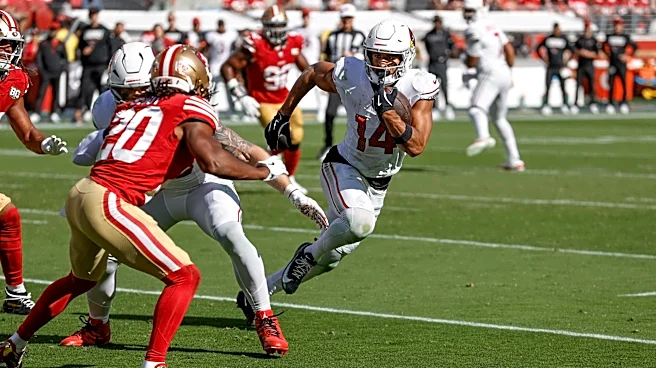
This offseason, Arizona invested in their running game by signing RB Tyler Algiere, drafting Jeremiyah Love, and signing guard Isaac Seumalo. But the overall impact of those additions have yet to be felt. The Cardinals sport a 3.9 yards per carry average (20th) and rank 13th in rush EPA.
Against the Giants, they did finish with 123 rushing yards and 4.7 yards per carry, but almost none of that success was up the gut. However, stretch running plays to the outside were wildly successful, and if you look at their season-long numbers, they match what we saw in this game.They’re producing an impressive +0.26 EPA/rush outside the left tackle (fourth best) and +0.36 EPA/rush outside the right tackle (second)—while producing negative numbers pretty much everywhere else.
Meanwhile, the Lions have been terrible at defending perimeter runs. They’re allowing +0.36 EPA/rush outside left tackle (second worst) and +0.17 EPA/rush outside right tackle (fifth).
Detroit will need their defensive backs to play much more disciplined run defending on the edge. I’m looking at you, Christian Izien.
Also, be on the look out for QB sneaks and tush pushes in short-yardage situations. Jacoby Brissett is 6-foot-4, 235 pounds, and it makes him very effective at that play.
Jacoby Brissett crumbling under pressure
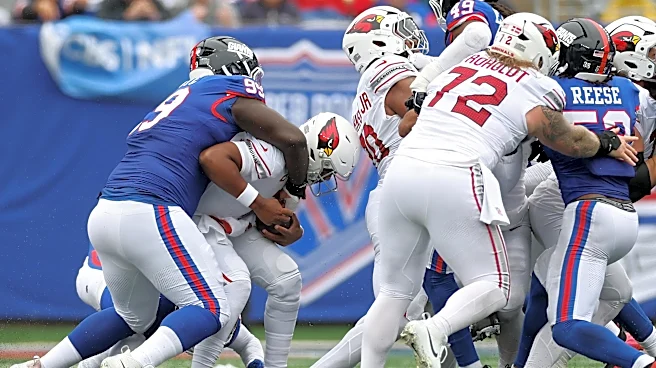
I thought the Cardinals’ offensive line did a pretty good job when the Giants sent just four defenders in their pass rush. Considering New York has a pretty formidable front (albeit without Brian Burns in this game), I thought Brissett had fairly comfortable pockets. The Giants managed just a 17.6% pressure rate without blitzing, ranking 29th in Week 4.
However, the Giants opted to crank up the blitz to a high rate (51.3%, fifth), and the Cardinals didn’t have an answer. New York produced a 55.0% pressure rate when blitzing (eighth highest).
Brissett is simply not a very good quarterback when the blitz is coming. He either checks down far too quickly (6.2 average depth of target, 27th out of 29 qualifying QBs) or is too risky with the football. Against the Giants, Brissett produced this statline under pressure:
6-of-12 for 53 yards, 1 TD, 2 INTs, and 50.3 passer rating.
For the season, it’s even worse. Doesn’t matter whether the pressure is coming from a blitz or just a four-man runs:
- -0.32 EPA/dropback vs. blitz (25th out of 29)
- +0.01 EPA/dropback vs. no blitz (17th)
- -0.67 EPA/dropback vs. pressure (25th)
- +0.17 EPA/dropback vs. no pressure (17th)
The Lions have been an abysmal defense in any situation, but particularly when blitzing. If Detroit can continue to generate pressure with just four—especially with Cardinals left tackle Paris Johnson Jr. out for the year—I wouldn’t be surprised if they can generate some negative plays or turnovers.
Cardinals defense found some pressure answers after rough start
Going into the Giants game, the Cardinals’ defense was getting dragged publicly for their terrible pressure rate. For the season, the Cardinals still rank just 29th in pressure rate (30.3%).
But against the Giants, they started to find some answers, and sacked Jameis Winston four times. The biggest solution was relatively simple: get more aggressive. The Cardinals upped their season-long blitz rate of 23.8% (23rd in NFL) to 30.3% and produced pressures on 40.0% of those blitzes (19th best).
Detroit didn’t handle the blitz particularly well against the Panthers, but if they can, that is the key to beating this Cardinals defense. Because when Arizona cannot produce pressure, opposing quarterbacks are killing them. With no pressure, the Cardinals are allowed +0.50 EPA/pass (30th) and 9.6 yards per play (32nd). That’s because their primarily zone defense starts to fall apart when quarterbacks have time to process the coverage.
With pressure, the Cardinals still aren’t great, but they’re better—ranking 29th in EPA/pass (-0.10) and 24th in yards per play (4.4).
Run defense could give Detroit problems
The Lions have run the ball very consistently this year, and the Cardinals present one of the tougher matchups thus far. They held the Giants to just 87 yards on 28 carries (3.1 YPC), and New York didn’t have a rush of over 9 yards.
Now, New York has one of the worst rushing attacks in football through four weeks, ranking 24th in EPA and success rate, but for the season, the Cardinals have done a pretty good job.
Arizona ranks fourth in rush EPA defense and 11th in success rate. Although the better rushing teams in football didn’t have a ton of issues against them (Seahawks: 162 yards, 4.1 YPC; 49ers: 140 yards, 6.1 YPC).
The Lions aren’t ever going to go into a game expecting to abandon the run, but it’s clear to me that the bigger mismatch is through the air this week.
Tight ends aren’t just about Trey McBride
Yes, Trey McBride is arguably their biggest weapon in the passing game. He currently had 33 catches for 242 yards and two touchdowns. That is going to be a problem for a Lions defense that is surrendering 407 receiving yards (31st) and six touchdowns (32ng) to tight ends through four games.
However, the Cardinals use 13 personnel (one running back, three tight ends) at a higher rate than everyone other than the Rams and Bills. That’s because they’ve got some dudes at that position beyond McBride. PFF’s highest-graded tight end in football through four weeks is actually Elijah Higgins (89.3 grade), because of his outstanding run blocking (77.0, second among TEs).
Hunter Long has been their third tight end, and he’s also been a big asset in the running game (72.0 run blocking grade, 10th). Unfortunately, he was placed on IR this week, leaving Teagan Quitoriano to be the TE3 this week. Quitoriano has yet to play a game for the Cardinals this year, and his history suggests he’ll be a pretty significant downgrade.