

The 2027 NFL Draft is still a long way away.
That needs to be the first disclaimer.
The college football season has barely started, and a lot will change between now and April. Players will emerge, others will fall, some will declare early, others will return to school, and a handful of prospects who aren’t even on most early boards right now will eventually become household names.
We’ve already seen how quickly that can happen.
Early projections for the 2026 NFL Draft had quarterbacks such as Garrett
Nussmeier, Drew Allar and Cade Klubnik being discussed as potential first-rounders, with some early projections placing them inside the top 10. They eventually went in the seventh, third and fourth rounds, respectively.
And then there was Fernando Mendoza.
Mendoza wasn’t the quarterback dominating the early draft conversation. By the time the 2026 draft arrived, he had developed into the No. 1 overall pick. That’s the nature of the NFL Draft.
So this isn’t a ranking, and it certainly isn’t a prediction of who the Seattle Seahawks will select. It’s an early watch list — a collection of players worth knowing as the 2026 college football season develops.
That is particularly relevant for the Seahawks because Seattle currently projects to have 11 selections in the 2027 NFL Draft, including a significant number of compensatory picks. Even after trading away a fourth-rounder for Beau Stephens and a sixth-rounder for Avery Smith, the Seahawks remain loaded with draft capital.
John Schneider therefore has something every general manager wants at this stage of the process: options.
Here are some of the names worth watching.
2027 NFL Draft quarterback prospects
Quarterback is obviously a position Seattle will monitor, but that doesn’t mean the Seahawks are going into 2027 needing to draft one.
Sam Darnold is coming off a Super Bowl-winning season, and there would be little reason to move away from him if he continues playing at that level. Seattle also has Jalen Milroe developing behind him.
But there is another part of the equation.
Drew Lock is scheduled to become a free agent after the 2026 season. That doesn’t mean Seattle has to replace him with another veteran or draft a quarterback, but it does mean the team’s quarterback room could look different entering 2027.
And that’s exactly why the position belongs on this list.
If Darnold plays well, Milroe develops and the Seahawks are happy with the direction of the room, quarterback could remain a low-priority position. But if Darnold’s performance declines, Milroe doesn’t develop as hoped, or an elite quarterback unexpectedly falls within Seattle’s reach, the Seahawks need to know exactly what they’re looking at.
With 11 projected picks, Seattle would also have the ammunition to move up if the right quarterback becomes available.
So the question isn’t “Will Seattle draft a quarterback?”
It’s “Could Seattle have a reason to consider one by April?”
That’s a very different question.
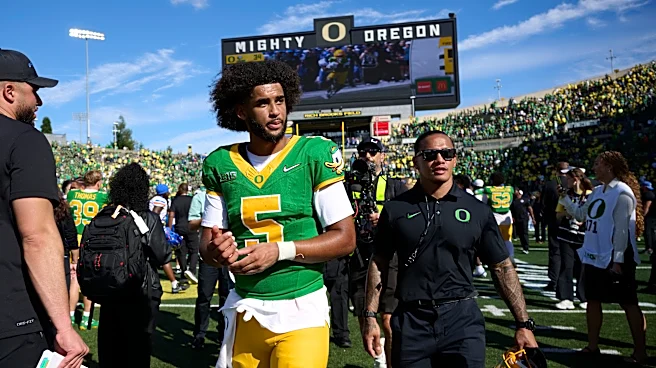
Dante Moore, Oregon
Moore is one of the quarterbacks who could force that conversation.
The Oregon quarterback entered 2026 with legitimate first-round buzz after an impressive 2025 season, and he has the physical tools scouts look for: arm talent, mobility, accuracy and the ability to make throws from different platforms.
The biggest question isn’t whether Moore can make NFL throws, it’s whether he can consistently make NFL reads.
Oregon’s offense can create favorable situations for its quarterback, but evaluators will want to see Moore handle more difficult progressions, identify coverage changes and make good decisions when the first read isn’t there. His ability to operate outside structure will be particularly important. If he takes that next step, Moore could become one of the most important quarterbacks in the 2027 class.
And that’s precisely why Seattle should be watching, even if the Seahawks don’t currently have an obvious need at the position.
Arch Manning, Texas
Manning will naturally attract attention because of his family, but the evaluation needs to go beyond the name.
He has the physical talent to become a top quarterback, but there are still questions about his processing and occasional hesitation before letting the ball go. If those issues improve, his talent gives him a clear path back toward the top of the quarterback conversation.
Trinidad Chambliss, Ole Miss
Chambliss is one of the more fascinating quarterbacks in the class because he doesn’t have the same physical profile as some of the bigger names.
His Week 1 performance vs. Louisville, however, showed excellent anticipation and timing. He consistently appeared comfortable throwing the ball before receivers were completely open, which is one of the more difficult quarterback skills to teach.
The questions are obvious: Can he maintain that against better defenses, and will his size limit his NFL projection?
Those are questions for the rest of the season.
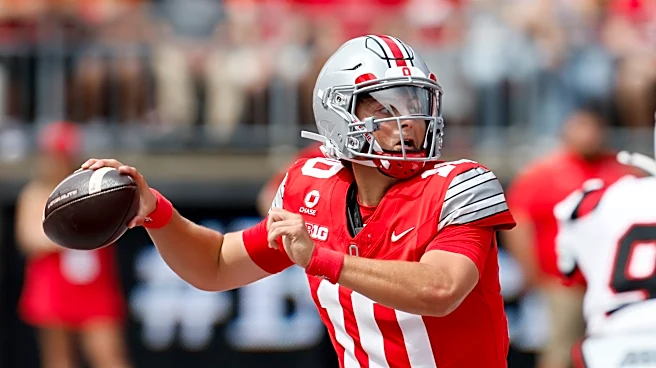
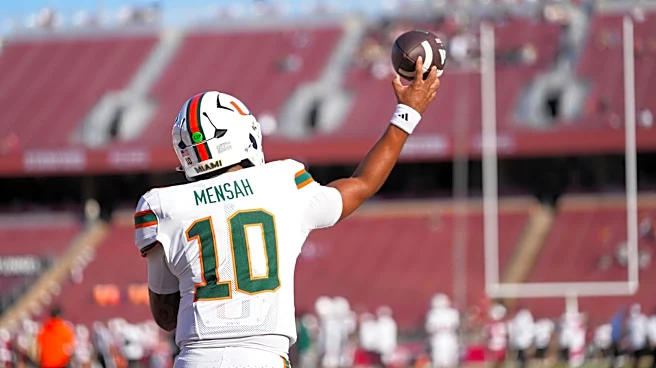
Darian Mensah, Miami
Mensah is another quarterback whose stock could change dramatically.
He opened the season with the highest PFF passing grade among FBS quarterbacks, completing 87 percent of his passes for 400 yards and five touchdowns. Through two games, he has twice as many touchdown passes (8) as incomplete passes (4).
That doesn’t make him the next Fernando Mendoza, but it does make him someone Seahawks fans should know. The important part of a 2027 quarterback watch list is not deciding who will be QB1 in September, it’s identifying the players whose development could change the entire conversation by April.
Running Back
Seattle probably isn’t going to spend another first-round pick on a running back. The Seahawks just used the 32nd overall pick on Notre Dame’s Jadarian Price, making him a significant part of their plans for the position moving forward.
But that doesn’t mean running back disappears from the scouting board. The situation could change quickly.
Kenneth Walker III is no longer in Seattle, while Zach Charbonnet is entering the final year of his rookie contract. If Charbonnet leaves after 2026, Seattle could suddenly need another young back to pair with Price.
That makes running back worth monitoring — just probably not at the top of the draft. Seattle has already invested a first-round pick in Price, so a second consecutive Round 1 running back would be difficult to justify unless something unusual happens.
A Day 2 or Day 3 back, however, could make plenty of sense.
Ahmad Hardy, Missouri
Hardy is one of the backs worth watching closely. He’s a compact, physical runner who combines excellent contact balance with the acceleration to turn small openings into explosive plays. His 2025 season put him firmly on the NFL radar, but his receiving development could ultimately determine how high he goes.
That’s especially relevant to Seattle.
The Seahawks don’t simply need a back who can carry the ball. A player who can stay on the field in multiple personnel packages and contribute as a receiver becomes much more valuable. If Hardy shows that part of his game consistently in 2026, his stock could rise significantly.
Kewan Lacy, Ole Miss
Lacy might be one of the most interesting backs in the class.
He exploded in 2025, rushing for 1,567 yards and 24 touchdowns, while also contributing as a receiver. His vision is one of his biggest strengths. Lacy sees openings quickly and has the burst to exploit them before defenders can close. He’s not a massive back, but he has enough size to handle a significant workload while possessing the explosiveness NFL teams increasingly value.
A strong 2026 season could put him firmly into the early-round conversation.
Isaac Brown, Louisville
Brown is another player whose athleticism makes him worth monitoring. He’s smaller than the traditional three-down back, but his acceleration is special. Once he finds daylight, Brown can turn a routine run into an explosive play almost instantly.
If he continues developing as a receiver and shows he can handle more of the workload, he could become one of the more intriguing backs in the class.
Offensive Line
This could become one of the more important positions for Seattle in 2027.
The Seahawks don’t suddenly have a disastrous offensive line situation, having brought everyone back for this year. That’s not the point.
The point is that Anthony Bradford and Jalen Sundell are both entering the final year of their contracts, creating a potential need after the 2026 season.
Seattle therefore has to keep scouting the position, even if the offensive line performs well this year.
And there is one interior offensive lineman in particular who stands out.
Kade Pieper, Iowa
He started all 13 games at right guard for Iowa in 2025 and earned third-team All-Big Ten honors. The Seahawks drafted two OLs from Iowa in the previous draft (Mason Richman and Beau Stephens).
That move is particularly interesting because Pieper already has a skill set that fits the modern NFL. He’s a mobile interior lineman who wins with leverage, hand placement and positioning rather than simply trying to overwhelm defenders with size. Iowa’s zone concepts allow him to show that movement ability.
Pieper can reach blocks, climb to the second level and pull effectively, and he consistently plays with good balance. He’s listed around 6-foot-4 and roughly 290-300 pounds, but his movement skills make him look lighter than that frame suggests.
The production is encouraging, too. Heading into 2026, Pieper had allowed just one sack in his college career sample while providing strong run-blocking results. There was a rumor that he will make a transition to center and this could be a key part of his evaluation. Center requires more than just physically winning blocks. There are additional responsibilities before the snap, including identifying fronts, communicating protections and recognizing defensive movement.
If Pieper can make that transition without losing his effectiveness, his ability to play both center and guard becomes a significant NFL asset.
And there is a very obvious Seattle connection.
If Bradford or Sundell leaves after the 2026 season, the Seahawks could have an opening inside. They wouldn’t necessarily need to spend a premium pick on a center. A technically advanced player who can play multiple interior positions could be exactly the type of prospect Seattle targets. Pieper is therefore much more than a name to remember.
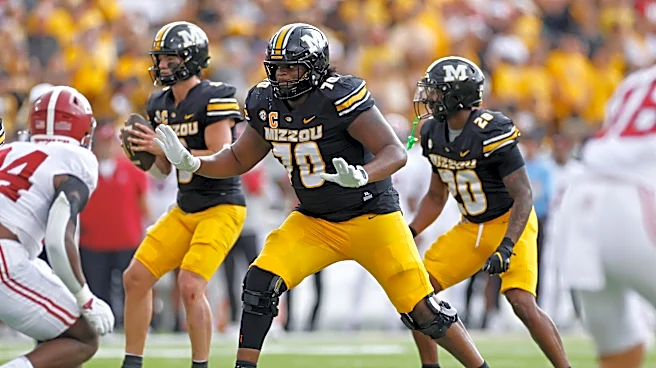
Cayden Green, Missouri
Green is another offensive lineman worth watching closely because of his versatility. He’s already played both guard and tackle, giving him experience at multiple positions along the line. That matters for Seattle because the Seahawks have consistently valued linemen who can provide flexibility rather than being locked into one spot.
His 2026 season is particularly important. If Green can establish himself as a legitimate tackle while maintaining the power and physicality that made him effective inside, his stock could rise quickly. Even if scouts eventually view him as a guard, his experience at multiple positions gives him a valuable floor.
Greg Johnson, Minnesota
Johnson is a very different type of prospect. At roughly 6-foot-6 and 325 pounds, he has the massive frame NFL teams want in an offensive lineman. But his evaluation will come down to how well he moves that frame.
Can he handle speed rushers? Can he maintain leverage? Can he operate effectively in space? Those are the questions scouts will be watching.
If Johnson answers them, his combination of size and functional athleticism could make him a much more serious NFL prospect than the current national attention suggests.
Wide Receiver
There are two receivers who currently sit well above most of the rest of this group.
Jeremiah Smith and Cam Coleman are already established as major 2027 prospects.
Smith, in particular, is one of the premier players in the entire class and is expected to be among the first names called whenever he enters the draft. He can be the No. 1 overall. Coleman has the size and explosiveness to potentially join him near the top of the receiver board.
For Seattle, however, those are more names to know than realistic targets at this stage. The interesting part is what happens underneath them.
Charlie Becker, Indiana
Becker is one of the more interesting receivers outside the top tier.
He enters 2026 with an opportunity to become a much bigger part of Indiana’s offense. If Becker establishes himself as Indiana’s primary target and produces consistently against better defenses, his draft stock could move quickly.
JoJo Bermudez, Temple
The Temple receiver entered 2026 with preseason recognition in the AAC and brings value beyond his work as a receiver.
He’s also a kick returner, giving him the type of versatility that can increase his value on draft day.
For a player outside the current elite group of receivers, special teams ability can help keep him on an NFL roster while his offensive role develops.
A strong season as a receiver could change the equation entirely.
Ryan Coleman-Williams, Alabama
He has the physical profile to become a major perimeter weapon and is already appearing high on early receiver watch lists. The 2026 season is about turning that physical potential into consistent production. His first game was not the good as I expected and he has had some drop issues, but let’s watch his development during the season.
EDGE
Seattle should always be watching pass rushers.
Even when the current group looks strong, edge rusher is one of those positions where having more talent is rarely a problem.
Matayo Uiagalelei, Oregon
Uiagalelei is one of the most physically intriguing edge defenders in the class. He has the size to play with power while possessing enough athleticism to threaten offensive tackles with speed. The key will be consistency as a pass rusher.
If he can turn his physical tools into regular pressure production, he’ll have a legitimate case to become one of the first defensive players selected.
Kenyatta Jackson Jr., Ohio State
Jackson is already giving scouts reasons to pay attention. He generated eight pressures in Week 1 against Ball State, including six hurries and two quarterback hits. Those numbers don’t automatically make him a first-round pick, but they’re exactly the type of early-season production that can change a prospect’s trajectory.
Clev Lubin, Louisville
Lubin is an explosive pass rusher whose first-step quickness immediately stands out. He’s not yet one of the universally recognized names at the top of the class, which makes him an ideal player to monitor throughout the season.
Will Heldt, Clemson
Heldt has already established a productive résumé. He led Clemson in 2025 with 15.5 tackles for loss and 7.5 sacks, giving him the production necessary to establish himself as a serious prospect. If he repeats that level of disruption in 2026, his draft stock could rise substantially.
Prince Umanmielen, Ole Miss
Umanmielen is another edge defender with an intriguing physical profile. The Ole Miss defender has the length and athleticism to create problems from the edge, but the next step is turning flashes into consistent production.
That’s the difference between an intriguing prospect and an early-round prospect.
Defensive Line
Justin Scott, Miami
Scott is one of the most interesting interior defenders in the class. At roughly 6-foot-4 and around 300 pounds, he has the size to play inside while still possessing the quickness to threaten guards and centers. He’s already receiving early first-round attention.
For Seattle, interior disruption is always worth watching, particularly as the team continues planning beyond the current veteran-heavy defensive line.
Ahmad Moten, Miami
Moten gives Miami another potential early-round defensive lineman.
He’s powerful, plays with a strong motor and has the ability to disrupt the run while continuing to develop as a pass rusher.
Having two potential early-round interior defenders on the same defensive line makes Miami particularly interesting to scout.
Will Echoles, Ole Miss
Echoles’ appeal isn’t limited to pass-rush production. He can disrupt the run game while still providing interior pressure, giving him the potential to become a three-down defensive lineman rather than a specialist.
A strong 2026 season could move him firmly into the early first-round conversation.
Francis Brewu, Notre Dame
Brewu has one of the more interesting paths among the defensive linemen on this list. He spent his first two seasons at Pittsburgh before transferring to Notre Dame. In 2025, he broke out with 34 tackles, 10 tackles for loss and 6.5 sacks, showing that he can create disruption from the interior.
He’s around 6-foot-1 and roughly 280 pounds, so he isn’t built like a traditional massive nose tackle. That’s actually part of his appeal.
Brewu has a low center of gravity and quickness that allow him to attack gaps and get underneath offensive linemen. The question at Notre Dame will be whether he can maintain that effectiveness against bigger offensive lines and when opponents are able to devote more attention to him. If he does, he could become one of the more interesting interior defenders on Day 2.
Linebacker
Sammy Brown, Clemson
Brown is one of the most established linebackers in the class.
He produced 106 tackles, 13.5 tackles for loss and five sacks in 2025, showing the range and physicality NFL teams want.
If his coverage continues to improve, he has a legitimate path toward the first round.
Kyngstonn Viliamu-Asa, Notre Dame
Viliamu-Asa is another linebacker with an appealing combination of size, instincts and versatility.
He recorded 48 tackles, 7.5 tackles for loss and three sacks in 2025, while also adding an interception and five quarterback hurries.
His ability to contribute against the run while also being used aggressively as a blitzer makes him particularly interesting.
Chris Cole, Georgia
Cole brings another athletic option to the position. At around 6-foot-3 and 235 pounds, he has the frame to play multiple roles. His 2025 production — 59 tackles, seven tackles for loss and 4.5 sacks — showed that he can affect the game behind the line of scrimmage.
His coverage development will be an important part of his 2026 evaluation.
Cornerback
Seattle probably doesn’t need to spend a first-round pick on cornerback simply because the position is currently weak.
But the Seahawks should absolutely be scouting it.
The current room has young players such as Julian Neal, and the organization needs to find out what it has there. If Neal doesn’t take the expected step forward in 2026, Seattle could have a much clearer need on the outside entering the 2027 offseason.
That’s where this year’s college class becomes interesting.
Kelley Jones, Mississippi State
Jones is compelling from a Seattle perspective. He’s listed around 6-foot-4 and 195 pounds, giving him the length that Seattle has historically valued at outside corner. He also brings the physical tools to challenge receivers at the line and compete at the catch point.
His 2025 season included 34 tackles, 11 passes defended and two interceptions, showing that he can make plays on the football.
If he takes another step in 2026, Jones could become a very interesting name for teams looking for a long outside corner.
Ellis Robinson IV, Georgia
Robinson arrived at Georgia with enormous recruiting pedigree and has shown flashes of the talent that made him one of the country’s top prospects coming out of high school. In limited action in 2025, he allowed just 15 receptions on 35 targets while recording four interceptions.
The question now is whether he can turn that efficiency into a larger role and sustained production. If he does, he could quickly become one of the most talked-about corners in the class.
Safety
Safety is another position where Seattle could eventually have a need.
The Seahawks currently have Julian Love, Nick Emmanwori and Ty Okada, while Bud Clark is recovering after his injury. That group gives Seattle options, but injuries and development can change the equation quickly.
Brauntae Johnson, Notre Dame
Johnson is one of the defensive backs I would watch most closely.
He’s not only a deep safety. Johnson can operate in single-high looks, two-high alignments and closer to the line of scrimmage. He’s also capable of matching up against receivers in space. That versatility is increasingly important in the NFL, where safeties are expected to disguise coverage and move around before the snap.
Johnson also brings legitimate ball skills. His ability to read the quarterback and anticipate routes allows him to play aggressively, while his physicality gives him value closer to the line of scrimmage.
The biggest question is consistency. There are times when his aggressiveness can work against him, particularly against misdirection, and his range from the deepest part of the field isn’t quite at an elite level.
But if he cleans up those issues, his versatility could make him one of the more valuable safeties in the class.
Jelani McDonald, Texas
McDonald has the size to contribute near the line of scrimmage while possessing enough athleticism to play deeper. His 2025 season included 80 tackles, three interceptions and three passes defended, giving him a strong statistical foundation heading into 2026. If his coverage continues to improve, he could become another safety who climbs significantly during the season.
This is only the beginning
The important thing about a September 2027 draft watch list isn’t getting every name right. It’s identifying the players who are worth watching before the rest of the NFL settles on its final rankings. Some of these prospects will become stars, some will fall, some will return to college.
Seattle doesn’t need to predict the 2027 picks.
It just needs to know the players.