



A few days ago, our good friends at The Good Phight in a similar boat—a star-studded, expensive squad that failed to live up to expectations—featured an article that resonates with every team of this profile, one discussing the hypothetical scenario of being able to amnesty a contract. After all, what big-market team is complete without the looming presence of at least one regrettable long-term deal, paying a former star a sum that’s not justified by their current production but more so the back
of their baseball card? Read about it here as they argue for the merits of moving on from Aaron Nola in Philly.
Encouraged to run with the idea, we’ll look at who the Yankees would attempt to offload in a scramble to recoup some spending cash, having finished the 2026 season with a payroll of $313 million. First and foremost, as expensive as the Yankees’ active payroll is, the number of long-term commitments isn’t as large as you might expect. The likes of Gerrit Cole, Giancarlo Stanton, and Carlos Rodón all see their contracts end in two years or fewer, and those signed to long-term deals are essential to this team’s current contending window: the likes of Max Fried, Aaron Judge, and Cody Bellinger. In years past we might have had our pick of options in this exercise; happily, it’s slim pickings now.
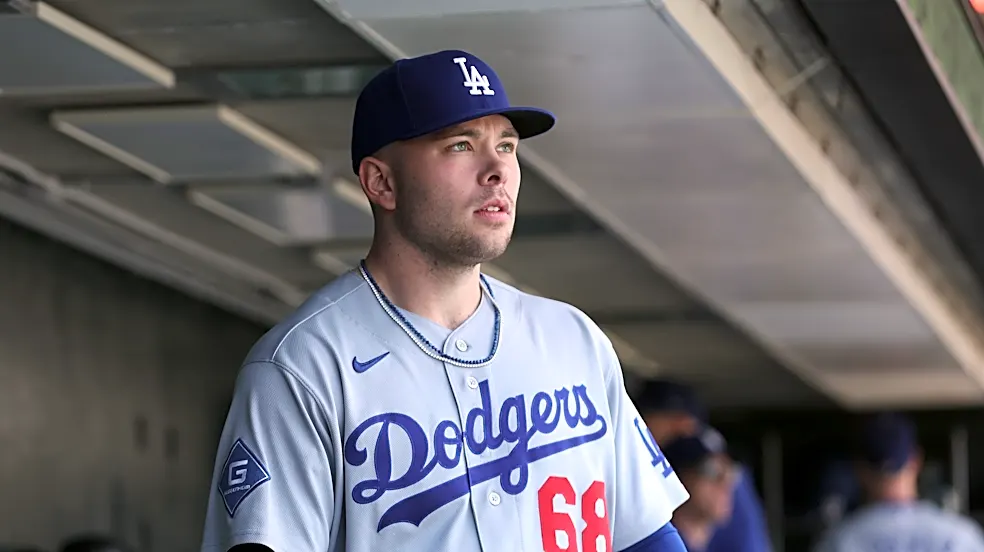
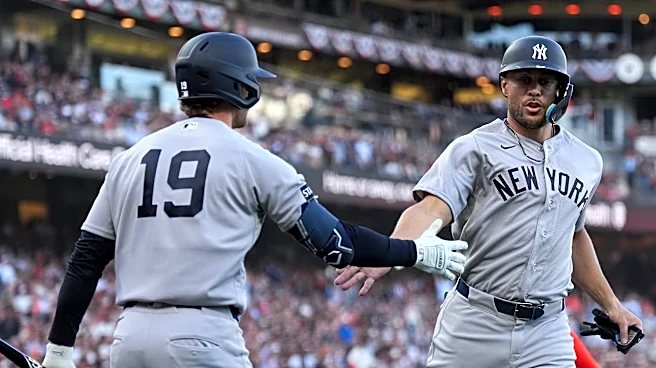
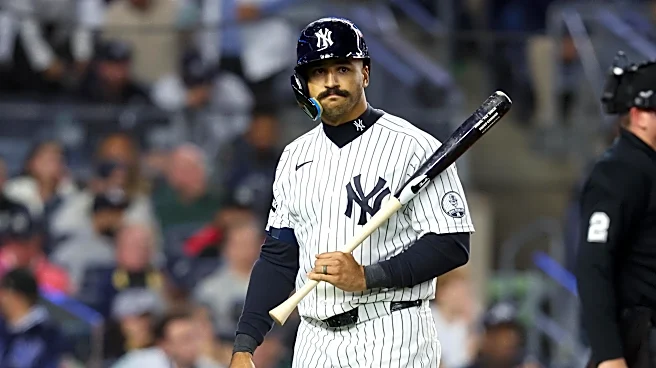
Out of that group, the only one who arguably could get amnestied is Stanton, whose recent chapters of his Yankees tenure have been spent primarily on the injured list—sincerely placing in jeopardy the notion of him at any point being able to produce consistently in the Bronx. Before getting to Stanton’s contract, there is one more player who could feasibly fit as an amnesty candidate, even if his contract is only on the books for one more year: third baseman Ryan McMahon.
To assess which of these two gets the nomination neither would like, we must assess their respective contracts. Stanton is owed $25 million in 2027, of which $10 million will be covered by the Marlins. Stanton has a team option for 2028 worth $25 million, with a $10 million buyout, the exact figure the Marlins owe the Yankees for that year as well. In essence, the Yankees owe Stanton a minimum of $15 million. McMahon is entering the final year of his deal in 2027, with the Yankees owing their starting third baseman $16 million.
It’s not as simple as looking at those figures; although the Yankees may owe Stanton one million less, the luxury tax figure for his deal in 2027 is $22 million. Ultimately, that’s the number that would theoretically count toward whatever version of the tax exists next year, making moving on from Stanton a more appealing option than McMahon from a financial point of view.
On the field, Stanton seemed to move from an asset whose regular-season reliability is extremely questionable to one whose likeliest scenario is that of being a non-factor after spending nearly all of 2026 hurt. Given his postseason impact and reliable skill when healthy in recent seasons, Stanton would need very little to compete with McMahon here. However, even that very little seems unlikely to come at this point, or at the very least, it’s not a reasonable gamble to make.
For all of his faults, McMahon is still capable of bringing a plus glove at third, even if 2026 was a down year for him defensively. Push comes to shove, you might look at him as a reasonable bench option. With or without McMahon, the Yankees can look at third base this winter. Without Stanton, you free up the DH position to rotate and keep players fresh or acquire a standout bat—not to mention the extra money in the budget given the luxury tax figures. Put it all together, and the choice becomes clear that the contract to wipe clean would be Stanton’s.