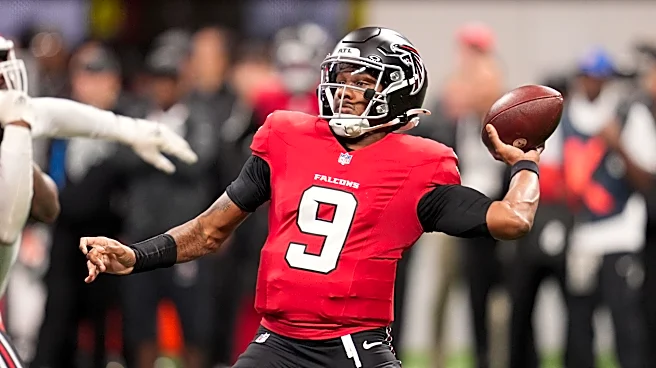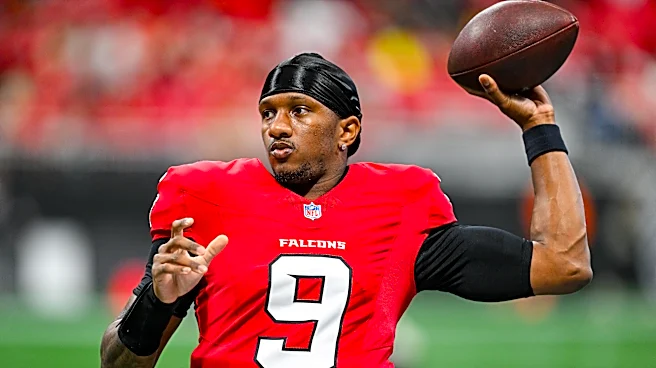

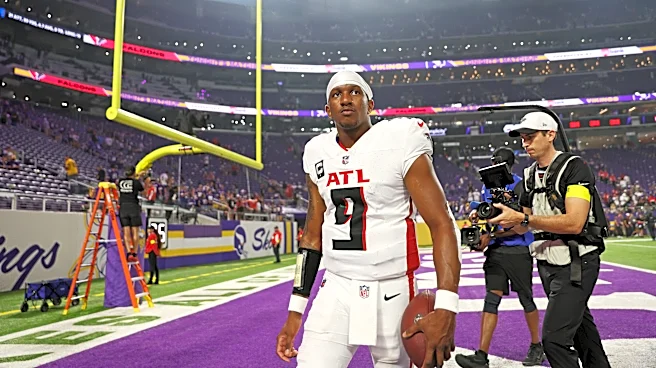
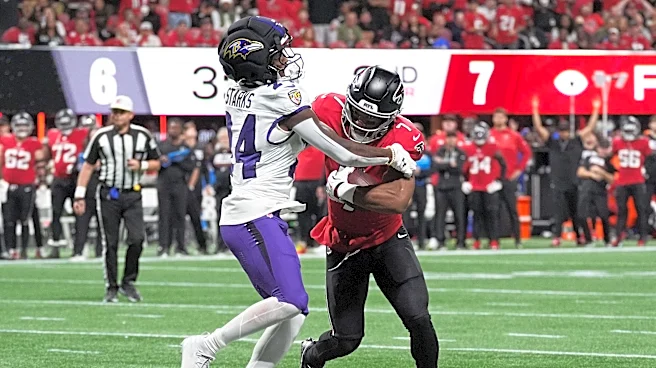
Atlanta Falcons quarterback Michael Penix exits the Week 11 bye and enters a seven-game stretch that could define his career. With scrutiny mounting, the final two months of 2026 will not only dictate whether Penix remains the Falcons’ starter entering 2027, but could also determine whether he ever gets another shot to lead an NFL franchise.
To save his job, Penix must show immediate growth in three critical areas: starting faster, surviving pocket pressure, and rediscovering his signature deep ball.
Penix must fix his first-quarter freeze
According to Next Gen Stats, the Falcons’ slow starts have been fueled by a 31st-ranked first-quarter EPA per play and 32nd-ranked first-quarter passing yards. Leaning on the run game would help, with Atlanta’s early-game run rate plummeting from 56 percent in Penix’s first three starts to the 24th-ranked 42 percent over the last five. But the Falcons cannot ask star running back Bijan Robinson to carry the entire offense, as Penix has to pull some weight.
Per NFL.com, Penix has completed 46 percent of his throws in the first quarter while averaging just 3 yards per attempt. The Falcons have produced just six passing first downs in the first quarter in Penix’s eight starts, compared with an NFL average of 19. This keeps the team from sustaining offense, thanks to a league-low first-quarter third-down efficiency of 10 percent across Penix’s starts. This isn’t a problem unique to 2026, as Penix posted a dismal 38.8 passer rating in the first quarter during his rookie season before surging to 108.8 in his second.
That leap offers hope that more time in Tommy Rees’ offense can spark a similar turnaround. But as a third-year pro, Penix’s early-game struggles are harder to excuse, and Atlanta cannot afford to wait until 2027 for competence.
Pressure is Penix’s kryptonite
While the slow starts are problematic, they at least show growth potential. However, Penix’s biggest issue is his inability to handle pressure. Rarely do quarterbacks thrive under pressure, but few struggle as much as Penix.
Per Next Gen Stats, Penix’s completion percentage over expected (CPOE) plummets by a league-worst 13 percentage points when pressured. Remarkably, the chasm between Penix and the NFL’s second-worst passer under pressure (Jameis Winston) is just as wide as the gap between Winston and the next eight quarterbacks on the list. Penix’s struggles against pressure are in a tier of their own.
PFF’s marks on Penix under pressure are even more stark. He has the league’s lowest passing grade, and his turnover-worthy-play rate of 11.8 percent is the worst in the league when under pressure. Unlike Penix’s poor early-game numbers, there aren’t many signs of optimism, as his PFF metrics have steadily declined since entering the NFL. It’s hard not to conclude that his 2025 injury has made Penix more tentative. But it’s been a known issue since college: if you can move him off his spot, his efficiency falls off a cliff.
As the Falcons look to rebuild their offensive line this offseason, patience won’t be on Penix’s side. Even with former offensive lineman Ian Cunningham as general manager and legendary line coach Bill Callahan in the building, rebuilding Atlanta’s trenches won’t be an overnight fix. Just ask Matt Ryan, now the man who’ll weigh in on Penix’s future, after he endured relentless pressure during his final seasons when the Falcons launched their last major offensive line overhaul in 2019. Young linemen take time to gel, meaning Atlanta needs a quarterback who can survive behind a transitional front, not one who crumbles the moment he feels some heat. Penix doesn’t appear to be that option unless he shows improvement over what remains of 2026.
Where did Penix’s deep ball go?
Penix’s flaws would be easier to live with if his greatest strength offset them. Penix’s best asset has always been his bazooka of a left arm, which should translate into his ability to hit downfield shots. While PFF ranks him 15th overall with a 48 percent adjusted completion rate on deep passes over 20 yards, that number is heavily skewed by his first three starts when he was nearly flawless save for a Jahan Dotson drop against Green Bay. Over his last five games, Penix’s deep-ball accuracy has cratered to 29 percent (29th in the NFL).
Penix desperately needs to get back to capitalizing on his greatest strength if he’s going to be Atlanta’s starter moving forward. Atlanta’s loss to Kansas City provides a bit of optimism, as Penix hit three deep completions in that game, the most in any game so far this year. However, all three only came after the team fell into a 14-3 hole, again illustrating his tendency to start slowly.
The bar is low, but the clock is ticking
Young quarterbacks experiencing ups and downs is the norm in the NFL, but it’s easier to accept the lows when they’re also delivering highs. Especially for a team like the Falcons that is struggling to win games. Wins and losses get pinned on quarterbacks, fairly or not. What Penix can control is showing the arm talent that made him a top-10 pick. Without it, there isn’t much to love about Penix’s play lately.
Improvement over the next seven games in these three key areas will justify the Falcons continuing their investment in Penix. Any progress Penix shows for the rest of 2026 can create momentum heading into the offseason. Without it, Penix’s future as a starter is in jeopardy. The Falcons will have to decide whether to pick up Penix’s fifth-year option this offseason. If they don’t exercise that option, 2027 will mark the final year of his rookie contract and his last real shot at a starting role. And it may not even be a guaranteed shot if the team pivots this offseason.
Outside of vertical passing, the bar Penix needs to clear isn’t that high. He must be dynamic downfield to justify his draft pedigree, yet he only needs to climb to league-average efficiency in the first quarter. Given his history, pressure may always be his fatal flaw, but he just needs to improve from awful to run-of-the-mill bad. Glimpses of progress are there, including his willingness to scramble in Madrid as he gains more confidence on his surgically repaired knee.
The path for Penix’s progress is laid out. All he needs to do is walk it.