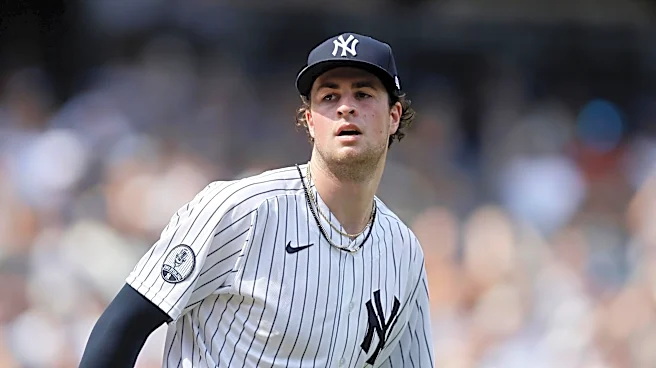


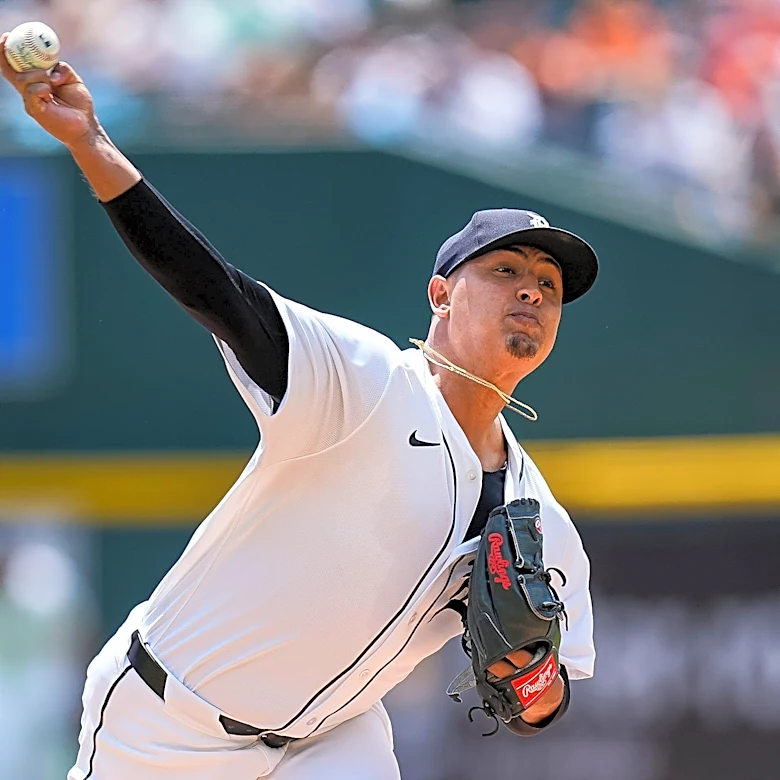
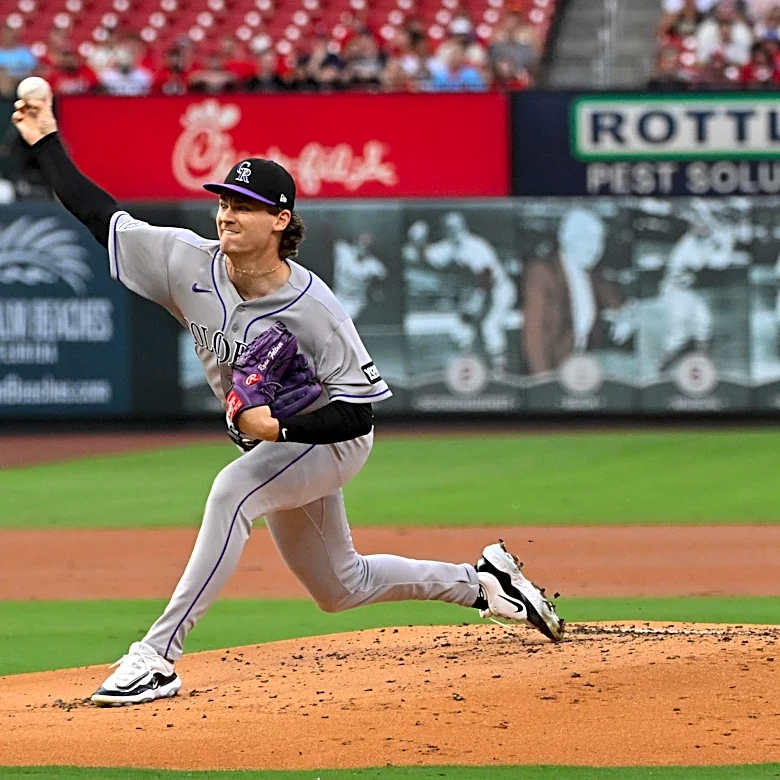
What is a Hall of Fame starting pitcher in today’s MLB? We know of a few retiring legends who’ve transcended eras and will be in Cooperstown: namely Zack Greinke, Clayton Kershaw, Justin Verlander, and Max Scherzer. But the game and the position itself have evolved in such a way that the traditional stats that used to define a Hall of Fame starter are no longer achievable.
300 wins used to be the goal, but after Verlander’s quest to get it came up short, it seems nobody will come close for a long
time, if ever. 3,000 strikeouts have also been used as a moniker to make you a lock, but with innings being managed and injuries plaguing even the most durable starters, how many people can realistically get to that?
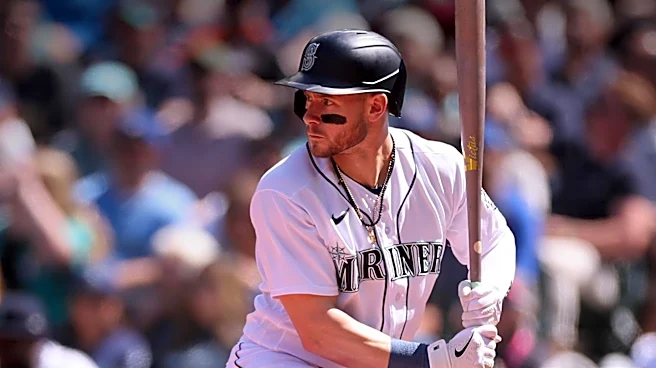
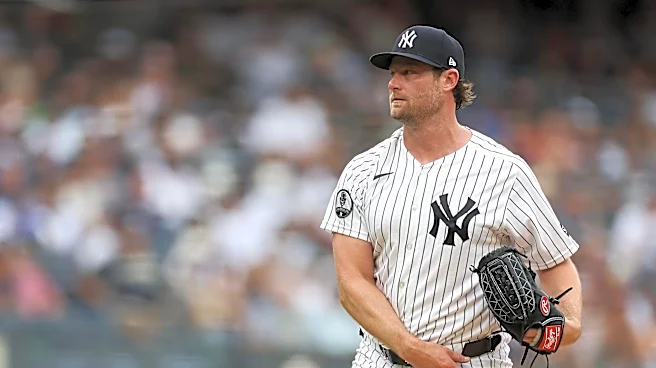
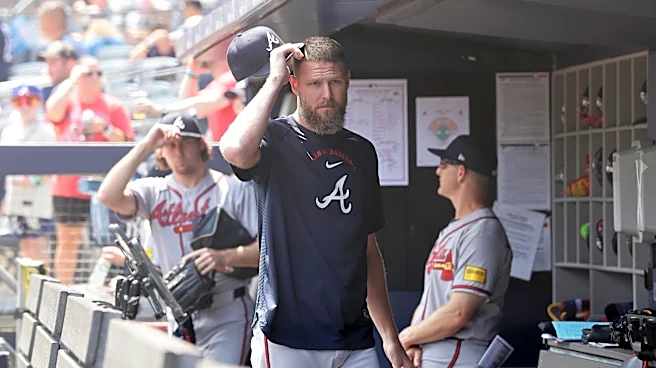
Two older pitchers who are viewed as the best chances to get inducted from this era were on display this past weekend against Atlanta, as Chris Sale and Gerrit Cole went head-to-head on a Saturday afternoon in the Bronx. The two aging aces are two men on the same warpath as their careers wind down, having fought the same battles to get here.
Sale was younger than Cole when he went under the knife for Tommy John surgery, but it was part of a stretch of ailments that cost him a large portion of his prime. He missed eight starts in 2019 before making a grand total of 11 starts from 2020 to 2022, throwing his entire $150 million contract extension into the shredder. He’s enjoyed a career renaissance in Atlanta, but has still battled injuries, being held to just 20 starts in both 2023 (his last year in Boston) and 2025.
As Cole enters his mid-to-late 30s, he’s entering the same part of his career that Sale struggled to stay on the field with Boston. The normally durable ace, who had not been on the injured list since 2016, missed several months in 2024 with an elbow flare-up before going under the knife for Tommy John in March 2025. The internal brace procedure allowed him to return relatively quickly, making his 2026 debut on May 22, but questions existed about whether he’d be able to recapture his old form quickly or face the lagging effects that others have in the past.
Those lagging effects can come in a bunch of different forms. It can hit your velocity, as it did with Spencer Strider. It can hurt your command, as it did with Sandy Alcantara. It can leave you more susceptible to future injuries. At age 35, Cole isn’t in a position to have a multi-year ramp-up if he wants to stay on a Cooperstown path. Fortunately for him and the Yankees, he seems to be right where he wants to be.
There have been some hairy patches, but Cole’s first few months back after a long absence have seen more life on his fastball than he had when healthy in 2023 and 2024, good control of the strike zone, and an ability to work deep into games. He’s been bitten by shoddy command at times, which is often considered the last thing to come back from an injury, but the results have been excellent. A 3.35 ERA across 80.1 innings with 87 strikeouts to a mere 17 walks. In a 2026-centric view of it, the Yankees might be getting a fresher version of the ace they signed back in 2020.
But this article is thinking long-term. When MLB.com analysts ranked Hall of Fame likelihood in 2023 and 2024, Cole was pretty high up due to his body of work and durability, but the elbow injuries knocked him down a few tiers in recent editions. With how Tommy John has impacted dozens of veterans in recent years, it was impossible to know if he would be able to get the train back on track.
Entering his 15th start of the season against Toronto this weekend, Cole has 159 career wins and 2,338 strikeouts. In the two traditional categories that Hall of Fame voters care about most, he likely won’t get the opportunity to hit any incredible milestone, but there are two numbers that, should he hit them, should make him a lock to eventually be enshrined in this era of baseball.
200 wins used to not be a big deal. There are 122 200-game winners in MLB history, with many of them never getting to Cooperstown. The mark that has been used as more of a moniker since guys stopped pitching 40+ games a year in the 1980s is 250, and predictably, only seven of the 49 pitchers who have achieved it have been left out (with multiple being shunned due to PED use).
But in the ever-changing game, 200 might need to be the new standard. Only six pitchers who’ve thrown a pitch in the last 10 years have more than 200, and all of those guys started their careers in the 2000s, a time when pitchers were given a lot more rope. In that case, does Cole only need to get 200, assuming the voters will adjust with the times? 41 wins might be difficult for a 35-year-old to attain, but if he can stay on teams with good offenses and continue to be good for at least five innings, it’s not out of the question.
The fun one is the number that he’s banking on more: strikeouts. The magic number is 3,000, a mark that has virtually ensured induction, with every single one of the 17 eligible pitchers who’ve reached it being inducted except Curt Schilling and Roger Clemens, who aren’t in for reasons you probably already know. While big, round numbers are what we all love, the number that has virtually guaranteed induction is actually closer to 2,564. The only non-controversial players who were left out were David Cone, Mickey Lolich, Frank Tanana, and Chuck Finley.
That lower number is a lock for Cole as long as he stays healthy and has already been exceeded by Sale. As someone who’s still averaging more than five strikeouts per start, he might only need another 40-45 starts to do so, which he might achieve as early as April-May 2028 (barring a lengthy lockout). From there, it’s all gravy, with the more strikeouts he can accrue, the better.
Cole has just two years left on the nine-year megadeal that he inked in the winter of 2019, but his efficacy immediately after a lengthy absence makes you believe that he’ll still be pitching beyond the 2028 season. A guy like him who eats, sleeps, and breathes baseball feels like someone who will go as long as possible, so it wouldn’t surprise me if he was still pitching past his 40th birthday in the early 2030s, which at that point, these round numbers become more attainable.
Let’s say Cole wants to plays into his 40’s, and pitches five more years and retires at age 41 in 2031. If he managed to be fully healthy, which is unlikely, that’s 160 more starts. Let’s be more conservative and say he has 100-120 left in his career. In those 100-120 starts, is it possible he can get those 41 wins and 662 strikeouts? It might be hard, but this is a guy who’s consistently picked up a win in 40 percent of his starts since 2021 with new life on his fastball that can will him up the strikeout leaderboards.
Would 190 wins and 2,800 strikeouts be enough? It should be, because if it isn’t, you’d be shutting the door on the rest of baseball history.