
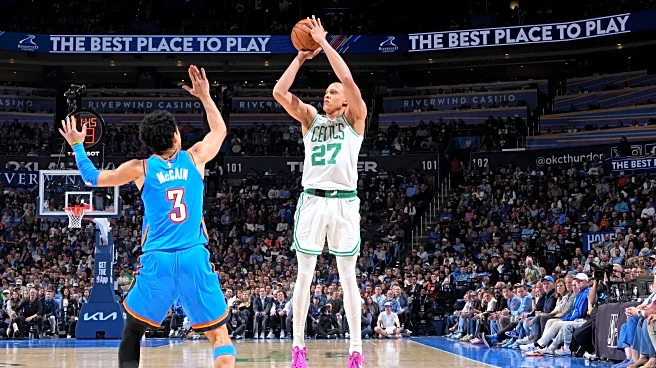
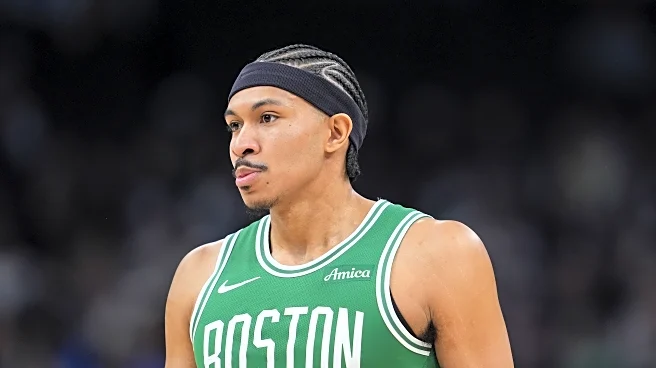
If you thought NBA expansion had become a never-ending rumor cycle, the latest reporting suggests the league may finally be ready to move forward.
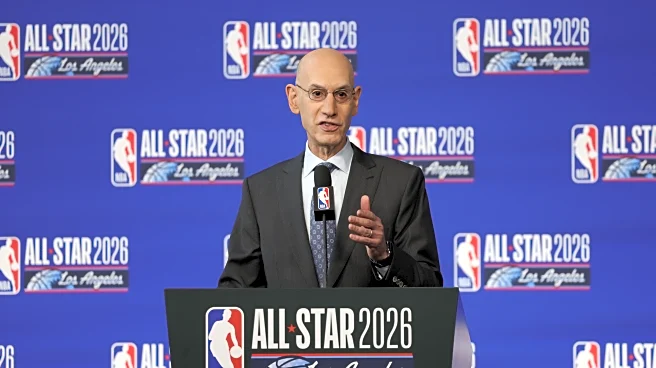
According to ESPN’s Shams Charania, the National Basketball Association Board of Governors will vote later this month to begin exploring expansion to Seattle and Las Vegas, with the league targeting the 2028–29 season for two new franchises.
The price tag alone almost feels like satire. Industry projections place potential expansion bids somewhere in the $7 to $10 billion range per team. The owners may be thrilled about that windfall, but it also means the ripple effects for teams across the league will be very real once the league reaches 32 teams.
For the Celtics, the challenge will be making sure those ripples don’t rock the roster too hard.
Expansion drafts force teams to expose players they would rather keep, and Boston happens to be built around the exact type of depth that expansion drafts tend to punish. To follow up on my piece earlier this year about who the Celtics might protect, it’s worth revisiting the conversation now that the expansion timeline is finally coming into focus.
The latest expansion update from Shams
The report from Shams adds a few meaningful details about how the expansion process would unfold.
First, the upcoming vote would allow the league to begin exploring purchase processes for teams in Seattle and Las Vegas. If those processes produce bids that reach the league’s desired valuation range, a final vote later in the year could formally approve expansion to 32 teams. Both votes require approval from 23 of the league’s 30 governors.
Second, the timeline attached to the report also clarifies when the league expects these franchises to begin play. The 2028–29 season currently sits as the target.
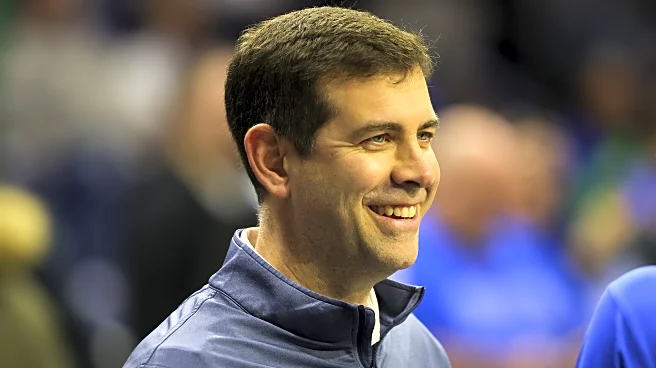
That places the expansion draft in the summer of 2027, likely between the NBA Finals and the NBA Draft. In league terms, that is not far off at all. Front offices around the NBA plan several years ahead when structuring contracts and building rosters. Brad Stevens likely plans decades ahead, but not everyone can be Brad Stevens.
If this holds, there would be just one NBA Draft between now and the expansion draft, which means the Celtics’ protection list will largely revolve around the roster they already have, plus whoever Brad Stevens selects in the 2026 draft.
All that’s to say, the Celtics will have more than eight players they would prefer not to leave out in the open. That is the squeeze expansion creates for good teams: not “who do we keep?” but “who are we okay losing?”
What the Celtics’ expansion decisions could look like
The rules for the expansion draft are simple enough. Each team gets to protect eight players. Everyone else becomes eligible for selection by the expansion team (or teams in this case). Seattle and Las Vegas can take one player from each franchise, but once someone is taken from a franchise, that team is off the board and can’t be taken from again.
Sounds manageable, right?
But a quick scan of Celtics fan guesses already shows the tension. If you want to understand why expansion could get uncomfortable for Boston, look at where the production has come from over the last ten games and then try talking yourself into protecting only eight players.
Brad Stevens has quietly built a roster where the eighth-best player might still be someone another team would gladly take a chance on. Which means the hard part isn’t naming the protected eight, but deciding which good player Boston has to expose.
The locks
For the Celtics, the no-brainers to protect are:
- Jayson Tatum
- Jaylen Brown
- Derrick White
- Payton Pritchard
Tatum and Brown define the franchise timeline. White is still one of the most valuable connectors in the league, the kind of player every serious team needs and almost no team wants to give away. Pritchard belongs here too, both because of his production and because smaller contracts attached to real rotation players become even more valuable in roster-building situations like this. Boston is not exposing him if he is still part of the picture when expansion arrives.

Barring unexpected developments (and those happen a lot in the NBA), those four players will get protection spots. That means Boston will be more than halfway through its protected list before the difficult decisions even begin.
The real debate
Sam Hauser is where the conversation starts to become a conversation.
If I had to choose today, I’d lean toward protecting him. Shooting this clean, at his size, in a role he already knows how to play next to stars, is useful on any contender. But I also understand the other side of that coin. By the time an expansion draft arrives, Hauser will be older, more expensive, and closer to a finished product than some of Boston’s younger options. That does not make him expendable, it just means the argument is no longer automatic.
Then there is Neemias Queta. Functional center depth cannot be underestimated in the modern NBA, and teams do not casually throw away size if they believe it can hold up in real minutes. If Boston still views Queta as a reliable rotation big in 2027 (like they do in 2026), he has a legitimate case for one of the final protection spots.
And then you get to the trio that makes this whole exercise interesting and a little nauseating: Hugo Gonzalez, Baylor Scheierman, and Jordan Walsh. If the six above are in, you can only protect two from this group.
These three are exactly the kinds of players expansion teams tend to talk themselves into. Young. Relatively cheap. Not fully formed yet. Easy to imagine in a bigger role.
Scheierman may be the easiest of the three to picture helping another team quickly because he already looks like an actual NBA player. Gonzalez brings the kind of physical upside teams chase, while Walsh is the classic “if the shot comes around, there’s something here” bet. You can make a case for any of them, and you can also make the case that Boston would hate to spend years developing one of those players only to lose him right before the payoff.
That is why the eighth spot matters so much more than the first four. The Celtics are deciding which developmental bet they trust the most.
The leftovers
Veteran back-end pieces such as Nikola Vučević are not likely to be at the heart of the expansion dilemma.
The rest of the roster mostly falls into the category of players who would need to force their way into the long-term picture before expansion becomes a real concern. Big men like Luka Garza and Amari Williams still have development ahead of them. Wings such as Ron Harper Jr. and rookie guard John Tonje would need to carve out consistent roles to enter the protection conversation.
Newer additions like recently converted Max Shulga and depth options such as Charles Bassey fall into a similar category. If any of them make a leap over the next two seasons, the math gets harder. But if they remain deep bench pieces or early-stage projects, they likely sit outside the protected eight.
Expansion will test what Boston has built
Expansion will be good for the league. And honestly, it will be fun to watch a real piece of NBA history take shape in real time (and hopefully goes better than welcoming the Charlotte Bobcats to the league).
For now, Celtics fans can keep the conversation light. What will the Las Vegas team name be? Do the SuperSonics get to claim Kevin Durant as part of their history? Which Western Conference team gets shoved East and immediately starts annoying everyone?
Boston’s harder questions can wait a little longer.
But if expansion is going to punish teams for being too deep, too well run, and too full of interesting young players, I’d rather be the Celtics than anyone else.