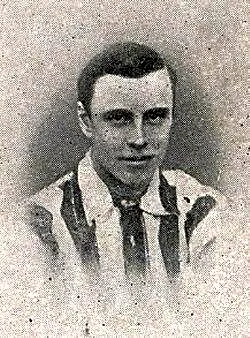




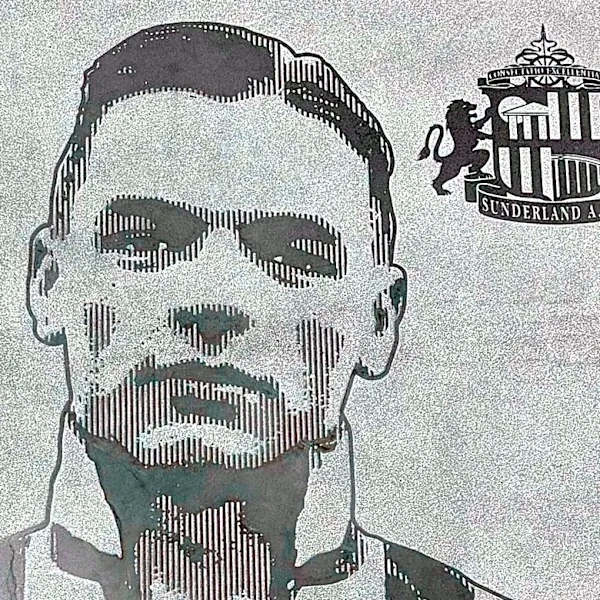



James Gillespie passed away in Bearsden, near Clydebank, in 1932 at the relatively young age of 64. Apart from a six-year period, he spent his life living in his home city. Those six years away from Glasgow were spent playing football in Sunderland, most of them as a key member of what became known as “The Team of All Talents”.
His family had moved to the Gorbals from Beith, and he was born in 1868, one of seven siblings. He started work as a message boy and was playing for junior side Glasgow Green
Star, who reached the final of the prestigious Glasgow Junior Cup in 1888. His performances for Green Star, and in that final, led to him being signed by Clyde.
Whilst still not a league team, the “Bully Wee” were a force in Scottish football and could often match and beat bigger league teams, which is where their nickname came from. League football would come, but by the time it did James “Jimmy” Gillespie had decided to try his luck down south and joined a veritable exodus of Scottish players over the border.
The game in Scotland had developed and grown in popularity amongst working-class people. The football played had also evolved differently to the game in England during these early years. The Scottish game placed far more emphasis on passing, formations and ball work, producing skilful, sharp and clever exponents of “the beautiful game”.
The powers driving the game in England recognised this, and so the raiding parties over the border began again. Instead of sheep and cattle, it was footballers who became the bounty.
It is a fact that Sunderland’s legendary manager, Tom Watson, was a great admirer of Scottish players and undertook a number of highly successful scouting missions north of the border to recruit the very best.
Jimmy had probably already played the best part of three seasons for Clyde when he made the decision to join the exodus of Scottish talent. It was not to Tom Watson’s Sunderland that Gillespie first moved, but rather their recently formed rivals, Sunderland Albion, whom he joined in March 1891.
Sunderland Albion had been formed in 1888 by Sunderland’s original founder, James Allan. Unhappy with how his brainchild was being run, and reportedly frustrated by the influx of players from outside the region, Allan resigned as treasurer to form a new club playing at Sunderland’s original ground, Blue House Field at Hendon.
Allan took a number of players, along with former Sunderland president Alderman Potts, with him, further straining relations between the two clubs. John Rae, Jimmy Hannah and long-time goalkeeper William Kirtley were just some of the Sunderland players to join Albion.
Intriguingly, another player to make the move from Sunderland to Sunderland Albion was John Scott Gillespie. Signed from Greenock Morton in April 1890, he is often confused with Jimmy Gillespie. Although their Sunderland careers were chalk and cheese, it is worth remembering that the Gillespie who scored a hat-trick against Aston Villa on 5 May 1890 – the match that gave rise to the nickname “The Team of All Talents” – was John Scott Gillespie, not Jimmy.
With the promise of work, a trade and probably accommodation, Jimmy joined Sunderland Albion, who were playing in the newly formed Football Alliance. James Allan’s neighbour, the successful businessman James Hartley, whose family ran the Wearside Glass Company, provided the financial backing as the club aimed for Football League status.
Mounting debts and a damaging workers’ strike at the glass company saw the club fold in May 1892. However, Jimmy had made enough of an impression for Tom Watson to sign him for Sunderland, who had just won the Football League title in only their second season in the top flight.
Tom Watson was not content to dwell on that first championship. He was determined to build a team that would deliver both success and entertainment for the Sunderland public.
With Sunderland defending their title in 1892-93, Jimmy was initially selected on the left wing and made his debut in the second game of the season against Notts County, with James “Blood” Hannah preferred on the right.
For the remainder of the season, Jimmy generally played in his preferred position on the right wing.
Throughout his career he showed enough versatility to play on the left, at inside-forward and even at centre-forward when required.
Sunderland retained their title in fine fashion, remaining unbeaten at home while winning nine and drawing two of their 15 away matches. Jimmy played 26 league and cup games, scoring 12 goals.
The following season Sunderland finished runners-up to Aston Villa. Jimmy once again provided assists and scored nine goals in his 27 appearances.
Tom Watson strengthened again during the close season, adding more Scots to his squad. Fellow Clyde players Harry Johnston and Robert McNeill, along with Andrew McCreadie from Rangers, arrived to reinforce an already formidable side for the 1894-95 campaign.
Jimmy enjoyed an outstanding season in a team that was flying. Sunderland reclaimed the title, once again remaining unbeaten at home while winning eight and drawing four of their 15 away matches. Jimmy contributed 14 goals in 29 appearances.
His 30th appearance that season came in the World Championship challenge match against Scottish League champions Hearts at Tynecastle. With both teams fielding a Scot in every position, a thrilling contest unfolded. Hearts recovered from two goals down to lead 3-2 at half-time, but with Jimmy tormenting the opposition down the wing, Sunderland fought back to win 5-3 through goals from the rampant Johnny Campbell and John Harvey.
What a season it was. League champions and now world champions, the legend of the Team of All Talents would forever grace our annals.
Tom Watson’s final season saw Sunderland finish fifth. They remained unbeaten at home once again, but poor away form proved costly. Jimmy continued to contribute with both performances and goals, scoring eight times in 27 matches.
The 1896-97 season would prove to be Jimmy’s last for Sunderland. In 1896 he had returned to Glasgow to marry before bringing his wife to Howard Street in Sunderland, where their first child was born. The Gillespies would soon return to their roots in Glasgow, but not before Jimmy played one final season for the Lads – and, in many respects, it was every bit as important as those that had gone before.
The inevitable break-up of the Team of All Talents had already begun during Tom Watson’s final season, with John Auld and Davey Hannah having played their last games the previous year. McCreadie and Gibson also departed with Watson at the end of the 1895-96 season.
Having spent their first years in the Football League competing for championships, Sunderland suddenly found themselves embroiled in a relegation battle during 1896-97.
The highest they climbed all season was tenth, spending much of the campaign in the bottom three as the goals from legendary striker Johnny Campbell dried up. Jimmy finished as the club’s joint-top scorer with eight goals, crucially netting twice in his final appearance.
With Burnley relegated at the end of the regular season, Sunderland were forced into a series of play-off-style matches against the top two Second Division clubs to determine who would play in the First Division the following season.
In this forerunner to the modern play-offs, Notts County and Newton Heath (later Manchester United) provided the opposition.
Sunderland scored only once in their opening three matches and things looked bleak before defeating Newton Heath at Newcastle Road to preserve their First Division status. Jimmy Gillespie scored both Sunderland goals that day and was carried shoulder-high from the pitch by ecstatic supporters. His goals preserved Sunderland’s place in the top flight for what would become an uninterrupted 60-year stay.
A number of “The Talents” played their final games that day in late April 1897, including Johnny Campbell, Jimmy Hannah, Donald Gow, John Harvey and, of course, James “Jimmy” Gillespie, bringing the golden era of the Team of All Talents to a close.
Jimmy’s Sunderland career yielded 149 appearances and 51 goals. His honours included Football League titles in 1892-93 and 1894-95, the World Championship in 1894-95 and a runners-up medal in 1893-94.
He left Sunderland to join Glasgow side Third Lanark (3rd Lanarkshire Rifle Volunteers), while also establishing an upholstery business in Bearsden. He played sparingly for Third Lanark, making 32 appearances and scoring 10 goals between 1897 and 1902, before spending one final season with Ayr in 1902-03, where he played 17 games and scored seven goals.
In 1898, in his 30th year, Jimmy earned representative honours, first being selected for the Scottish League against the English League before winning his only full Scotland cap against Wales. He scored in the League representative match and then hit a hat-trick against Wales. His exploits earned him the nickname “Taffy” amongst friends and acquaintances.
He retired from football in 1903, focusing on his family and business. He passed away in 1932, not far from where he had been born and where, apart from six memorable years on Wearside, he had spent his entire life.
James “Jimmy” Gillespie was an essential component of Sunderland’s legendary Team of All Talents. He brought pace, power, skill and goals to Wearside in a side filled largely with fellow Scots. He should rightly be remembered with pride as one of “The Talents” during one of the most successful periods in Sunderland’s history.