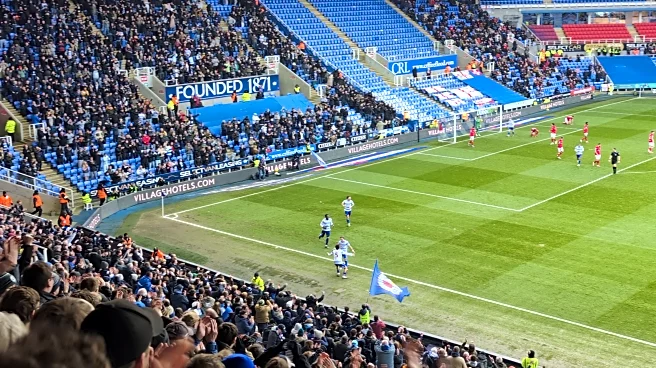




Reading’s 2-2 draw with Barnsley this afternoon wasn’t the completely convincing swing back into winning ways that we’d have hoped for, but ultimately the Royals responded well enough to last weekend’s shocker on the road in East London, came from behind to secure a result late on and wouldn’t have been undeserving of a win if we’d managed it.
There were a number of frustrating elements in a distinctly mixed-bag performance too though (a theme that, aptly, was starkly apparent in the reverse fixture),
so this level isn’t what we should settle for regularly. For now however, it’ll do.
You get good draws and bad draws, and although Reading had been leading in the first half and lost that lead, the fact that we recovered from being 2-1 down by netting a late equaliser puts this game in the former category. Far too often on previous occasions, Reading have sunk so badly when going behind that they’ve not recovered, or the Royals have dragged themselves back to level pegging, only to lose their concentration and concede again.
When Jack Marriott popped up (as he so often does) to make it 2-2, I couldn’t help but worry we were only setting ourselves up for a gutting late defeat. After all, Barnsley came into this match on a strong run of visits to the SCL, having beaten us 3-1 and 4-2 here in recent years, so breaking that habit is another plus point in my book – especially in the context of Leyton Orient extending their own winning record against the Royals last Saturday.
Doing that required spirit, resilience and persistence. That’s a fairly low bar for any side, let alone one with ambitions of reaching the top six, but it’s pleasing nonetheless to see Reading clear it.
Two other plus points: Haydon Roberts and Ryan Nyambe. Reading’s two new full-backs were both involved in goals today (scoring and assisting, respectively) but generally exuded a level of class and authority which this side has been lacking in these positions.
The big question for me coming into this game was how the arrival of Roberts and Nyambe would affect Reading in wide areas tactically. Those players aren’t quite like-for-like replacements for their right-back and left-back competitors respectively, with Nyambe more defensive than Andy Yiadom and Roberts more attacking than Jeriel Dorsett. So how would this affect the team?
Leam Richardson’s answer was to essentially flip his system. Though Reading were again in a 4-2-3-1 on paper, with one full-back pushing high to become a wing-back and the other staying deep to make it a 3-2-4-1, this time the left-back (Roberts, in for Finley Burns) was given the attacking job as Yiadom sat alongside the two centre-backs.
Reading needed a pacy, direct wing-back on Yiadom’s side, so Daniel Kyerewaa swapped from the left flank (as is usual) to the right. Otherwise, Paddy Lane (left wing) replaced Matt Ritchie, while Nyambe and fellow January arrival Will Keane both made the bench.
Reading (4-2-3-1): Pereira; Yiadom, O’Connor, Dorsett, Roberts; Wing, Savage; Kyerewaa, Doyle, Lane; Marriott
Subs: Stevens, Nyambe, Burns, Fraser, Ritchie, Ehibhatiomhan, Keane
George Iredale asked on Twitter if this was the strongest bench we’ve had since relegation to League One. Although there’s some room for improvement (I’d have liked the options of pace and creativity – Randell Williams and Ben Elliott perhaps?), I can’t disagree with the point being made.
There was experience in abundance. The only player in there who fits the ‘young academy graduate’ profile that we’ve so often seen on League One-era Reading benches has, in fact, now played well over 100 times for the club.
First half
The opening half an hour was pretty devoid of incident, leaving me pondering Richardson’s tactical theory rather than anything particularly exciting to react to (though Savage and Kyerewaa had shots from range and Kamari Doyle saw one blocked inside the area).
And on paper, I really liked the balance of this side: Dorsett switching to centre-back, Roberts coming in at left-back, Charlie Savage being in the double pivot and Lane taking a wide role just ahead meant Reading had four left-footers on that flank, which can make the team much more fluent (although it didn’t fully click today).
Yiadom seemed a bit more at home as a defensive full-back rather than an advanced one – which makes sense given his diminishing levels of energy and dynamism. And higher up, having two wing-backs in Kyerewaa and Roberts, who were confident in pushing forwards, fitted the system nicely.
The downside though was that it felt quite a few times today as if Reading were back (at least a bit) to the stage of getting used to each other. Though the Royals have been playing Richardson’s system for a few months now, there were new/newish elements to factor in today – the flipped width I mentioned higher up, Lane coming back into the side and Roberts making his full debut – so perhaps those at least partially explained the clunky nature of the performance.
Reading gradually grew into the game and, just over half an hour in, broke the deadlock.
Lane, popping up on the right for a change, found space in the Barnsley and sent in a low cross, aimed at Jack Marriott. Though the Tykes defender took it away from the Royals’ leading scorer, Roberts was on hand to stick the ball home via a deflection for 1-0. Good attacking wing-backs need to push forward aggressively, and popping up at the back post to finish off chances ticks that box emphatically.
It took Barnsley only six minutes to get back on terms though. Reyes Cleary beat Yiadom and sent in a low cross for David McGoldrick, who had the easiest of tap-ins from point-blank range, unmarked as Paudie O’Connor was seemingly unaware of the danger behind him. 1-1.
Neither team was able to convincingly respond to that goal before the interval, with Reading only mustering two long-range Lane efforts. Though one was well struck, set up by Marriott on the edge of the box, the less said about the other one the better.
Half time: 1-1
A big theme running through Reading’s 2025/26 campaign, especially the Richardson era, has been poor second halves. Today though, the Royals defied that by managing what was (for me at least) their strongest first five minutes after a restart of the season, penning back the visitors convincingly and even hitting the bar with a header from a corner.
Reading couldn’t build on that period though and the opposition grew into the ascendancy (how many times have I said something like that in a match report down the years?). Though Richardson sought to swing the game back in the Royals’ favour by swapping Lane for Kelvin Ehibhatiomhan shortly after the hour mark, Barnsley found the net from range in the 67th minute when an Adam Phillips pop from distance fortuitously deflected off Dorsett and past Joel Pereira at his near post for 1-2.
I’m not entirely blaming the goal on Dorsett as, nine times out of 10, the shot in that instance goes anywhere apart from the back of the net. But I’d still make the point that narrowing his body as he did, rather than getting a more sturdy block on the ball, made an erratic deflection that bit more likely. Am I being too harsh, even with that? Perhaps. Either way, it was one of just two shots on target the visitors managed all afternoon, which makes what was overall a good point that bit more frustrating.
From a Reading point of view, the next stage of the game lacked quality going forwards and atmosphere in the stands. Though it was clear the Royals were trying to get back into the match, building up momentum and upping the ante was a tough ask, and the home crowd accordingly seemed mightily flat.
Richardson turned to his bench once more, in the 79th minute, with a triple change. Ritchie replaced Roberts in the left-back/left-wing-back role, which was sensible both for managing the minutes of someone who’s not played a huge amount of football and for getting a good crosser onto the pitch. Keane came on in the 10 role for Doyle, who’d shown quality, but not enough in the final third. Nyambe also made his debut, at right-back in place of Yiadom, which was a wise idea for shoring things up at the back as the Tykes had shown flashes of being able to grab a third.
Though I’m not convinced about using Keane as a direct replacement for Doyle, he so nearly made it 2-2 soon after his introduction. Fellow substitute Ehibhatiomhan sprayed a pass out wide to Kyerewaa, whose cross perfectly found Keane at point-blank range, but – on the stretch – he couldn’t get his finish on target. Anything less on that shot and the scores would have been level.
Another introduction was crucial in the eventual equaliser though. Nyambe blazed down the right and into the area like a man possessed, played in Marriott, and he made no mistake by guiding the ball into the net off the inside of the far post. 2-2. That was the last major action of the contest.
Full time: 2-2
This isn’t a game that’ll live long in the memory, but it’s an important result nonetheless. Preventing one defeat from becoming the start of a streak of defeats is important, and hopefully gives the Royals a platform to return to winning ways when Exeter City come to town on Tuesday night.