




Profile
Position: Point guard
Height: Six-foot-one
Weight: 180 pounds
Comparisons: Tyus Jones, Marquis Teague, Earl Watson
Raptors Comparisons: Fred VanVleet (not as good defensively), Jose Calderon (smaller and not as good of a passer)
Strengths
Perimeter-shooting
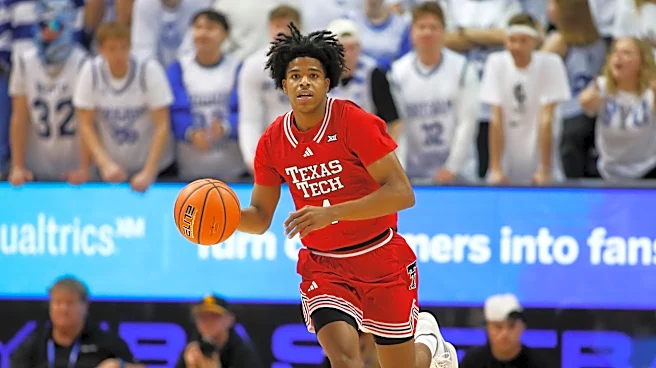
Anderson has a case for being the best shooter in the draft. That lone selling point should be enough for a Toronto Raptors team that finished 21st in three-point percentage (35.3 per cent) and 26th in makes (11.3) to consider Anderson with the 19th pick. Anderson finished his
last season with the Texas Tech Red Raiders shooting 41.5 per cent on 7.9 three-point attempts. Only three players in the nation shot the ball better on more attempts. That includes teammate Donovan Atwell (45.8 per cent), junior Pryce Sandfort of Nebraska (41.6 per cent) and Samford’s Jadin Booth (43.6 per cent). Unlike Anderson, none of Atwell, Sandford or Booth are guaranteed to be selected in the 2026 NBA Draft. Anderson has one of the cleanest-looking jumpers in the NCAA. His range feels unlimited at times. Anderson quickly developed a reputation for showing a willingness to pull the trigger from anywhere.
Pick-and-roll maestro
The 6’2 guard played almost exclusively out of the pick-and-roll (PnR). While Anderson doesn’t possess an elite first-step, he’s already mastered how to change speeds and leverage his positioning to gain advantages with a screen-man. The NBA is a PnR heavy usage type of league, making Anderson an ideal plug-and-play option off the bench for several teams. Anderson also showcased an ability to hit shots off the dribble when defenders go under the screen and consistently traps defenders with a hostage dribble when they go over.
Areas for Improvement
Defence
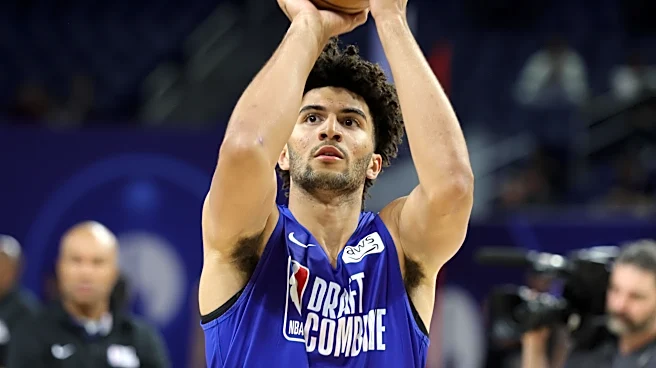
Anderson measures out as one of the smaller players in the draft. He was listed at the NBA Combine as six-foot-one without shoes and 180 pounds. On tape, Anderson’s skinny frame and stature are expected to stand out next to NBA-level physiques. He also ranked in the bottom seventh percentile for hand-width.
For Anderson to carve out a spot in the league, he’ll need to prove that his offence is enough to overcome his potential defensive concerns. Opposing teams will hunt him down, especially in a playoff setting. How Anderson navigates through that will determine how long Raptors Head Coach Darko Rajakovic can keep him on the court.
What Anderson has going for him is that he played an astronomical 38.3 minutes per game (for non-college watchers, games are 40 minutes long) while only averaging 2.0 fouls. It’s even more impressive considering that he plays with an effort-level that pops on screen. Flanked by Scottie Barnes and Collin Murray-Boyles, Toronto might be the perfect fit for Anderson.

Playstyle
While Anderson ranked as an elite rim-finisher (74.2 per cent), he rarely got to the basket. That likely needs to change as defences run him off the three-point line or funnel him into the paint. Anderson understands who he is – someone who thrives on the perimeter – and that also explains his low free-throw attempts.
The pick-and-roll was Anderson’s bread-and-butter, and that makes sense considering how effective he was in that set. However, it also meant Anderson either didn’t get a chance to show off more of his isolation toolkit or that the Texas Tech coaching staff didn’t believe it existed. While the Raptors can’t expect to hit a home-run with the 19th pick, the chances of doing so exponentially increase if Anderson can consistently produce points when the offence is off-schedule.
Anderson was a dominant on-ball type of guard with the Red Raiders. He’ll need to get comfortable being more of an off-ball threat playing next to heavy-usage players like Barnes, Brandon Ingram and RJ Barrett.
Potential fits with Toronto
Obvious shooting upgrade
The Raptors need to surround Barnes with better shooters. Adding one of the prettiest jumpers in the draft helps. Schematically, it just makes sense to select someone like Anderson. There were multiple instances during the playoffs when the Cleveland Cavaliers forced a second or third pass to an open corner shooter (usually Jamal Shead) or a wing-three (often Barrett), and the Raptors failed to make them pay.
Possible Immanuel Quick trade?
Assuming the front-office admired Barrett’s playoff rising performance, the Raptors might consider moving Immanuel Quickley or Brandon Ingram (more the salary than the player) to create some roster construction flexibility.
If it’s the former, that would promote Shead to a starting gig, subsequently opening up a back-up guard spot. Shead overproduced as an emergency starter while pushing the Cavaliers to seven games. Theoretically, he could pass as a serviceable starter across 82 regular-season games.
Adding Anderson to help lead the bench – in tandem with a veteran addition through trade or free agency – would work, especially if it meant the team could upgrade elsewhere.