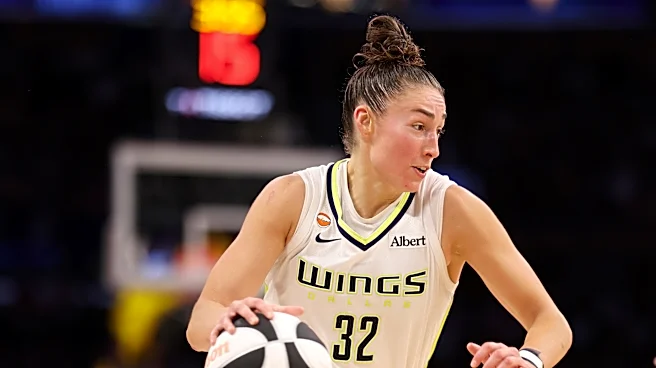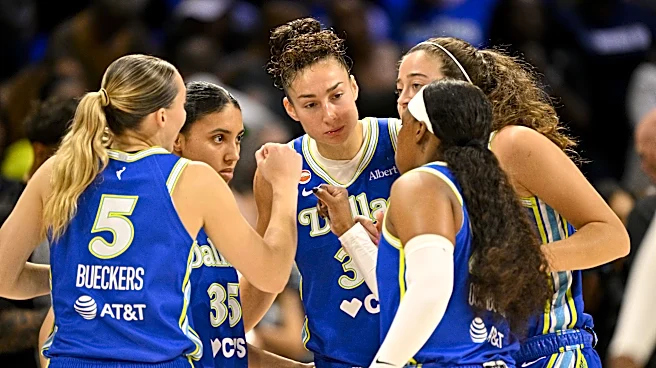







September 11th, 2025. The Dallas Wings hosted the Phoenix Mercury at College Park Center in their season finale. It was another trying year for the Wings, who muddled their way through a 9-34 record heading into their last game. The Mercury had already wrapped up a top-four seed and had nothing to play for. After a competitive first half, Phoenix rested its starters, and the Wings blew them out for a 97-76 victory. It was a rare fun game for the home crowd, a nice way to end a miserable season.
The
Wings faithful, many of whom have seen nothing but failure in the last 10 years, celebrated their team as the game came to a close. And Paige Bueckers, who tied a bow on her historic Rookie of the Year campaign, took the opportunity to address that crowd. Her message was simple, but inspiring: “Stick with us. We’re going to figure it out.”
Fast forward eight months, and the Wings organization decided they were ready to do just that. The front office made bold offseason decisions, spending big in free agency and drafting No.1 overall. Despite winning just 19 combined games over the last two years, the Wings told fans they were ready to take a meaningful step forward in 2026.
These Wings have opened the season 7-3, their best start since moving to Dallas in 2016. They’ve done this while playing the toughest schedule in the WNBA. This team is tied together and focused, and it starts with the coaching staff, led by first-year pro Jose Fernandez. The former University of South Florida skipper has established new standards of accountability, professionalism, and intentionality on the court. He’s created a noticeably different culture around this organization.
The upgrade in the coach’s chair has been huge, but what else is driving the Wings’ success? And is it sustainable? Just how good can this team be right now?
Historic offensive execution
The Wings lead the WNBA in offensive rating with a 112.7 mark (per WNBA dot com), nearly a full two points ahead of No. 2 Minnesota. They are No. 1 in Assist Rate (72%), No. 2 in Turnover Rate (14.8%), and have the best AST/TO ratio through 10 games (2.02) in WNBA history. Despite playing at a slower pace, the Wings lead the league in fast-break points (11.7 per game).
The formula has been simple: take care of the ball, find the open player, take great shots, and run like hell off misses and turnovers. Coach Fernandez’s system has played perfectly to this roster’s strengths, leveraging the excellent off-ball movement and decision-making skills of its guards into a special read-and-react machine. The biggest beneficiary of this system has been forward Jessica Shepard, who is loving life in the Fernandez offense:
Jessica Shepard, PRA machine
Sunday, my colleague Matt Martinez wrote a great feature on Shepard and her unprecedented success in Dallas. Matt really lays out just how effective she’s been and how surprising this production from her is. With underperformance from big free agent addition Alanna Smith (more on this later) and injuries to other frontcourt players, the Wings have leaned on Shepard a ton.

Shepard’s success hasn’t really been the result of her doing anything new. She’s simply doing it a lot more often, in an ecosystem well-suited to her strengths. Shepard acts as an offensive hub, constantly creating out of handoffs, ball screens, and post-ups. Paige Bueckers and Azzi Fudd are two of the best off-ball movers in the league, and Shepard is feasting by finding them on cuts and off-ball screening. When she has a mismatch, she can use her strength and size to back defenders down and score. Her ball handling is a legitimate plus for a big, and that really shows up in transition, where she’s been an absolute delight sprinting down the floor and leading the break off defensive boards. It helps that Shepard is an incredible rebounder who is almost single-handedly cleaning the glass for Dallas right now.
Defensively, Shepard leaves a lot to be desired. You’d love to play her full-time at the five, but she cannot protect the rim. She infamously has zero blocks this year and just six total in her last three WNBA seasons. Her archetype (non-shooting bigs who can’t guard) is a tough one to build around, but for now, she’s driving historic offensive success. And it’s really fun!
Azzi Fudd, impact icon
If you’ve read my work or followed me on social media, you know that Fudd was not my preferred choice at No.1 in this year’s draft. As I have laid out many times, that had nothing to do with Fudd’s talent and obvious ability to help the Wings and everything to do with how I regarded the three other prospects I ranked ahead of her.
And while I stand by everything I’ve written and posted about that, Fudd’s impact on the Wings has been seismic thus far. Coach Fernandez opted to play it slow with Fudd early in the season, easing her in with a bench role. This decision was controversial (understandably so), but I think it’s proven to be the right one. Since she joined the starters, Dallas has been rolling.

The Wings have a +17.6 net rating with Fudd on the floor and a -6.1 rating when she sits. Her mere presence on the court opens up so much for everyone else. Fudd’s gravity as a shooter and historically quick release terrify defenders, and they are consistently reluctant to leave her in help. She is constantly moving, cutting, and screening. Teams have stuck to her like glue at the three-point line (apart from the Liberty in her 26-point, six 3-pointer breakout game), and she needs to force the issue there more. She turns down too many semi-contested looks in favor of a pull-up middy (which has been great). If she starts doing that, look out.
Defensively, Fudd has held up decently well, especially off-ball. She’s struggled on ball screens, where she often gets flattened and taken out of plays. But her size, strength, frame, and excellent hands have allowed her to hold up in one-on-one situations. This is undoubtedly a two-way player, even if Fudd is never a great point-of-attack defender.
It’s hard to find much fault with what Fudd has done so far. She has been so, so impactful for this team, and watching her and Bueckers run around the floor is thrilling. Speaking of Bueckers:
Paige Bueckers, scratching the surface
Bueckers has played wonderful, efficient basketball so far in 2026. Fernandez has struck a harmonious balance between playing her on and off ball, leveraging both her scoring and playmaking abilities. Bueckers is racking up the assists while picking her spots to hunt shots (though she needs to take more). She’s displayed excellent synergy with Shepard— that duo has assisted each other 16 times apiece already.
Coming into this season, Bueckers listed three offensive goals: take and make more threes, get to the rim, and attempt more free throws. Thus far, she’s nailed the first one— Bueckers has upped her 3PAr from .217 in 2025 to .324. Even better, she’s hitting those threes at a sparkling 41% clip.

The other two goals haven’t materialized at all. Bueckers’ free-throw rate is virtually identical to 2025, and that’s despite the new whistle driving comically high year-over-year increases for most WNBA players. Her rim rate is actually down from 2025. Bueckers isn’t driving, she isn’t getting fouled, and she isn’t putting pressure on the rim. At this point, it’s fair to wonder if it’s actually something she can do. If she can’t, she’s still an all-world player. If she wants to be the best in the world, the aggressiveness getting downhill and drawing fouls has to come. And while Bueckers is thriving in Ferndandez’s system, she’s still turning down opportunities to bend the defense in favor of moving the ball. Most of the time, it works. But true tier-one superstars take it upon themselves to take over games when the team needs it. I believe Bueckers will get there, maybe even as soon as this season.
Awak Kuier, one-woman defense
It’s a real shame that Kuier sustained a wrist injury that will rule her out of a third straight game, because she was in the midst of a special start to the season. After playing sporadic minutes early on, Kuier broke out over her last three games, earning a consistent role with massive impact:
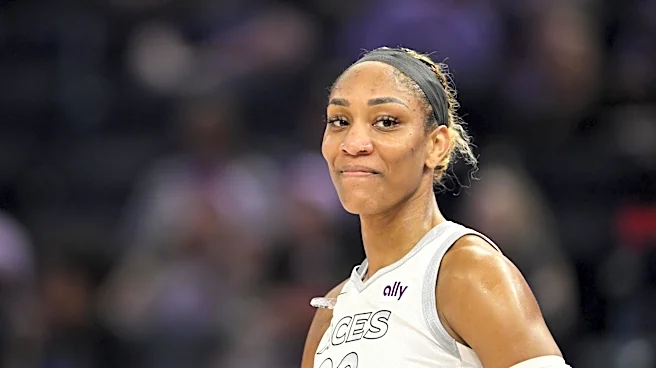
Kuier, who’s been great on both ends, is carrying the defense on her back. In her 111 minutes on the floor, Dallas has a 95.4 defensive rating, an elite mark. In 289 minutes with Kuier off, the Wings are at 106.5. Kuier is the best defender on this roster by a mile. Her unreal length, quickness, and athleticism have popped off the screen. She’s shut off the rim against both New York and Las Vegas, making superstars like Breanna Stewart and A’ja Wilson appear mortal.
Can Kuier sustain this level of impact with increased minutes? Is the offense going to be tenable enough to play her like a starter? She’s shooting a wildly magnet-ish 7-13 from three this year, but I’m encouraged by how she’s looked as a screen-and-roller. If she can do that and hit threes at a respectable clip, this is a real-deal player. The only thing she lacks is defensive rebounding, which will always be an issue with her slight frame.
How good is this team?
As fantastic as this start has been, there are still some red flags with this group. For starters, Alanna Smith, recipient of a 3-year, $3 milliom max contract, has been virtually unplayable. The reigning Co-Defensive Player of the Year has looked awful on both ends, and she’s seen her role greatly diminished. Part of this could be due to a facial injury sustained in preseason that has Smith wearing a mask she’s experiencing obvious discomfort with. But I don’t think we can hand-wave her struggles away with this.

I believe Smith is putting too much pressure on herself to succeed on a new team to justify her contract. That’s leading to bad decision-making, rushed shots, turnovers, and fouls. At the same time, she’s struggling with the mask and the new whistle, limiting her ability to play physical defense. All these factors have her unsure of what she can do to help the team. She needs to focus on getting back to basics: moving the ball, taking open shots, setting good screens, and being in the right spots on defense. This Wings team needs her if they want to make an actual run, and they’re stuck with that contract, too. I hope she can get right soon; this team is not good enough on defense without the best version of her.
Aside from Smith, Arike Ogunbowale has had a typical up-and-down start to the season. She’s helped win Dallas some games (at Indiana, Chicago, and Los Angeles) with hot shooting, while putting up ghastly lines the rest of the time. She’s shooting 33.8% from the field overall, which includes 33% from two-point range. When she’s not shooting well, she isn’t making up for it with impact on either end. The fit with her, Bueckers, and Fudd is clumsy, especially on defense. Her presence with this group highlights the glaring lack of a true wing on the roster. It forces everyone slightly out of position and makes Bueckers and Fudd have to defend players they shouldn’t be guarding full-time. Those three are working together right now, but I don’t believe in it long-term.
If the Wings want to take the next step, I believe (as I long have) that they need to move on from Ogunbowale and find a legitimate two-way wing to pair with Bueckers and Fudd. That’s easier said than done, as those are arguably the hardest players to acquire in this league. But the more that the franchise tries to cling to Ogunbowale as the franchise legend she is, the harder it will be to strike when the opportunity arises.

The rest of 2026 should be about making a playoff push while simultaneously evaluating who is a long-term piece. That includes Ogunbowale, Maddy Siegrist, Aziaha James, and Kuier. Shepard and Smith are hired guns, and though Dallas needs them to succeed right now, the future core still has spots up for grabs. The Wings might win a playoff series in 2026, but the best is yet to come. For now, I’m enjoying meaningful, high-level basketball.