
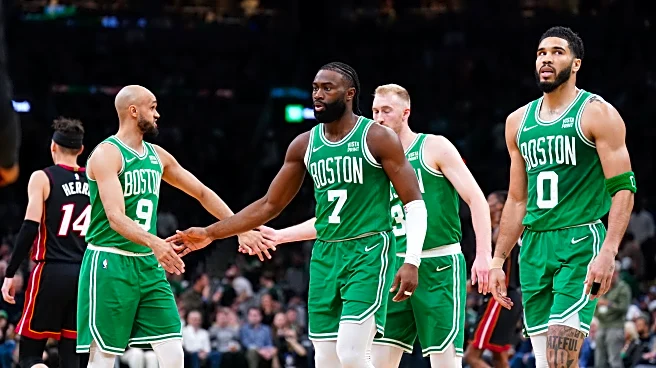
After an eventful summer, the Celtics’ offensive identity has shifted in subtle but meaningful ways this season.
As we are getting closer to Christmas, we can start using statistics with the confidence that they reflect reality. For example, the playtype data. These metrics from NBA.com give insights to better understand a team’s offensive approach.
Therefore, to understand the difference between last season’s “stacked Celtics” and this season’s “underdog Celtics,” let’s dig into the numbers.

Spot-up and isolation are still the way to go
Despite
playing without Jayson Tatum, the Celtics still rely heavily on isolation scoring. They were third in isolation frequency last season, and they remain fifth this year. Tatum’s ISOs were redistributed to Jaylen Brown (+1.6 per game), Payton Pritchard (+1 per game), and Anfernee Simons (2.4 isolations per game).
What is most impressive is that they were able to keep the same efficiency, even without JT. How? Well, as always, by hunting mismatches.
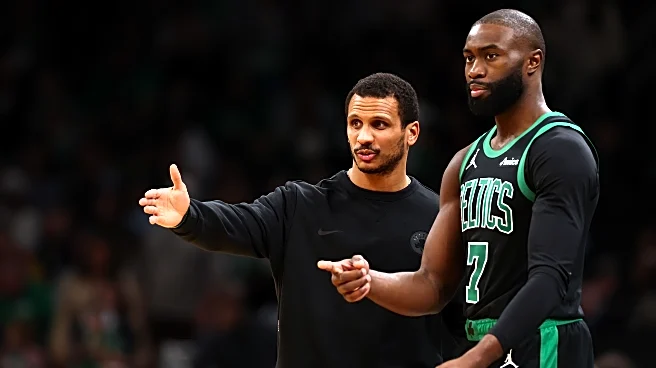
Among JB’s matchups against whom he scored the most this season, you find a lot of mismatches like Jalen Brunson, Duncan Robinson, Goga Bitadze or VJ Edgecombe. Joe Mazzulla will keep spamming isolations in 2025/26 because there are still seals to hunt. Plus, this contributes a lot to the Celtics’ low turnover percentage. You can’t lose the ball if you don’t pass it.
Among the Celtics, Pritchard is the most efficient player in isolation with 1.12 points per possession. Like JB, the coaching staff tries to give him the best isolation situations possible with mismatches.
From these mismatches, the Celtics are also able to generate gravity on the ball, giving room to spot-up shooters like Sam Hauser, Pritchard or White. The Celtics’ shooters are still often placed one pass away from the ball to beat the defense’s front line.
Because the Celtics keep the same approach with isolations and keep their elite shooters close to the ball-handler, it makes sense that the offensive structure remains very similar. Yet, they also made a noticeable switch: going away from the post-up to the handoff.
Queta’s influence on the team offense
Without Kristaps Porzingis’ size and touch to spam the post-up and with JT on the sideline, the Celtics lost most of their weapons from the post-up. This might also have to do with spacing — with less space in the paint, the post-up situations become harder to read, and that could be why even Jaylen’s post-up numbers went down from last season. Without the post-up threat, it has been replaced with Neemias Queta’s handoff game. This season, D-White and PP doubled their shot volume from handoff situations, and we can see a similar trend for JB.
The connection between Queta and White on these handoff possessions has been a joy to watch. As Queta can move around, set great screens and pass the ball pretty well for his size, White can benefit from the handoff. When the guard catches the ball from the hand of the Portuguese center, he has space to operate and can use his speed and shooting touch to punish the defensive coverage.
Queta’s screening ability also has a strong influence on the rise in pick-and-roll volume this season. JB went from 3.9 shot attempts on pick-and-roll per game to 6, White from 3.5 to 5.8 and Pritchard from 2.1 to 3.7. Most of the time, the screener is Queta. His speed, verticality and willingness to use his frame to create space for his teammates have been key to opening the floor for the Celtics.
Alongside Queta’s screening ability, the improvement from JB, White and PP as pick-and-roll ball-handlers has been noticeable too. Last year, the pick-and-roll reps were mainly dedicated to JT, but this year, the burden has been allocated to the three best ball-handlers — and they delivered.
Nonetheless, the biggest offensive change for the Celtics might be coming from what happens after missed shots.
Putbacks machine
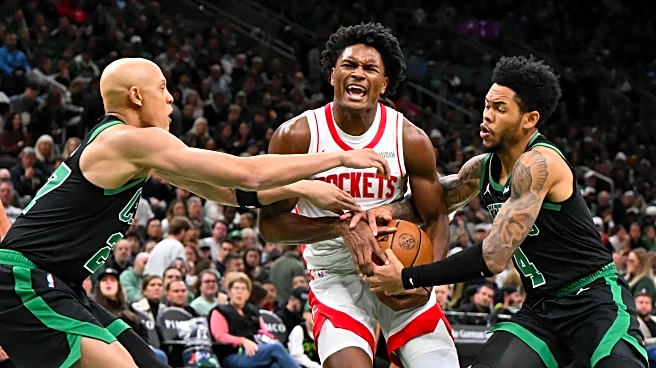
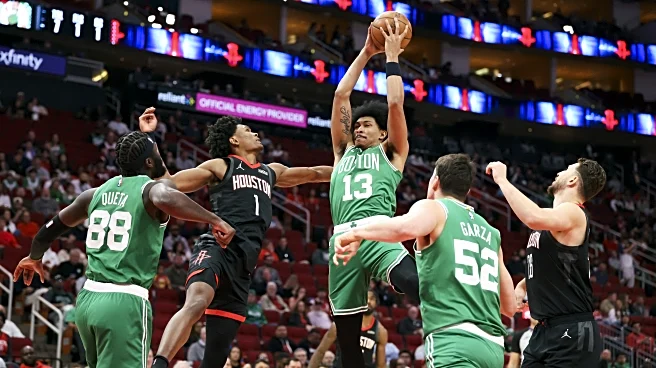
Not only did the Celtics go from 18th to 7th in offensive rebound volume, they also increased their putback efficiency — by a lot. Last season, the Celtics scored only 1.01 points per possession on putbacks (27th in the NBA), leaving a lot of missed second opportunities behind. But this season, not only did they step up in putback volume, they became one of the most deadly teams from this position with 1.28 points per possession (3rd in the NBA).
With Queta, but also Josh Minott, Jordan Walsh and Luka Garza, they made sure to improve their efficiency on second-chance opportunities to compensate for the loss of offensive talent after a turbulent summer.
If the Celtics keep blending isolation, handoff creation and elite putback efficiency, this “underdog” version might end up just as dangerous as last year’s contender.