
The San Francisco 49ers have already upgraded their wide receiver room this offseason, and done so dramatically. Mike Evans gives the 49ers a red zone threat they’ve never had at the position under Kyle Shanahan.
And despite any conflicting opinions on Evans, 19 miles per hour would have been a team-high at wide receiver last season for the Niners. Evans and Christian Kirk make the 49ers a better offense. Ricky Pearsall won’t have to be the No. 1 option, which will make him a better player.
With that
said, each of the three players above comes with an injury history or questions surrounding them. Additionally, Evans and Kirk may not be around in 2027. That means we could be in the same situation this time next year when discussing the 49ers’ wideouts.
Today, we’ll go over two options at wide receiver at each pick. So No. 27, No. 58, and the fourth-rounders. Let’s start with the first round, where Kyle Shanahan is looking for a “man” at the position.
2 options in the 1st round at wide receiver for the 49ers
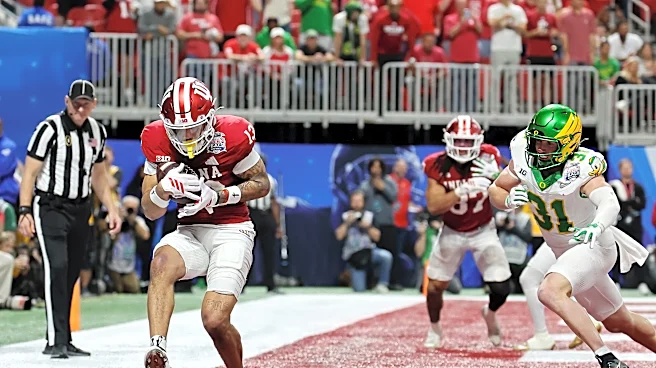
I do not consider Omar Cooper Jr. from Indiana a first-round prospect, so you will not see him here. He’s 15 pounds lighter than Deebo Samuel, and their playing styles aren’t similar. It’s a lazy comp. Cooper Jr.’s arm length is in the 11th percentile. Brandon Aiyuk was in the 90th percentile. These measurables matter when you’re projecting because contested situations allowed Aiyuk to protect the ball without letting it get into his body. Aiyuk’s jumps were also superior to Cooper’s. I don’t think he is in the same class as a true Day 1 wideout.
Denzel Boston does not have those same size issues. He’s not going to “wow” you athletically, but neither did Tet McMillan last season, and we saw how effective he was as a rookie. Boston’s 76th percentile 3-cone stands out when it’s time to create late separation in his routes.
He’s a hair below 6’4″, and at 212 pounds, there will be no issues using Boston in a condensed split to block. Shanahan pointed out that the blocking at wide receiver took a step back last season, which was part of the reason the run game suffered. Boston helps you there and in the red zone. Plus, on isolated routes outside of the numbers for “easy access” throws we saw early in the season to Pearsall.
KC Concepcion should be a better pro on the strength of upgrading at quarterback and being used more as a receiver. But if I argued against Cooper’s size, I can’t make an exception for Concepcion.
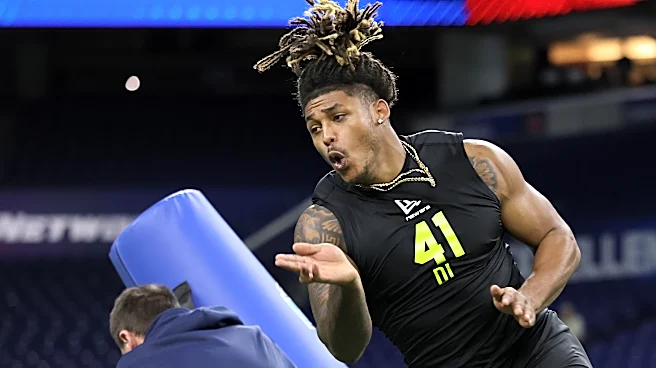
Instead, I’ll stay true to my draft board that has four wide receivers with first-round grades. Because I think one will fall due to an injury, the other will be a trade-up scenario. Let’s say, hypothetically, Jordyn Tyson out of Arizona State falls to the 20s. The 49ers could use a pair of their Day 3 picks to move up and snag Tyson, who could play any position in the 49ers’ offense.
Tyson comes with an injury risk, just like the other three receivers the 49ers are expecting to contribute this season. He’s viewed as a player who isn’t great after the catch, despite averaging 4.3 yards after the catch per reception this past season. It’s a number that is more reliant on usage. Plus, we’re talking about a wide receiver who had the highest target share in this class.
To me, you can see the route savviness, body control, movement skills, and ability to come through with a big play when his offense needs it when watching Tyson. Despite a sky-high target share, Tyson only had one drop this past season.
He could be the power slot that Jauan Jennings was, and a mismatch against the opposition’s slot corner. There are enough ways that Tyson won in college that would lead you to believe he can be a WR1 in the NFL, with the caveat that he stays healthy.
2 options for the 49ers at wide receiver in the 2nd round
This is where the fun begins. Let’s say the 49ers go a different direction. The wide receivers in the second round are just as, if not more, intriguing than the ones being mocked to go in the first round.
Using different simulators, names like Germie Bernard, Chris Brazzell, and Skyler Bell are all being selected in the 50s. Concepcion and Chris Bell are off the board in the 49ers. Bryce Lance, Antonio Williams, Elijah Sarratt, Zachariah Branch, and Deion Burks are in the 70s, but the 49ers don’t have a third-round pick.
I’m going with Bernard, who might be the most Shanahan-esque receiver listed. He’s over 6’1″ and weighs 206 pounds. The arm length isn’t great (13th percentile), but it’s offset by having 82nd percentile hands. Those hands are reliable, as evidenced by only four drops across 241 targets during his career.
Not only is Bernard comfortable catching the ball away from his body, but he also understands how to change tempos to get open. That, and not going down after first contact, makes me think Bernard can be a solid WR2-3 in the NFL. Plus, Alabama went out of its way to try to get the ball in Bernard’s hands, which is always a positive sign.
Skyler Bell is another strong option on Day 2. He’s in the 28th percentile for height and weight; however, his other testing numbers were impressive. Bell had 87th percentile hands. Big hands for a wide receiver cannot be ignored. Bell also ran a 4.4 flat in the 40-yard dash, and both of his jumps were 95th percentile. Hello.
Bell is a fifth-year senior who transferred from Wisconsin. He’s played a lot of football, so there is no second-guessing about what this player can become. He had a drop issue in 2024, but caught 93 percent of his on-target throws this past season. It’s easier to forgive drops when there are other redeeming qualities. In Bell’s case, you can see the play speed when he’s coming out of his routes or once the ball is in his hands.
If he breaks a tackle, Bell is a threat to take it to the house. His speed is real, and he’s comfortable enough working over the middle where you’d feel good about playing Bell as a rookie.
2 options for the 49ers at wide receiver in the 4th round
Let’s say the draft doesn’t fall the 49ers’ way, and they don’t force a wide receiver on the first two days of the draft. Maybe a safety, a pass rusher, or a left guard is too good to pass up. For example, in one simulation, Caleb Lomu fell to No. 58. Ridiculous? Of course. Impossible? Never say never.
Wide receivers going in the fourth round include CJ Daniels, Brenen Thompson, De’Zhaun Stribling, Ja’Kobi Lane, Reggie Virgil, and Eric McAlister. Of that group, we’ll roll with Stribling and McAlister—although my hot take would be Lane ends up being the best USC wide receiver in this class.
Stribling is my favorite receiver in this class. He’s over 6’2″ and weighs 207 pounds. Stribling has 87th percentile hands, ran a 4.36 40, and had a broad jump in the 82nd percentile. One of his athletic comps is Romeo Doubs, who was linked to the 49ers during free agency. Stribling can win in similar ways on slants, curls, and vertical routes. The fourth round is, in my opinion, too late for Stribling. He’s a player who should be selected closer to No. 58 than No. 128.
McAlister would be the 49ers trying to find a Mike Evans clone. He’s 6’4″, but only 194 pounds. For a player his size, McCalister was surprisingly sharp after the catch, forcing missed tackles. In fact, no player in this class forced more missed tackles per reception than McAlister. It’s not often that a 6’4″ receiver has more yards after the catch (609) than air yards (592). McCalister also had 10 touchdowns and nearly 1,200 receiving yards this past season. He’s no slouch.
Think about why these giant wideouts struggle at the next level, and you’ll see why McAlister will fall to Day 3. Struggling to stop and start means you can only run specific routes. Think Pat Bryant, a rookie last season for the Broncos. That’s a player you can find a role for. I’m sure Shanahan could in his offense.