


The Daily Slop
Editor’s note: Each day, Hogs Haven compiles a collection of articles, podcasts & tweets from around the web to keep you in touch with the Commanders, the NFC East, the NFL and sports in general, with a sprinkling of other stuff. Enjoy!
Commanders links
Articles
5 Commanders curveballs that could put the NFL on notice in 2026
Some surprises could be on the way
Commanders running back committee
The Commanders have an intriguing battle brewing in the running back room. Dan Quinn wasn’t sure how the dynamic would shake out, but he did hint at a committee approach. That is the best way to keep
everyone fresh and firing on all cylinders, and Washington now has the options available to deploy this approach.
Croskey-Merritt will play a role. Free-agent signing Rachaad White looks like a potential focal point. Sixth-round rookie Kaytron Allen brings a physical presence. Jerome Ford, Jeremy McNichols, and undrafted free-agent Robert Henry Jr. have also caught the eye over offseason workouts.
Not everyone will make the team, but there is genuine strength in depth that Blough can put to extremely good use when the regular season begins.
Last Man Standig
Mailbag: What are Kaytron Allen’s chances of making the 53-man roster?
Washington has selected 20 players over three NFL Drafts under General Manager Adam Peters and head coach Quinn. All 20 made the initial 53-player roster during their respective rookie seasons, and only one (Dominque Hampton) is no longer with the team. That’s some good history for the six players that comprise the Commanders’ 2026 class.
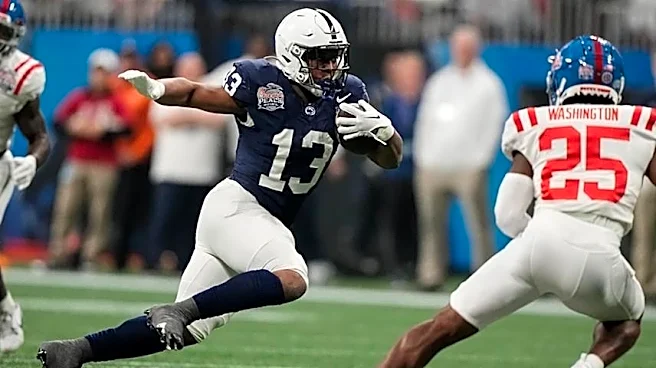
Allen, Penn State’s all-time leading rusher, fits perfectly into a potential three-back committee with Jacory Croskey-Merritt and Rachaad White. Even if Allen lags behind others in touches, his power style gives him a chance to carve out a meaningful role.
Though likely on the short end of the workload, Allen’s power style puts him in position for short yardage and interior runs.
If forced to include a caveat, Washington may only have room for three running backs based on projected depth and roster battles at other spots. Jeremy McNichols survived final cuts in each of the previous two seasons due to his versatility and reliability as a runner, receiver and pass protector. The resolution more likely lands on the Commanders keeping four backs rather than releasing the rookie to make room for the veteran.
For more from Ben Standig, click here
Pro Football Focus
PFF Quarterback Rankings: All 32 starters ahead of the 2026 NFL season
Rank 12—Jayden DanielsWashington Commanders · QB
Injuries marred Daniels’ sophomore NFL season, as he couldn’t quite recapture the form that earned Offensive Rookie of the Year honors in 2024. Playing in just seven games, Daniels earned a 74.9 PFF passing grade, ranking 18th among qualifying quarterbacks, while his 6.7 yards per pass attempt ranked 27th.
One of the biggest reasons for Daniels’ struggles in 2025 was his difficulty handling pressure. Opposing defenses blitzed him at a similar rate as they did in 2024, but Daniels’ PFF passing grade against the blitz dropped by more than 30 points. Opponents seemed content to force Daniels to beat them with his arm, especially given Washington’s lack of pass-catching depth. A healthy Daniels still gives the Commanders a great chance to win every week, but he needs to be available for all 17 games.
Commanders Wire
Warren Sharp disregards Jayden Daniels’ 2025 season due to circumstances
Warren Sharp, NFL Analyst and trailblazer in NFL analytics, appeared on “The Al Galdi Podcast” on Thursday. It was his fourth consecutive offseason appearing on Galdi’s podcast to preview the upcoming Washington season.
2024 was a rookie season for the ages by Jayden Daniels, perhaps the best season ever for a rookie quarterback. But in 2025 the Commanders fell from 12-5 to 5-12, and with a -95 point differential, meaning they were blown out several times.
“Last season, I am not even factoring it into my analysis of Jayden Daniels,” said Sharp. “His EPA drops massively, his yards per attempt goes from 7.4 to 6.7. His completion percentage drops from 69 percent to 61 percent. I don’t care about any of those statistics.”
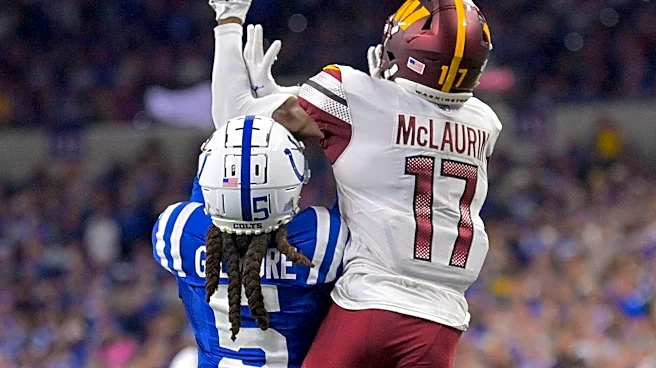
“Ironically enough, Daniels played with receiver Terry McLaurin just [3 times] during the 2025 regular season. They played the first game and then a Thursday night game against the Packers. They never played another snap together [except for the Week 14 shutout on the road vs the Vikings].”
That isn’t a simple statistic. That is a huge statistic that can’t be ignored [but] we had all season to talk about the bad injuries during the 2025 season.
Now, it is time to move on to the 2026 season.
Riggo’s Rag
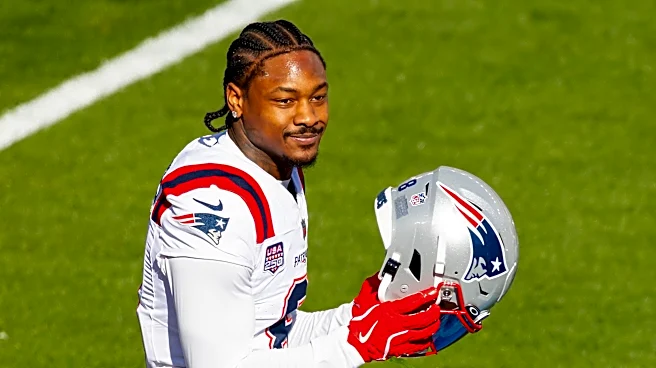
Stefon Diggs is winning the public argument Commanders won’t touch yet
Moe Moton of The Bleacher Report added his name to the growing list of those who believe Diggs would be a better option right now.
“Washington should look elsewhere for receiver help—someone who’s a free agent and has been on the field over the last year. (Stefon) Diggs could sign a homecoming contract with the Commanders in the coming weeks.”
Reports earlier in the offseason suggested Washington was in the market for another dependable veteran. Not moving on anyone and their supposed interest in Aiyuk led most to draw their own conclusions, but it’s been nothing but radio silence from Peters.
Diggs is more reliable. He’s coming off a 1,000-yard season, and though he may be past his peak, the former Maryland standout is still a useful asset to depend upon.
Photos
Podcasts & videos
Defensive Backyard Football, Tana Tales & Food Draft | Command Center | NFL
NFC East links
Big Blue View
What do advanced stats tell us about Jaxson Dart’s rookie season passing?
Dart by himself was responsible for almost 2/3 as many pressures as his offensive line was collectively. You may be surprised to see left tackle as the biggest OL pressure culprit. That’s not the fault of Andrew Thomas, who only surrendered 13 pressures all season (6 against the Eagles in 2 games). The rest were by Marcus Mbow and James Hudson.
[H]is 71.1 passing grade when kept clean was among the lowest among starting QBs, while his 51.6 under pressure, while lower, was in the mid-range of NFL starters.
QB play design and alignment
Dart does not like play-action:
Dart was 30th ranked in the NFL both when under center and when in the shotgun. The Giants had him in the shotgun 87% of the time, under center only 10%, and in the pistol alignment 2%.
Dart, like most QBs, was at his best when his first read was open, with a PFF passing grade of 65.5, but that was only 31st among 43 qualifying QBs. He was slightly worse when he had to go off-script and check it down or scramble to bide time to get an open receiver, but he ranked middle of the pack in those situations. He only had a 50.3 passing grade when he had to progress to his 2nd or 3rd read, however. Perhaps it says something about the Brian Daboll – Mike Kafka offense that Dart was able to go to his first read 301 times vs. only 48 times to his next read.
NFL league links
Articles
ESPN
Which U.S. area has best NFL players? Eight teams, Cup winner
I’ve gone through active NFL rosters and split the country into eight teams. Different areas naturally have unique styles of play that have evolved as a product of everything from local weather to the influence of the college teams in the area. Today, we’re going to see which of those eight teams can put together the best 30-man roster and win our totally made-up “Domestic Cup of American Football.”
Eligibility is determined by where each player played high school football.
South Atlantic
Maryland, North Carolina, South Carolina, Virginia, West Virginia and Washington, D.C.
You could argue that D.C. and its suburbs might be considered part of the Northeast, which would add a much-needed quarterback to that roster. Instead, the top QB from the D.C. area — Caleb Williams — ends up as the backup for this collection of states.
QB: Drake Maye, Patriots; Caleb Williams, Bears
The much-vaunted quarterback class of 2024 sends two of its top three picks to compete for the starting job here. Maye seems like the clear favorite to me given that he was better than Williams in both 2024 and 2025, but don’t tell Bears general manager Ryan Poles.
RB: Omarion Hampton, Chargers; TreVeyon Henderson, Patriots
Could this be a golden generation forming for the South Atlantic on offense? Two players from the subsequent year’s class added life to what had otherwise been an underwhelming group of ball carriers out of the backfield. Hampton flashed real power and explosiveness before missing most of his rookie season with an ankle injury, while Henderson was a threat as a pass catcher and a big-play generator for the Patriots. The next backup might have been Blake Corum, who was with the quarterbacks in the 2024 draft.
WR: Stefon Diggs, free agent; Jordan Addison, Vikings; Deebo Samuel, free agent
TE: Tyler Warren, Colts
Warren adds to the recent draftees on the offensive side of the ball, but Diggs and Samuel are two veterans who would have been part of this team for quite a few years now. They should still find starting roles in the NFL in 2026, although I imagine both would have expected to land on a roster by now.
OT: Christian Darrisaw, Vikings; Darnell Wright, Bears; Olu Fashanu, Jets
G: Landon Dickerson, Eagles; John Simpson, Ravens
C: Zach Frazier, Bears
There’s youth at tackle and center here, where Frazier is one of the best young pivots in the game. Darrisaw was excellent before suffering a serious knee injury during the 2024 season; he didn’t look like his usual self after returning last year, which could open up the left tackle job for Fashanu. The guard combination might be past its best, with Dickerson reportedly considering retirement before returning for another year with the Eagles. Another solid line, but there are better ones to come.
Discussion topics
Pro Football Focus
Performance on zero-graded throws, and what it can tell us about quarterback play
If you’ve ever spent any time around PFF content or studied its grading system, you’ll already know that every pass PFF grades receives a score from -2 to +2, in half-point increments.
The throws that land exactly on 0 are, by design, unremarkable. There is no exceptional decision. You won’t see it on a highlights show or the condensed-game replay. A zero-graded throw is the “control group” of quarterback play — simply a quarterback doing his job, making a play that an NFL quarterback would be expected to make.
To some, a dataset of nothing but zero-graded throws would be incredibly boring. But those throws can make for an incredibly interesting study when viewed through the right lens.
Removing the extraordinary — for better or worse — leaves a cleaner look at how quarterbacks and offenses operate within the scheme’s structure. It becomes less a study of football’s most unremarkable throws and more a study of efficiency: how consistently quarterbacks execute what’s asked of them, how offenses create production through design and how those two elements work together to generate successful plays.
20 years of unspectacular plays
Across 221,438 zero-graded attempts since 2006, the league has averaged 5.17 yards per attempt and -0.060 expected points added (EPA) per attempt.
Only one season in 20 has produced a net positive result. Every other year, including 2025, left offenses worse off on average when the passer did nothing above what was expected.
Looking back at 2025: Josh Allen Stands Apart
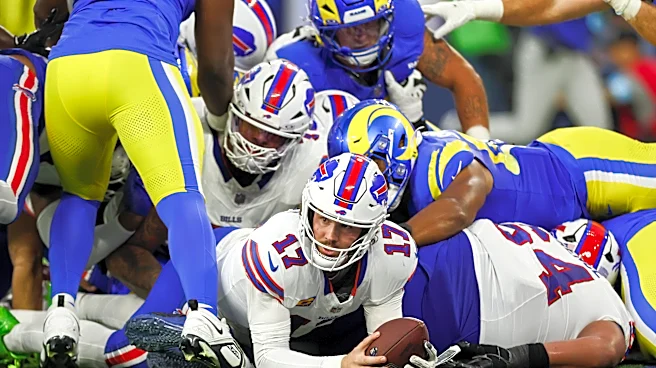
Among 2025 qualifiers with at least 100 zero-graded attempts, Josh Allen’s 6.59 yards per attempt and +0.173 EPA per attempt lead the league by a wide margin. In fact, he was the only qualifier north of +0.10 EPA per attempt, and on a bigger workload than most passers near him.
Daniel Jones (+0.052) and Jared Goff (+0.090) are the next-closest passers generating real value on their expected throws. Notably, Patrick Mahomes (-0.034) and Trevor Lawrence (-0.097) both fell below the league median on these expected plays, while Kirk Cousins (-0.247) and Joe Flacco (-0.273) posted the worst marks among regular starters.

While quarterback talent is still a prerequisite, the common thread running through the list is offensive efficiency and harmony. The quarterbacks who thrive on zero-graded throws are almost always the ones operating in systems that consistently create efficient, on-schedule football.
Careers since 2006: Executioners and beneficiaries
Since 2006, 104 quarterbacks have attempted at least 500 passes that earned a play-level grade of zero. Jimmy Garoppolo leads that group at +0.111 EPA per attempt, while Nick Mullens — a two-year 49ers stopgap who clears the threshold at exactly 500 attempts — ranks second at +0.076, ahead of Patrick Mahomes (+0.054) and Jared Goff (+0.025). Brock Purdy slots in fifth at +0.023 across 931 attempts.
That gives the 49ers three of the top five career EPA-per-attempt marks on zero-graded throws since 2006.
Sort the same 500-attempt pool by yards per attempt instead of EPA, and you’re left with another reminder that few coaches in the modern era have elevated quarterback play as consistently as Kyle Shanahan.
Garoppolo, Purdy, and Mullens don’t just rank near the top — they sweep the top three spots outright, at 6.43, 6.01 and 5.81 YPA, with Drake Maye’s small 2024–2025 sample the closest thing to a challenger at 5.80.

Patrick Mahomes: the easy throws are no longer working