





It was a helluva run. Five first-round exits, two semi-finals defeats, a conference finals heartbreak, and, right in the middle of it all, ultimate glory. Nine years of playoff basketball. 47 wins and 42 losses—more than a season’s worth of postseason action.
Now, for the first time since the 2015-16 season, the Milwaukee Bucks are on the outside looking in. But that doesn’t mean they should switch off. If anything, they should be paying even closer attention, using these playoffs to determine what
holds up under the bright lights—and what direction their off-season should take.
Oklahoma City Thunder vs. Phoenix Suns
What happened?
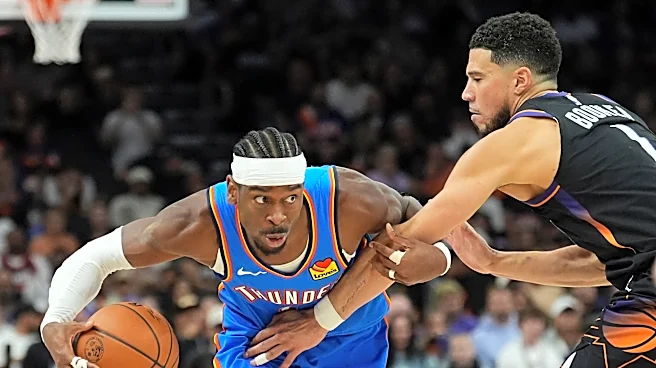
As expected, the Thunder wrapped up this series quickly, winning all four games by an average of 17.3 PPG even with Jalen Williams playing just two games. MVP candidate Shai Gilgeous-Alexander led the rout with 33.8 PPG and 8.0 APG on 55% shooting, while Dillon Brooks led the Suns, averaging 26.0 PPG and 6.0 RPG (shooting .459/.438/1.00).
What matters?
Despite the loss, which again was expected—not every team can be stacked with first-round studs—it’s the Suns that offer Milwaukee guidance. And it’s for two primary reasons. One, coaching matters. After an unsuccessful year under Mike Budenholzer in 2024-25 where the Suns went 36-46, rookie head coach Jordon Ott was instrumental in the Suns winning nine more games and moving from 11th to 7th in the Western Conference standings despite the roster having arguably less talent. With the Bucks having already signed Taylor Jenkins as their new head coach, that box seems to be checked. Two, the right veterans can make all the difference. For all his perceived warts, Brooks was phenomenal for the Suns this year, leading a culture shift that helped transform Phoenix from the 27th ranked defence to the 9th. What does this mean for the Bucks? It’s not always the big names that make the most difference. Castoffs, malcontents—take a look at them. Hard.
San Antonio Spurs vs. Portland Trail Blazers
What happened?
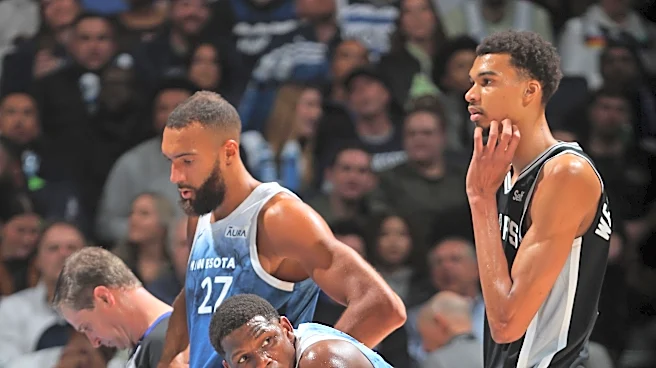
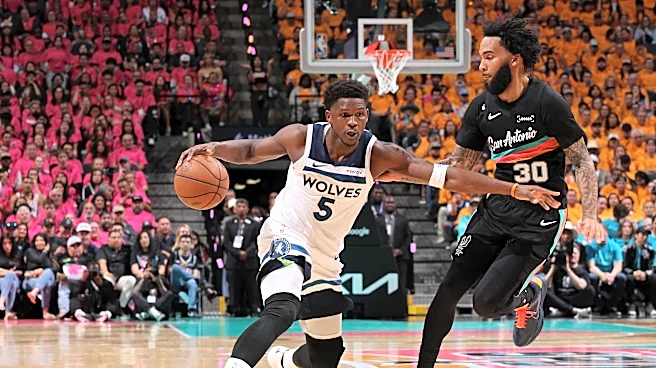
The Spurs took care of the Blazers in a gentleman’s sweep. Wemby averaged 21.0 PPG on 58.3% from the field and a shocking 53.8% from deep; dude is a real-life cheat code. The Blazers were led by Deni Avdija and, somewhat surprisingly, Scoot Henderson, with both combining to average nearly 40 PPG over the five-game series.
What matters?
Although the series ended in five games, many of the games themselves were much more competitive than people would have thought. Portland’s size appeared to be the factor that kept them in most of the games. At 6’3” (but 207 lbs), Scoot Henderson was really the smallest player the Blazers played. Of course, they also had Jrue at the other guard spot, but their wing group of Camara, Avdija, Grant, and Sharpe, along with Clingan in the middle, was a real headache for the Spurs at times. The key takeaway here is that, well, size matters…
Los Angeles Lakers vs. Houston Rockets
What happened?
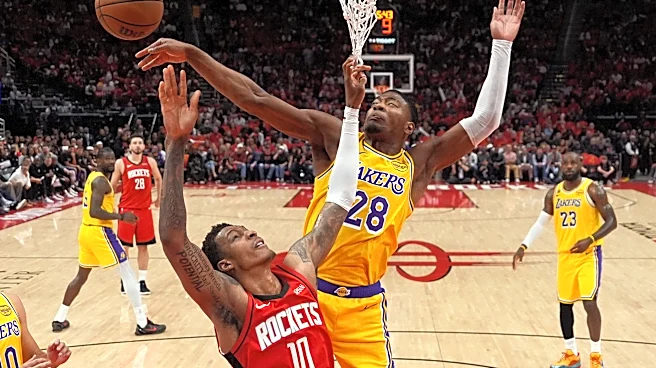
After going up 3-0 without the services of Luka Doncic and Austin Reaves (until Game 5), the Lakers let the Rockets back into the series by winning two straight games, but finished the job in Game 6. The series was closer than that, though, with the Rockets pulling off the choke of all chokes in Game 3, up six with about 30 seconds left, and turning it over twice to allow the Lakers to tie the game. In the end, Houston, like so many teams before them, got LeBron’d; the 41-year-old (!) averaged 23.2 PPG, 8.3 APG, and 7.2 RPG over the series. Remarkable.
What matters?
The main takeaway from this series is that balance is key. I think during the regular season, people (including me) can be led to believe that if you build an elite defence, offence can be secondary, and you can still go far in the playoffs. But when the playoffs roll around, we always learn how much half-court creation still matters. Could you imagine if the Rockets had an Austin Reaves-type during that series? It would have helped greatly. But they were stuck with a fleet of defense-first guys and forced to play the 6’1” Reed Sheppard (a second-year guy) into the ground each game to grease their clogged-toilet offence.
Denver Nuggets vs. Minnesota Timberwolves
What happened?
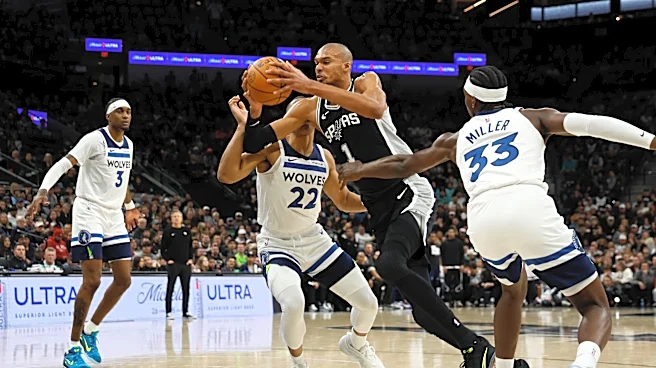
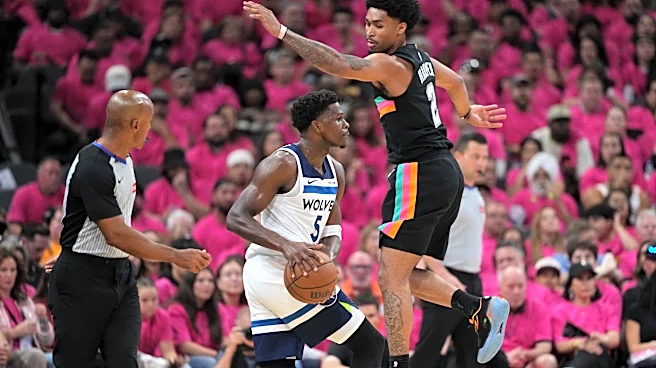
What a series! If you didn’t see unfold in real time, do yourself a favour and watch the tape. After holding serve in the opening game, Denver lost home court thanks to an all-around team effort by Minnesota in Game 2, with ex-Buck Donte DiVincenzo perhaps the biggest difference maker with momentum-shifting play after play (and 16 points, seven boards, six assists, and a team-high +20). Of course, he’d go on to tear his Achilles in the opening minutes of Game 4, a game in which Anthony Edwards also played his last minutes of the series—and Ayo Dosunmu officially arrived (43 points), giving the Wolves a 3-1 lead.
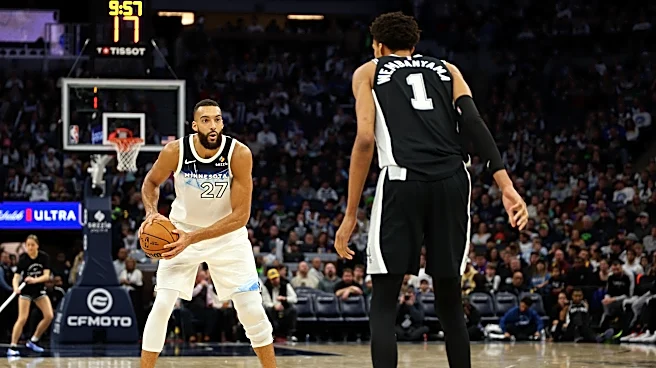
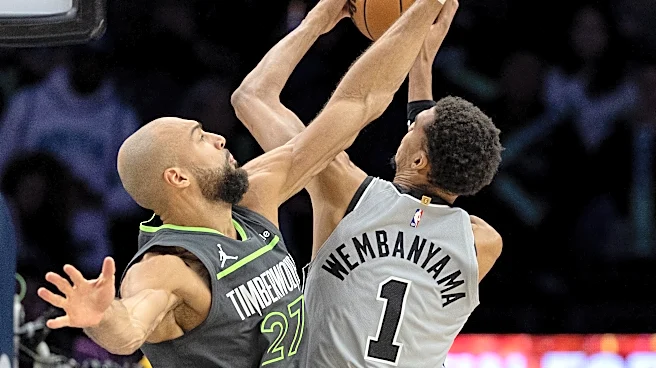
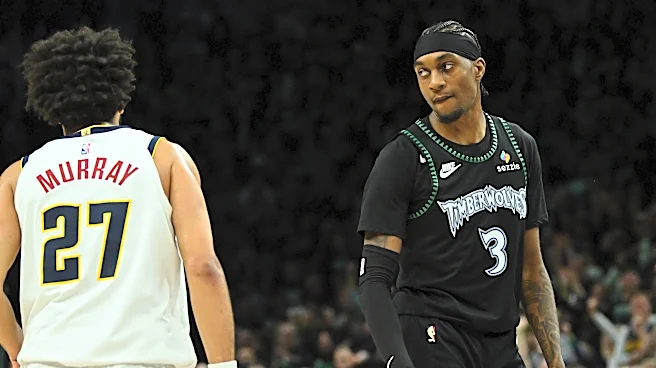
But when the Nuggets won Game 5 and Dosunmu played his last minutes of the series, a comeback seemed inevitable. Jaden McDaniels, however, would have none of it. The six-year pro put up a career-high 32 points to go along with 10 rebounds—while seat-belting Jamal Murray to just 4/17 shooting—Rudy Gobert continued to earn some much-deserved respect back, and Terrence Shannon Jr. came out of nowhere (24 points and six rebounds) to send the Nuggets home.
What matters?
Having beaten the Nuggets in two out of three recent playoff series, including the last two, the Wolves demonstrated that building a roster to “beat the best” works. Dig deeper and it’s apparent just how valuable two way wings with length are. Not only was McDaniels the MVP of this series, he also averaged 22.0 PPG, 5.0 RPG, and 3.0 stocks per game (with zero turnovers and 75% shooting) to close out the Nuggets in Games 6 and 7 of their 2024 Conference Semi Finals win. In fact, the only time this iteration of the Nuggets have beaten the Wolves in the playoffs was in 2022-23 when McDaniels didn’t play due to injury.
Now, the Bucks aren’t going to suddenly luck into McDaniels in the offseason, but they do have a similarly-built Ousmane Dieng—both are listed as 6’9”, 185 lbs—and absolutely should force-feed him all of McDaniels’ tape. At just 22 years old and having only played 166 career games, Dieng is certainly still mouldable. Plus, it’s not as if he hasn’t shown some defensive chops (see his blanketing of Devin Booker in March). The other takeaways? It’s time to get back to the gritty defensive team the Bucks used to be and make opponents feel them. And belief is perpetually underrated. Instil those and you’ve got a shot.
Do you agree with our assessments, or is there something we missed? Add your two cents in the comments.