





It’s Monday evening here at BCB After Dark: the hippest happening for night owls, early risers, new parents and Cubs fans abroad. Come on in out of the fall chill. We’ve got a fire going in here. There’s no cover charge. There are still a few tables available. The hostess will seat you now. Bring your own beverage.
BCB After Dark is the place for you to talk baseball, music, movies, or anything else you need to get off your chest, as long as it is within the rules of the site. The late-nighters are
encouraged to get the party started, but everyone else is invited to join in as you wake up the next morning and into the afternoon.
Last week I asked you if you thought that the Cubs should pursue NPB Triple-crown winner Teruaki Sato. Since I wrote that, the Hanshin Tigers announced that they would, in fact, post Sato to MLB this offseason. In any case, 61 percent of you were in favor of trying to sign him with only 22 percent opposed. The rest were in that lovely “meh” category.
Here’s the part with the music and the movies. You’re free to join us for that. There’s no extra charge or drink minimum.
Tonight we have drummer Philly Joe Jones and the Philly Joe Jones Sextet playing “Blues for Dracula” in 1958. This features Jones doing a Bela Lugosi impersonation at the beginning of the song. Nat Adderley is on cornet, Julian Priester plays trombone, Johnny Griffith is on tenor sax, Tommy Flanagan plays piano and Jimmy Garrison is the bassist.
I watched a few horror movies this week and they were mostly terrible. I’m not going to name them because I might end up writing about one on Wednesday. But I did see one thing that I thought was very good and that was the pilot for the television series Night Gallery. Since that was released as a made-for-television movie in November of 1969, I think it counts as a film.
Night Gallery has a bit of a poor reputation among Rod Sterling fans. Sterling wanted Night Gallery to just be a new version of his legendary show The Twilight Zone, only with more of a horror/supernatural theme instead of a science fiction theme. The producers and the network, however, wanted no part of The Twilight Zone’s commentary through allegory. Or in other words, they wanted none of the social and political commentary that that got The Twilight Zone in trouble with advertisers and some network affiliates. Unfortunately, unlike The Twilight Zone, Sterling did not have final cut privileges for Night Gallery. His scripts, as well as those of the writers he hired, were constantly being edited, re-written or outright rejected by the producers. On top of that, the reputation of Night Gallery suffered even more when the show was re-run in syndication, as the one-hour program was cut down to 30 minutes and many segments were butchered even further for time constraints.
Despite that, Night Gallery managed to get several strong stories out despite network interference. Even Sterling admitted that a few of the stories on Night Gallery were as good as anything he’d ever done. And its reputation has increased over the past few years after being released on DVD, where audiences could re-watch the great stories unedited for syndication and skip over the bad ones. Academy Award-winning director Guillermo del Toro considers himself one of the show’s fans.
The three-part pilot had none of the problems with network meddling that the rest of the series had. Sterling wrote three 30-minute stories that were loosely tied together by the theme of a painting. Like he did with The Twilight Zone, Sterling introduced each story. He teased each story with a painting that he claimed was “not . . .of any specific quality” but rather that they captured “the frozen moment of a nightmare.” All three stories had well-known actors to kick off a potential series order.
So far, I’ve avoided mentioning the big reason why everyone remembers the pilot movie for Night Gallery, which is the second of the three stories, “Eyes.” In it, screen legend Joan Crawford, in one of her final performances, plays a blind and totally despicable millionaire who pays a desperate Tom Bosley $9000 for his optic nerves. The resulting translate will allow Crawford’s Miss Menlo to see for about 10-to-12 hours and will leave Bosley’s sad character blind for the rest of his life.
If all that wasn’t enough to interest you, “Eyes” is also the professional directorial debut of a 22-year-old Steven Spielberg. Spielberg has spoken extensively about the experience and how well Crawford treated him and everyone else on the set. Apparently this was only after Crawford had a breakdown behind the scenes and tried to get him fired because she didn’t want to directed by a child. She later wrote that once she got on set and started to work with Spielberg, she realized he was a child genius. Spielberg even said she lied to crew (who also didn’t like working for a young punk) and told them she had worked with him before and that they should trust him.
As far as the quality goes, “Eyes” is excellent. Serling has written a tale about the immoral rich exploiting the weak and helpless and, like so many of Serling’s stories, he adds an O. Henry-type twist to the plot. Crawford is at her imperial best, or at least as good as she could be at that stage of her career. Spielberg definitely makes sure that she dominates the screen whenever she’s on.
Spielberg also directs the episode like he’s never going to direct again and he wants to be sure to include every trick he’s learned in film school. To be fair, most of the tricks work. He starts out with a tracking shot of Barry Sullivan walking into Miss Menlo’s huge and immaculate penthouse apartment, which is shot from up high and then transitions into a shot of Sullivan seen upside-down through one of the crystals hanging from Miss Menlo’s chandelier. There are several off-center closeups where the back of the head of the person listening to the speaker takes up the left side of the screen. Then there’s the famous scene of Crawford, wearing a bright red dress, spinning around in total darkness. There are a few tricks that don’t land, such as a very weird dissolve, but it’s clear that this thirty-minute segment is being directed by someone with a lot of talent and ambition. Also one that can be prone to excess if he doesn’t keep himself in check.
The other two segments to the Night Gallery pilot are good too, even if they aren’t directed by future Oscar winners. The first segment, ‘The Cemetery,” is directed by TV veteran Boris Sagal (also Katey Sagal’s dad). This is a two-hander with Roddy McDowell playing the long-lost nephew of a rich, dying painter (George Macready). For decades, the old man has been attended to by his butler Portifoy (Ossie Davis). After McDowell’s nephew gives the dying uncle a little shove into the great beyond, one of his paintings keeps changing in a kind of riff on Poe’s “The Tell-Tale Heart.“ Or is it? As with any Sterling story, things aren’t necessarily what they seem. Most of the episode is McDowell going crazy and Davis insisting that nothing is wrong.
The third segment is maybe the weakest, but it’s still pretty good with maybe the most horrifying ending. “The Escape Route” is the story of Strobe, a Nazi war criminal (Richard Kiley) who has fled justice to South America. The man is constantly haunted, not by all the deaths he was responsible for in the camps, but rather from the knowledge that people are looking to bring him to justice. Eventually he’s recognized by an Auschwitz survivor (Sam Jaffe) and Strobe if forced to run and hide.
However, after fleeing into a museum, Strobe discovers that he can magically enter one of the paintings. Inside the painting, which is of a man fishing out of a boat, Strobe can finally find peace, knowing that no one else can follow him into the painting. Of course, Sterling adds a twist ending to “The Escape Route” as well.
“The Escape Route” was directed by Barry Shear, who was also a TV veteran but also directed the absolute bonkers sixties counterculture film Wild in the Streets the year before. You should watch Wild in the Streets. I’m not saying it’s a good film. Just memorable.
All three of these stories are bad people coming into bad ends, which was a common theme in The Twilight Zone as well. All three of them are also at least good and the combination of Joan Crawford and Steven Spielberg make “Eyes” a kind of must-watch. They also demonstrate that Night Gallery could have been as good as The Twilight Zone if only the producers and NBC had left Sterling alone.
We do have a trailer/commercial for the Night Gallery pilot. You can see Spielberg using all his tricks in the disjointed zoom to closeup of Crawford here.
Welcome back to everyone who skips the music and movies.
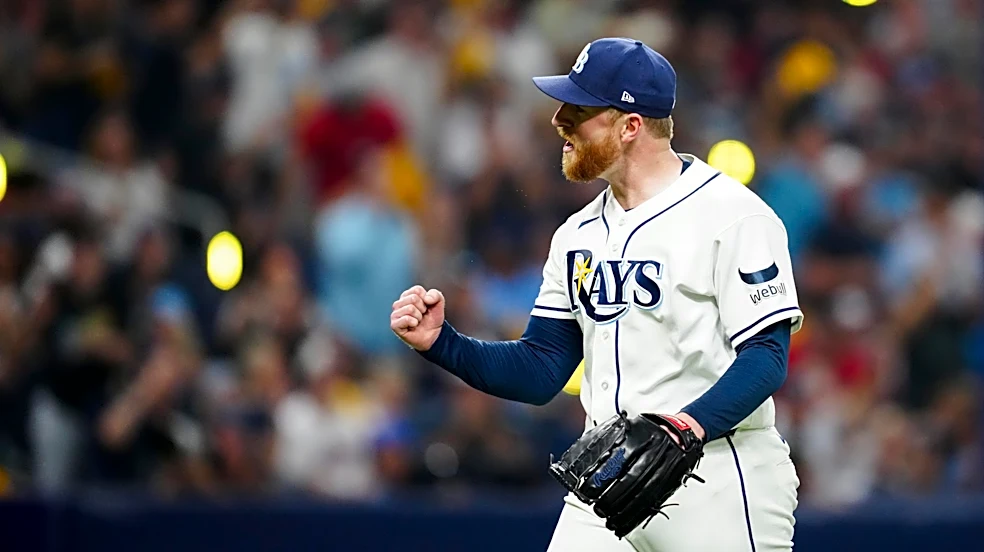
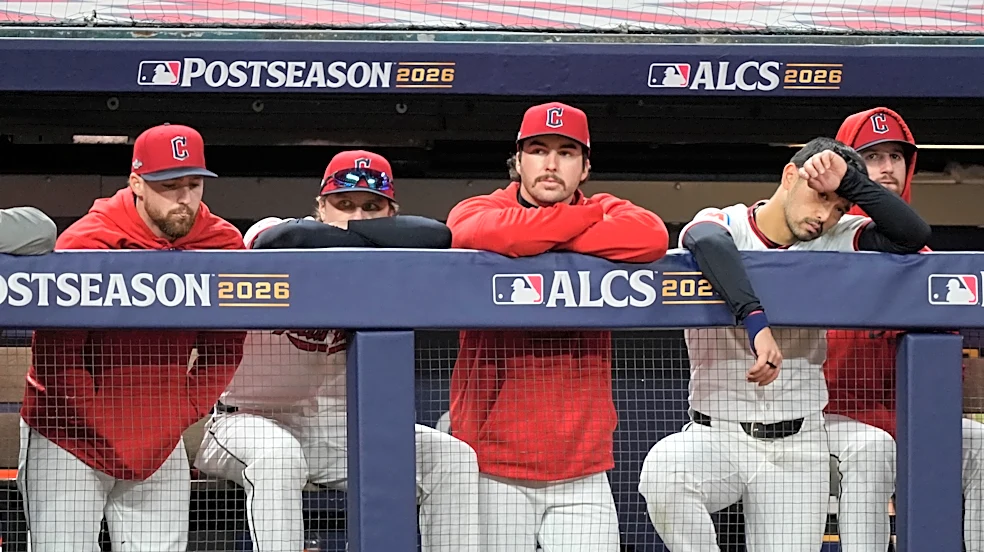
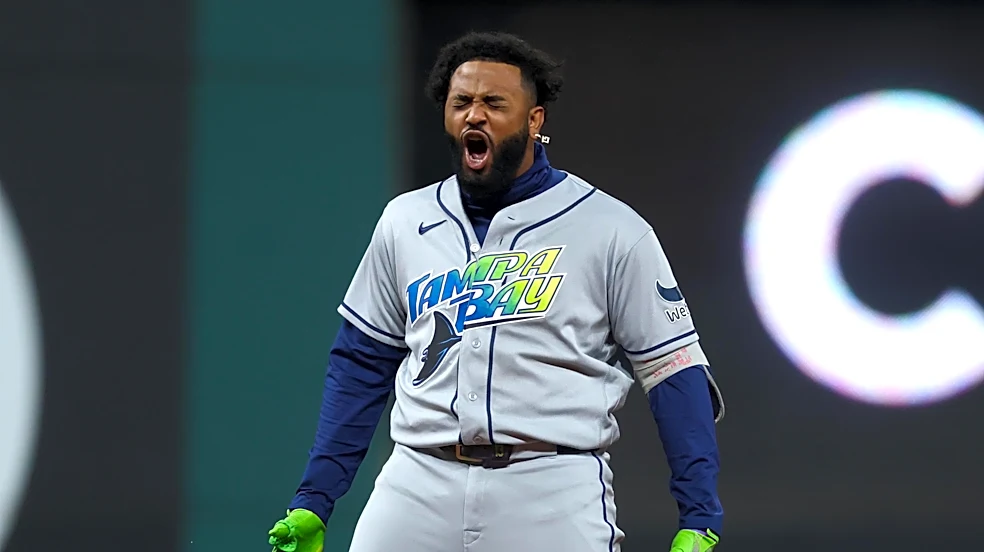
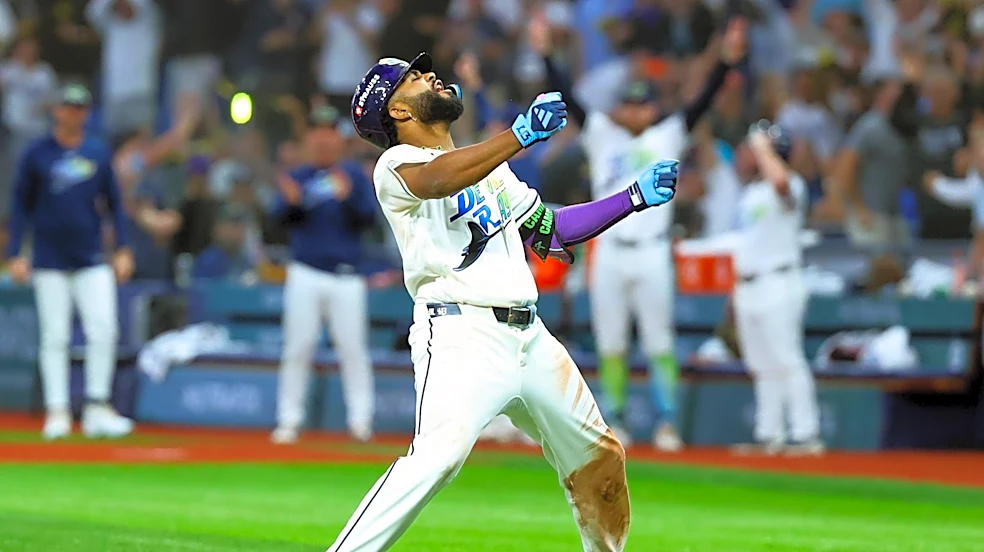
Tonight’s question is easy. Who are you rooting for in the World Series?
Personally, I’ve made it clear that I will never, ever cheer for the Brewers under any circumstances. There’s a lot of childhood trauma there. But I realize that a lot of you don’t see the Brewers as the Cubs most-hated rival like I do. I’m going to admit that it’s a minority position.
There are decent reasons for a Cubs fan to cheer for the Brewers. One would be that you just cheer for the National League. You might have some kind of Lake Michigan solidarity. Perhaps you appreciate how well the Brewers run their club and you want to see that rewarded. Maybe you’re a fan of Willson Contreras or Jacob Misiorowski. Or maybe you have some innate hatred of Tampa Bay the way I hate the Brewers.
All of those are fair. As long as we’re pleasant to each other, we can all disagree and may the best team win. As long as that team is the Rays. But feel free to make your case for your team in the comments.
Thank you for stopping by tonight. We’re always glad to have one more. Get home safely. Don’t forget any personal items. Tip your waitstaff. And join us again tomorrow night for more BCB After Dark.