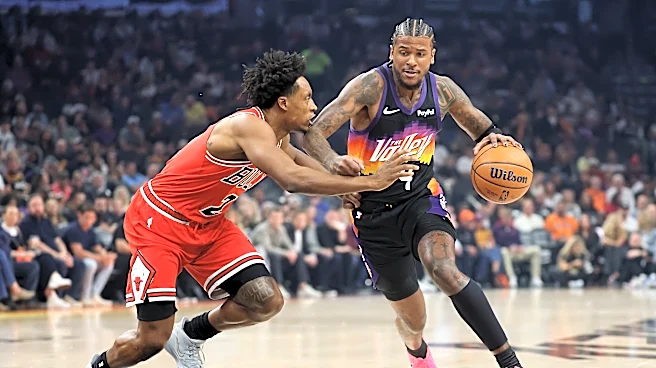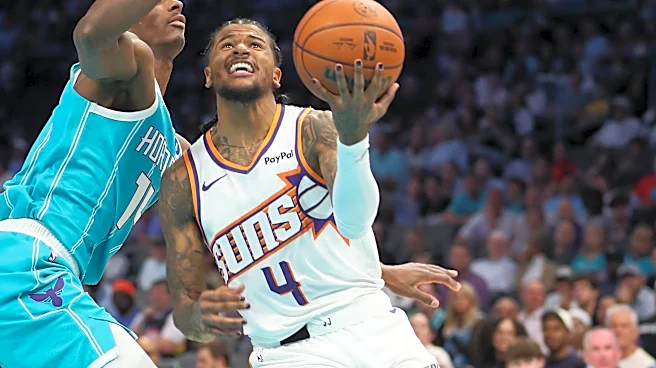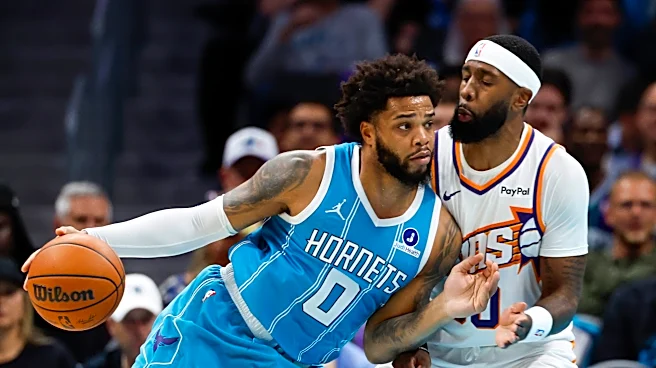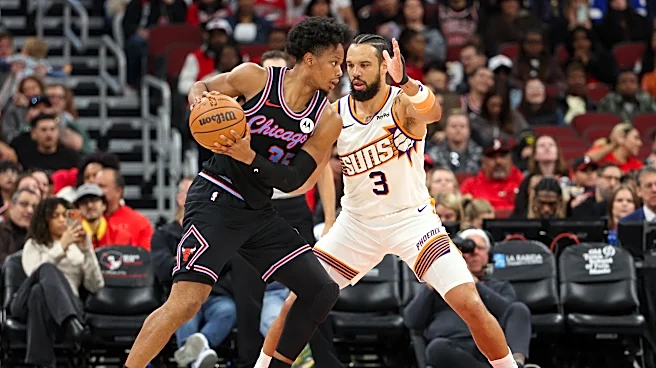

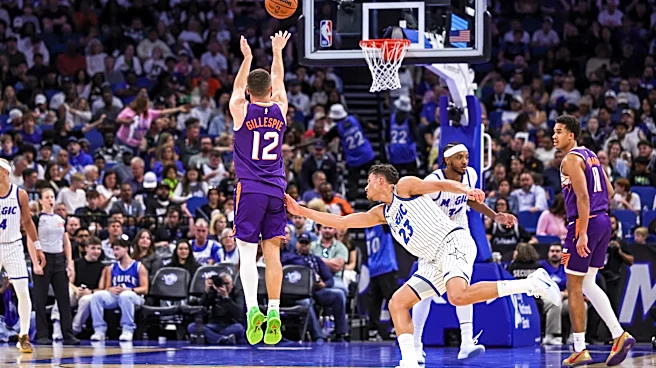

In a very messy, stop‑and‑go kind of game that wasn’t exactly pleasant to watch, the Suns pulled out a 120–110 win against a courageous Chicago team. The matchup was defined by constant rhythm swings, sloppiness, and physical intensity. In short: a classic Sunday game at a European-friendly tipoff.
The night was highlighted by Booker and Green on the Suns’ side (54 points combined), and by Tre Jones (29 points) along with the Miller/Sexton duo (35 points and 20 rebounds between them) for the Chicago
piece. Phoenix shot the ball relatively well (50% from the field, 40% from three), didn’t get crushed too badly on the boards (41 vs 46), and dominated in forcing turnovers: 18 turnovers created, 10 steals.
The win moves the Suns to 43-35 on the season.
Game Flow
First Half
Rough start, clearly. Tons of sloppiness on both sides: Chicago coughing up the ball, Phoenix stacking up short misses. It takes 2–3 minutes before Devin Booker finally gets the Suns on the board with a fadeaway. In the middle of this messy opening, Leonard Miller is already locked in: 8 points in 4 minutes, mixing it up perfectly (drive, corner three, transition).
First real turning point: as expected, the Bulls impose their presence on the glass and push the pace. Push it hard. As a result, Phoenix’s paint is under pressure, and offensive possessions become rushed and poorly constructed. After six minutes, Chicago is in control (12–19). Jordan Ott goes to his bench: Grayson Allen first, then Oso Ighodaro, Collin Gillespie, and Royce O’Neale.
End of the quarter is more encouraging for Phoenix. The defense ramps up, gets more aggressive, disrupts Chicago’s flow, and slows down transition, but at the cost of fouls. Offensively, though, it’s still very poor: little movement, lots of static situations, and points coming almost exclusively from individual creation. Despite that, the Suns manage to stay afloat and tie it up: 30–30 after one.
The main issue remains obvious: Chicago scores way too easily in transition. The Suns’ transition defense and overall floor balance are not good enough and need to be fixed quickly.
Start of the second quarter follows the same pattern: the Bulls keep hurting Phoenix in transition, and the Suns still struggle to match the pace. Offensively, it’s a bit cleaner, more fluid in stretches, but still heavily reliant on individual talent — mainly Jalen Green and Collin Gillespie. The point guard does a genuinely good job as a creator, repeatedly finding Oso Ighodaro on pick‑and‑rolls, helping Phoenix take the lead (39–38).
First real adjustment from the Suns: they play faster, but more importantly, they play smarter. Physical intensity rises, transition defense improves, and Chicago is gradually forced into half-court offense. Immediate result: bad decisions pile up for the Bulls, shots get tougher, and turnovers increase (already 10 with four minutes left in the half, shooting percentage dropping below 50%). Phoenix capitalizes and builds its first real gap (52–47).
But as has been the theme of this first half, the end of the quarter collapses into chaos again. Sloppy, choppy, poorly managed. Phoenix’s defense holds up, but the offense wastes possessions instantly: 5 turnovers in just a few minutes. Jordan Ott calls a timeout with 3 minutes left (54–49). Despite the messy stretch, the Suns limit the damage and head to the locker room up 63–56.
Worth noting: Grayson Allen already has 4 fouls, and Phoenix gave up way too many free throws (13 team fouls). On the bright side, they dominated the rebounding battle in the second quarter (15–6). Individually, Jalen Green is on fire: 18 first‑half points with a real impact on the offensive rhythm.
Second Half
Phoenix comes out of the locker room locked in. This time, they dictate the pace from the jump — and even outrun the Bulls. The offense is sharper, cleaner, and more decisive, and it shows immediately: +10. Billy Donovan has to burn a timeout quickly (69–59).
Phoenix stays in control afterward. The plan is clear and well executed: limit Chicago’s transition and force them to play in the halfcourt. And collectively, the Suns do a solid job. The Bulls remain dangerous whenever they can run, but overall, they’re contained. On the other end, Phoenix keeps producing and maintains a solid lead (82–69 with four minutes left in the quarter).
And then… another collapse. Again. The end of the quarter completely kills the momentum. Just when Phoenix seemed in control, the lead doesn’t grow — it evaporates. A 13–2 run allowed, with the offense going totally silent. No field goals in the last four minutes, only free throws. Instead of putting the game away, the Suns let Chicago right back in it.
86–84 heading into the fourth. Everything resets.
Start of the fourth is fairly balanced. Both teams score, but no real run emerges. The rhythm is constantly broken: fouls, turnovers, interference calls… the game never finds flow. Phoenix still holds a small edge (102–97) with seven minutes left.
Tension rises, but the Suns handle it reasonably well at first, especially physically. The tempo slows down — maybe too much. In trying to control the game, Phoenix lets Chicago hang around, giving up easy buckets both inside and from three. Jordan Ott calls a timeout with four minutes left (109–106), aware that the game could swing.
And then, individual talent takes over. Dillon Brooks, quiet until then, completely shifts the momentum: valuable connective play on offense, strong defensive impact, influence on both ends. At the same time, Devin Booker takes command in the clutch and punishes Chicago, pushing the lead to +9 with 1:30 left.
The Bulls fade on the final possessions, and Phoenix closes it out without trembling: 120–110.
Up Next
After this hard‑earned win, Phoenix will host the Rockets to kick off the final week of the regular season.