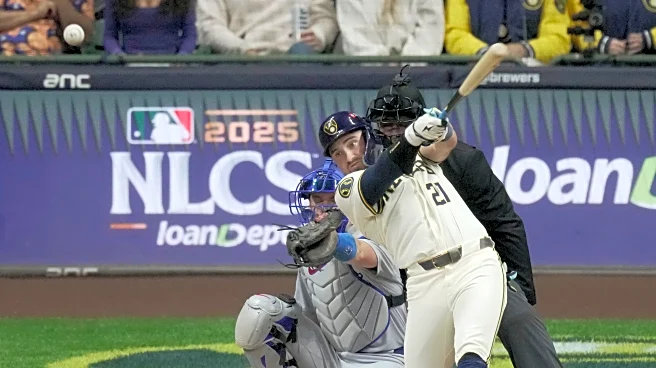

As the Milwaukee Brewers continue to straddle the line between contending now and planning for the future, one theme keeps resurfacing: flexibility.
It’s not a flashy concept, and it doesn’t always generate
headlines, but flexibility has quietly become one of the most defining characteristics of the current Brewers era. Whether it’s positional versatility, roster churn, or contract management, Milwaukee has built an organization that prioritizes optionality over rigidity. It’s a big reason they’ve remained competitive year after year despite operating with clear financial limitations.
You can see it all over the roster.
Take the position player group, for example. The Brewers rarely carry a traditional bench anymore. Instead, they stockpile players who can move around the diamond without much drop-off. Brice Turang, Joey Ortiz, Sal Frelick, Andruw Monasterio, and even William Contreras to some extent all give the coaching staff multiple ways to construct a lineup on any given day.
That versatility isn’t just a luxury; it’s a necessity. For a team that often supplements its roster with short-term veterans or bargain acquisitions, the ability to cover injuries internally without panicking is crucial. When someone goes down, Milwaukee doesn’t need to make a perfect replacement move. They just need someone who fits into the web of interchangeable parts.
The pitching side reflects that same philosophy.
I can’t remember the last time the Brewers entered a season with a rigid five-man rotation and a fixed bullpen hierarchy. Instead, they build depth and let roles evolve. We’ve seen starters become relievers and vice versa, prospects shuttle between Triple-A and the majors, and bullpen arms move fluidly between leverage roles depending on performance and health.
That approach has drawn criticism at times, particularly when it comes to workload management or the lack of clearly defined roles. But the results are hard to argue with. Year after year, Milwaukee finds itself piecing together above-average pitching staffs despite constant injuries and turnover.
That’s not accidental. It’s the product of designing a system that expects instability and prepares for it.
Flexibility also shows up in how the Brewers handle contracts.
Milwaukee rarely lets contracts become anchors. Long-term extensions are handed out selectively, often to players whose value aligns with both present and future contention windows. When the team reaches a crossroads, as it did with Josh Hader, Corbin Burnes, and Devin Williams (and maybe Freddy Peralta), the front office has shown a willingness to act early rather than risk losing leverage.
That doesn’t mean every move is popular. Trading star players is never easy, especially when the team is still competing. But from a roster-construction standpoint, it preserves flexibility. The Brewers keep their payroll clean, maintain a steady flow of young talent, and avoid the dead-money scenarios that can derail mid-market teams for years.
Of course, flexibility comes with trade-offs.
The Brewers don’t often push all their chips to the center of the table. They rarely operate with a “this is the year at all costs” mentality, instead sticking to David Stearns’ “bite of the apple” philosophy. For some fans, that restraint feels like a lack of ambition, especially in seasons where the team looks one piece away from something special.
But the flip side is sustainability.
Since the team’s 2018 NLCS run, Milwaukee hasn’t had to tear things down. There’s been no full rebuild and no multi-year plunge into irrelevance. Instead, the Brewers have remained competitive while constantly reshaping the roster around a core identity: strong pitching, defensive competence, and just enough offense to win consistently. That’s not an accident. It’s flexibility by design.
As the Brewers head into another season with legitimate playoff aspirations and plenty of uncertainty, that flexibility may once again be their greatest strength. It allows them to adapt on the fly, absorb bad breaks, and pivot when opportunities arise.
It may not always feel satisfying in the moment. But over the long haul, whether or not that approach ultimately delivers a championship, it has undeniably raised the floor for what success looks like in Milwaukee.