

Confirmation that the Friedkin Group is willing to sell Everton was not really a surprise; it has been rumoured for several weeks. But the timing certainly was.
There had been a three-week international break during which to announce such news, but instead, a statement dropped on the club’s official website just hours before David Moyes was scheduled to hold a press conference previewing Sunday’s trip to Hull.
Reports suggest that club staff, including Angus Kinnear, were unaware of the announcement
until a few hours before its release, providing further evidence of a disconnect between the Toffees and their Houston-based owners.
One normal day of Everton. That’s all I ask for. It will never happen.
It has been clear since the end of the summer that TFG had lost interest, though it could be argued that they never really had much interest in the first place.
It is telling that Dan Friedkin has never watched a game or even spoken to David Moyes. He was in Scotland last week playing golf with Tommy Fleetwood but still didn’t make the effort to arrange a meeting. A light-touch approach is fine in certain circumstances – it is preferable to the costly interference of Farhad Moshiri – but it also means the club has lacked leadership and direction at crucial moments.

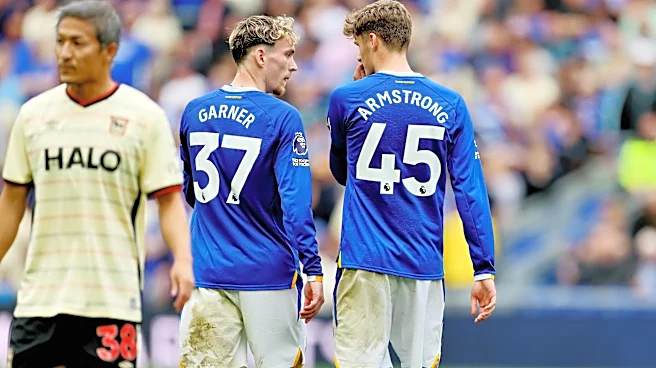
The Harrison Armstrong fiasco, swiftly followed by a calamitous deadline day, was evidence enough that the commitment simply wasn’t there any more.
That has led to accusations of flipping: buying Everton as a distressed asset in the knowledge that restructured debts, coupled with the move to the new stadium, would dramatically increase its value – much like doing up a house.
That could certainly be a factor, though I do think TFG had genuine intentions but perhaps were naïve about the costs involved. The financial might required to compete in the Premier League is such that it takes a £100m summer spend just to stand still. It would take considerably more than that to get Everton regularly competing in the Champions League.
That is not the case with Roma, who have been propelled to the top of Serie A with a smaller outlay.
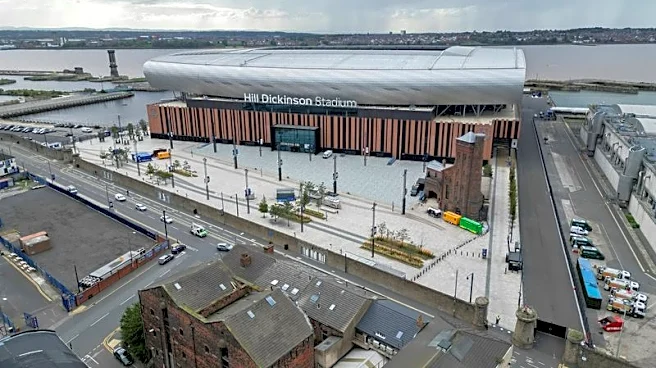
If TFG don’t have the desire or resources (it may or may not be relevant that they hope to launch an NHL expansion team in Houston at a cost of several billion dollars) then now is the time to sell. It is fair to say they will sell the club in a far better state than when they bought it, meaning Everton should be attractive to a new calibre of buyer. TFG’s true legacy will be defined by whom they pass the baton to.
It is also encouraging that the group will “continue to support the club in all ways necessary”, with reports suggesting funds will be available in January and there will be no job losses. But any deal needs to be done quickly to alleviate the power vacuum at the top of the club.
That brings us back to Moyes, whose stock has risen sharply over the last six weeks as he has fiercely defended his club. A sizeable chunk of the fanbase wanted a change over the summer, exasperated by Moyes’ radio silence. Now, it seems he had an idea of what was going on behind the scenes. As divisions grew between the terraces and the boardroom, he made it clear where his loyalties lay. He is the wise, comforting old head guiding the ship through troubled waters.

Asked on Friday whether he felt let down by TFG, given what they may have promised when he returned, Moyes said: “No, because I love this club. They could have sold it to me at any time and I’d still have taken it. But it’s Evertonians I am more disappointed for. They have been through so many difficult periods, and the last thing they really wanted to hear was this.
“It’s a great club. If anyone wants to speak to me, then I will be the first person to let them know that it is certainly worth buying.
“Evertonians are galvanised even more when there’s a situation where they know the team and manager need help. We stick together. I don’t want it to feel unstable. We have to try to keep it moving forward, not backwards.”