

There’s one article I love writing every year, and this is it. It takes time, research, holistic thinking, and a few energy drinks to get me there. I’ve juggled countless thought exercises, spoken with numerous people about their thoughts on the Phoenix Suns’ direction, and considered it all.
Who doesn’t love a good puzzle? That’s exactly what this piece is. It’s my chance to take a full look at the landscape of who the Phoenix Suns are right now, what options are in front of them, and how they can
navigate the offseason as I try to piece together my blueprint for how I think they should operate.
And make no mistake, this is a complicated puzzle.
I’m sure somewhere along the way, my math is off. Maybe a contract number gets fuzzy. Maybe a roster-construction idea looks cleaner on paper than in reality. That’s part of the process. This isn’t what will happen. This is, more or less, what I hope will happen. What I want to happen.
This is the piece where I zoom out to look at the Suns holistically, then try to answer the questions we’ve been asking since the team was eliminated in the First Round on April 27. What should they do with the draft? What should they do in free agency? Which team options should they exercise, and which players should they let walk?
I’ll start with where I landed when the season ended. At that point, I kept coming back to continuity and development. I wondered if that would still be the direction I believed Phoenix should take once it was finally time to write this article. That was the initial thesis entering the offseason.
Now it’s time to find out if that thesis still holds up, or if working through every decision in front of the organization pushes me somewhere else. So welcome, my fellow readers. Let’s talk about how you fix the Suns.
The Starting Point
You can’t start building out theories on what the Phoenix Suns should do without a starting point, so let’s begin with the basics.
The salary cap this offseason sits at $165 million. The luxury tax line is $201 million. The first apron comes in at $209 million, and the second apron is $222 million.
Right now, Phoenix has 11 of its 15 roster spots filled, though a couple of those spots are occupied by players on team options. Their current payroll, including that dastardly $23.2 million in dead cap tied to Bradley Beal, Nassir Little, and E.J. Liddell transactions, sits at $185.6 million.

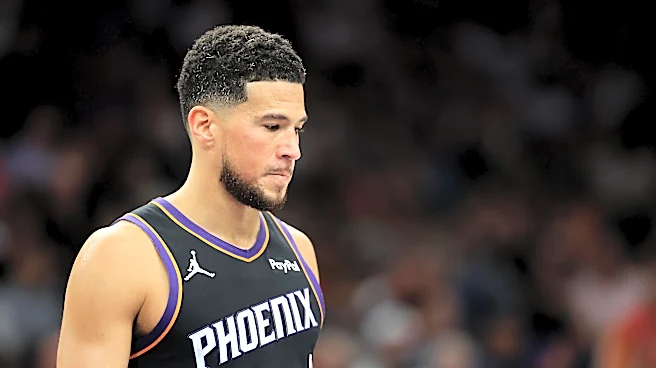
There will be no trading of DevinBooker as a part of this path. I believe that it is a valid conversation to have, and we have had it. I am pro-Book in Phoenix…at least for this offseason.
I contemplated moving off of Jalen Green. In my personal opinion, that is the way to go. He is pricey, duplicative of Booker positionally, and inconsistent as a player. But three things prevented me from pulling the trigger as a part of this plan. First, I truly believe the Suns will bring him back, as they want to see if his development can justify his salary. Second, while he might duplicate Booker’s position, he brings a unique skill set, as he can actually put pressure on the cylinder. Now, if only he could finish around the rim more.
And third? It’s hard to find a trade suitor for him. I played with the trade machine and simply couldn’t find any justifiable or likely candidates who would want his services while providing something that makes sense for Phoenix. He will be much more appealing next summer, when his contract becomes an expiring.
Therefore, Booker and Green return. Those are your high-level decisions relative to trades. Now, for the next steps.
Step 1: Pick up the options and structure Dillon Brooks wisely
The Phoenix Suns have two players with team options this offseason that they can exercise: Ryan Dunn and Jamaree Bouyea. If this were a team sitting comfortably under the cap and looking to upgrade the bench with some spending power in free agency, maybe there’s a conversation about declining one of those options. That isn’t where Phoenix is.
Given the financial tightrope they have to walk and the need to maximize every available asset on the roster, both of those options feel like easy decisions. You pick them up.
Then comes the more interesting conversation, Dillon Brooks.
The rumored extension floating around is as much as four years, $125 million. That breaks down to roughly $31.3 million annually. And as much as I value what Brooks brings to this team, that kind of deal would keep him under contract through the 2031-32 season. At this point, I don’t think anyone should be tied to this roster for that long.
Given where the franchise stands and the direction they’re trying to go, flexibility matters. Yes, they want to deepen it. Yes, they want to reinforce the culture. You don’t do that by locking yourself into paying a 35-year-old Dillon Brooks north of $30 million a season. That’s not good business, nor is it smart. Still, you want to reward the player responsible for assisting in defining your culture, and you want to do so in a way that allows you a flexible contract moving forward.
So, in my blueprint and in the scenario I’m building here, Phoenix signs Brooks to a three-year, $81.7 million contract. That lands at an average annual value of $27.2 million and has him under contract through the 2029-30 season. I’d backload the deal and attach a player option to the final year. That gives Brooks security, gives him flexibility later, and still gives the Suns options.
For now, the Suns remain at 11 of 15 roster spots filled, and the payroll stays at $185.6 million. No new players have been added, and no new money has come in. At this stage, we’re focused on securing the future with Brooks and exercising the team options for Dunn and Bouyea.

Step 2: Turn the draft into an opportunity to get younger and cheaper
Before the Phoenix Suns can start navigating restricted and unrestricted free agency, which doesn’t officially open until July 1, the NBA Draft comes first. Two rounds, the first on June 23, the second on June 24. This is Phoenix’s first opportunity to add a player, whether that ends up being somebody on the active roster or a two-way contract.
With the Suns picking 47th overall, and knowing Isaiah Livers no longer qualifies for a two-way deal, the most likely outcome is pretty straightforward. Phoenix drafts somebody at 47, probably Jaden Bradley out of the University of Arizona, and develops him in the G League. And honestly, I’m not opposed to that. That’s a solid place to develop a young point guard, and the Valley Suns could certainly use more distribution and facilitation. It’s the safe play. Probably the most logical play, too. Maybe it’s Bradley. Maybe it’s somebody else. The conservative move is using that pick on a two-way player and keeping the 15th roster spot open for flexibility.
But that’s no fun.
If we’ve learned anything about this front office, it’s that they aren’t afraid to move around in the draft. Two offseasons ago, Phoenix traded up to grab Oso Ighodaro. Last offseason, they used leftover assets from the Kevin Durant deal to move up and make the first pick of the second round for Rasheer Fleming.
So that’s the route I’m taking here. The Suns move up. And to do it, they make a deal with the Memphis Grizzlies. The trade? Phoenix sends Royce O’Neale to Memphis along with two second-round picks, including No. 47 in this year’s draft, and in return receives Taylor Hendricks and the 32nd overall pick.

Adding Taylor Hendricks gives Phoenix another three-and-D forward, and another player the team can continue to develop at only 22 years old. The 6’9” power forward was selected ninth overall in the 2023 NBA Draft out of the University of Central Florida and was later moved to the Memphis Grizzlies in the Jaren Jackson Jr. trade this past February, along with additional players and draft capital.
He didn’t see a ton of run in Memphis. Across his three-year career, he’s averaged 7.3 points and 4.1 rebounds on 45/35/71 splits. There’s some upside there for sure.
The bigger part of this deal is financial. Phoenix moves off Royce O’Neale and his $10.9 million salary for a player making $7.8 million. And another plus with Hendricks? He’s on an expiring contract.
Of course, the immediate question is: why would Memphis do it?
From my perspective, the Grizzlies are in the middle of stripping things down to the studs and reshaping the roster. Veteran presence still matters in that environment. Royce gives them a proven rotation wing and one of the better three-point shooters in the league, plus Phoenix is attaching another second-round pick to the deal.
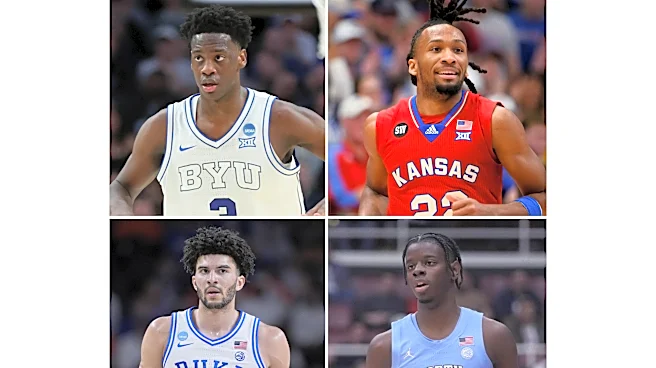
That becomes a conversation you can talk yourself into. And Memphis already owns the third and 16th picks in the first round. A lot of early mock drafts have them looking at frontcourt players like Cameron Boozer from Duke University and Jayden Quaintance from the University of Kentucky. If that’s how their board falls, a contract like Hendricks becomes a lot easier to part with.
And for Phoenix, that creates an opportunity to add another young, switchable forward and save money in the process.
So step one of navigating the draft is complete. You’ve traded Royce O’Neale to acquire Taylor Hendricks, and in the process, you moved up 15 spots in the draft. Oh, and you saved $3.1 million in the process. Now what?
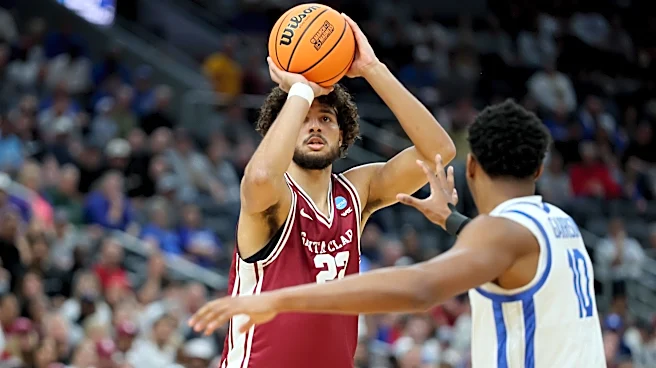
You draft Zuby Ejiofor out of St. John’s University and add another forward to the organization.
He’s 6’9”, 240 pounds, and he plays a highly fundamental game. He isn’t somebody you’re expecting to consistently knock down threes, especially after shooting 30.5% last season at St. John’s. What interests me more is the 16.3 points and 7.3 rebounds per game, and the motor that comes with it.
He’s productive in the paint. He brings physicality. He plays with attitude. And all of that feels aligned with who and what this Suns team is trying to become. At 22 years old, he’s not some raw teenage prospect. He’s older, more developed, and somebody who feels like a cleaner fit for what Phoenix is building.
The next question becomes contract structure. Do you place Zuby on a two-way deal, or do you use a standard roster spot? For this exercise, I’m going with the standard deal. That puts him around $1.4 million. Noah Penda, who went 32nd overall last season, landed around $1.3 million, and with the rookie minimum projecting around $1.4 million for the 2026-27 season, that’s the number I’m using here.
So that’s how we navigate the draft. You move off Royce and save $3.1 million. You move up 15 spots. You add two 22-year-old power forwards to the mix, and one of them comes on an expiring contract. So where does that leave things?
Pre-draft, Phoenix sat at $185.6 million with 11 players rostered. Post-draft, you’ve lowered payroll by $1.7 million and bumped the roster to 12 players.
And because you moved off Royce for a player on an expiring contract, the 2027-28 cap sheet starts looking cleaner, too. And, as we get ready to navigate restricted and unrestricted free agency, every dollar counts.

Step 3: Bring back your depth via free agency
This is where the challenge really begins. And this is where you can’t help feeling frustrated that the Phoenix Suns are carrying $23.2 million in dead cap this season. Up to this point, Phoenix sits $17.1 million below the luxury tax and $25.1 million below the first apron. That feels manageable on paper. Then you remember there are still three open roster spots and three players you’d ideally like to bring back. That’s when things get interesting in a hurry.
So what do they do? And how do they do it? You start by figuring out what actually matters most to Phoenix. Is avoiding the luxury tax the top priority, especially with repeater tax implications hanging out there? Or is this a team willing to cross that $201 million line if it means keeping continuity intact? And beyond that, how comfortable are they with going over the first apron, knowing the restrictions that come with it and how much harder it makes roster building?
Personally, I don’t think Phoenix is overly concerned with being above the luxury tax. At least I hope they aren’t. Mat Ishbia has shown he isn’t afraid to spend. Yes, this would be spending on a team you probably wouldn’t label a true contender today. That part is fair. At the same time, they clearly want to stay competitive. They clearly want to protect continuity. And if that means paying into the tax to make it happen, I believe the organization would be willing to do it.
And there’s one important caveat to always keep in mind. It’s about where you are on the final day of the NBA season. So in theory, the Suns can bring back Collin Gillespie, Jordan Goodwin, and Mark Williams, then buy themselves time. Time to evaluate. Time to see how the roster performs. Time to make decisions based on what the team actually looks like once the season starts. And for a front office trying to balance flexibility with continuity, that matters a lot.
And that’s the direction that I think this team will go. And honestly? I think it’s the right way to go. So let us begin with what bringing back Mark Williams looks like.
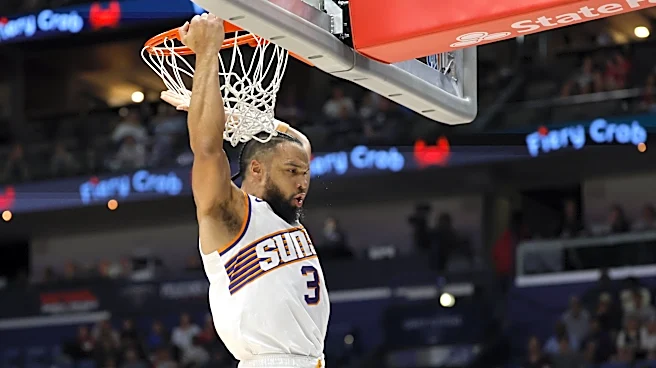
Bringing Mark Williams back gives Phoenix an important buffer as Khaman Maluach continues to develop. We know Mark’s injury history, and although he played a career-high 60 games this past season, his career average remains 41.5 games played per season. There’s a real chance he misses time this season, and if that happens, the door naturally opens for Maluach in year two. And that can work in Phoenix’s favor. If Maluach pops, if he looks ready and starts showing real growth, then you’ve put yourself in a position where Mark becomes more expendable and potentially somebody you can shop on the market come the trade deadline. If Maluach still looks raw, then you still have stability at the center spot whenever health allows.
The obvious question with Mark is price. What is he worth? What does his market actually look like? My guess is there won’t be a huge amount of interest. This year’s unrestricted free agent center market has plenty of options, and a lot of teams can find comparable production for cheaper or find somebody with a cleaner injury history. And maybe Phoenix sees it that way, too. Maybe they decide not to bring him back and go fishing in that pool.
For continuity purposes and for Maluach’s development, I think they keep him. And I think they do it on the qualifying offer.
Yes, Bobby Marks floated out $14 million annually as something Mark could potentially get on the open market. If another team wants to pay that, then you tip your cap, thank him for his time, and move on. You look at options on the unrestricted free agent market. That’s easy.
If that market doesn’t materialize, I bring him back at $9.6 million for this season, knowing he’d hit unrestricted free agency next summer. And by then, Phoenix should have a much clearer picture of what it actually has in Maluach. That makes the decision cleaner. That makes the timeline make more sense. And it gives the Suns another year of stability at a position where having it matters.
Jordan Goodwin is somebody the Suns should absolutely bring back. He’s part of the culture. Part of the identity. He’s gritty, he hustles, and he sets the tone every night he’s on the floor. He feels like the soul of this team. That’s not something you casually let walk out the door. At the same time, because of the apron restrictions, it may become a real possibility. And if that happens, it hurts.
Phoenix has Early Bird Rights on Goodwin, which gives them flexibility. They can structure a deal anywhere from roughly $4 million to $9 million annually. Then the question becomes whether Goodwin is willing to take a hometown discount or if he wants to test the market.
And honestly, that would make sense. He’s 27 years old. This could very well be his best chance to land a meaningful contract. There aren’t many teams with major spending power, which helps Phoenix a bit. Yes, another team could use part of a mid-level exception or the non-taxpayer mid-level to make a run at him, although those routes come with their own restrictions.
That’s why in this scenario I’m betting on continuity. I’m betting on fit. And I’m betting both sides find common ground. The number I land on is two years, $11.3 million. That feels fair for Goodwin. It rewards the role he’s carved out and keeps Phoenix intact.
That number could rise if the Suns decide to move off Mark Williams and go searching for another center in unrestricted free agency. In this version of the offseason, they don’t. They keep Williams. They keep Goodwin. And they keep building around the identity they spent all season trying to establish.
Lastly, there’s Collin Gillespie. He showcased exactly what he can bring this season and earned himself a real raise. And he’s a fantastic story. Honestly, he’s the kind of story you want your organization connected to. A player you brought in, developed, watched grow from a two-way contract into a guaranteed deal, and now he’s positioned to cash in because of the work he put in.
Now he hits unrestricted free agency, and Phoenix has to pay him accordingly. For me, that number comes to three years at $32.4 million. Yes, that’s a sizable number for a backup point guard. I’m still doing it. He’s worth it. He fits what Phoenix is trying to build. He understands the system. He’s earned trust. He brings steadiness when he’s on the floor, and there’s real value in knowing exactly what you’re getting from that position every night.
Could another team offer more? Absolutely. And maybe one does. Much like Jordan Goodwin, there’s more financial flexibility here if Mark Williams walks and Phoenix reallocates those dollars. In this version of the offseason, I’m keeping the group together.
And part of making that work is including a player option in year three. That gives Gillespie flexibility and gives him the chance to bet on himself if his progression continues. Which feels fair. Because if that growth keeps trending the way Phoenix hopes, he’ll have earned the right to cash in again.
So when restricted and unrestricted free agency wraps up, you’ve accomplished the mission. Three more players added. Three roster spots filled. Fifteen players under contract. Mark Williams comes back at $9.6 million, Jordan Goodwin returns for $5.5 million, and Collin Gillespie gets $10 million. That puts Phoenix at $25.1 million spent in free agency and brings the payroll right up to $209 million.
Now, if we’re being exact, and I know some of you absolutely will be, the final number lands at $208,116,977.
Boom. Under the first apron. Mic drop.

This keeps the Phoenix Suns under the first apron while filling every roster spot and maintaining continuity across the board. Your depth is fortified, and you have enough financial flexibility to keep options available if adjustments are needed later in the season.
I’ve avoided the daunting first apron, and that matters because crossing that line starts cutting into your flexibility in a real way. If you want to make trades, salary matching must be within 100%, and you can’t take back more money than you send out. You lose access to acquiring players via sign-and-trades. You also can’t sign a player waived during the regular season if his original salary was greater than the non-taxpayer mid-level exception. In this scenario, those restrictions stay off the table.
Phoenix still has some flexibility. A lot of that flexibility comes through Haywood Highsmith. The “Locksmith” is owed $3.8 million next season, although only $1 million of that is guaranteed. His deal doesn’t fully guarantee until January 10, 2027. By then, you should have a much better understanding of his role, what this team looks like, and what steps you may need to take to get under the first apron, if necessary.
The same applies to Jamaree Bouyea. His team option can be exercised now, and that salary also doesn’t become fully guaranteed until January 10, 2027.
So yes, this is a tightrope. And it’s a tightrope the Phoenix Suns are going to keep walking for a while because of the dead cap on the books, all the way through 2030 (thank you, Bradley Beal). They have to be careful. The Suns have to balance fiscal responsibility with competitiveness. That isn’t easy, but it is the right thing to do. It’s not flashy, it’s not sexy, but that is the path that will open more doors than it locks. Don’t let your short-term greed get in the way of your long-term greed.
This is my blueprint. Yes, Phoenix lands around $209 million in payroll in this scenario. And yes, being roughly $8 million over the luxury tax means that bill turns into something closer to $26 million once repeater tax penalties are factored in. That’s expensive, that’s the cost of doing business, and that’s the cost of carrying dead cap. That’s the cost of trying to stay competitive. That’s the cost of continuity.
And when I look at the roster I have created, I believe it works. You still have an open two-way slot, and I believe it’s competitive. I believe it preserves optionality if the organization decides it needs to pivot. And I believe it gives you a healthy mix of veterans, youth, and upside worth investing in.

That’s who Phoenix is right now. This isn’t a team polishing the edges of a championship contender. This is a team trying to strengthen the path it’s on. They are a team focused on development, leaning into continuity, trying to figure out if this next era of Suns basketball is actually sustainable. Because if it is, you can start making different decisions a year or two from now. You can get more aggressive, adjust the vision, and attack the next phase.
Currently, this is who the Suns are. And this is the path I’d take. I know it’s optimistic to believe that Williams would come in at the qualifying offer and that Gillespie would take a $32.4 million deal. Perhaps they don’t. Perhaps the Suns let Williams walk, sign an unrestricted free agent center on a veteran minimum deal, and reinvest those savings into Gillespie and Goodwin’s contracts. ‘Tis possible.
At the end of the day, there’s no perfect answer here. There probably never was. The Suns are navigating the consequences of past decisions while trying to build something healthier moving forward, which naturally makes every offseason choice a balancing act.
That’s why I keep coming back to continuity and development. Let this group grow. Let the younger players keep earning opportunities. Let Jordan Ott continue shaping the identity Phoenix spent all last season trying to establish. Then evaluate from there. Allow health to be your friend, considering your three highest-paid players missed a combined 96 games last season. See what they can do from here, and for the love of AC Green’s celibacy, avoid three-guard lineups. Maybe a year from now, the vision looks clearer. Maybe the next pivot presents itself naturally.
For now, the smartest move feels like patience, trust in the foundation, and giving this version of the Suns another real chance to prove what it can become.