



So, did I divine this or what?
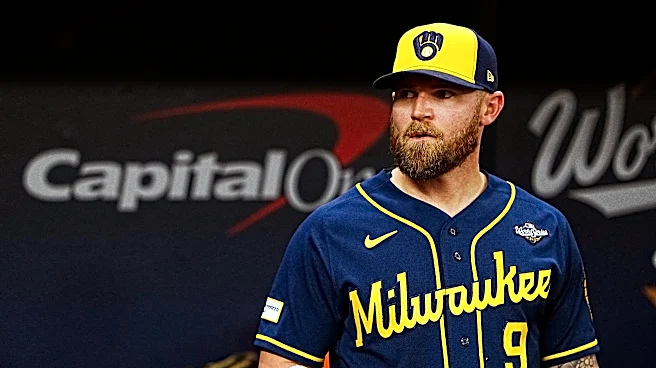
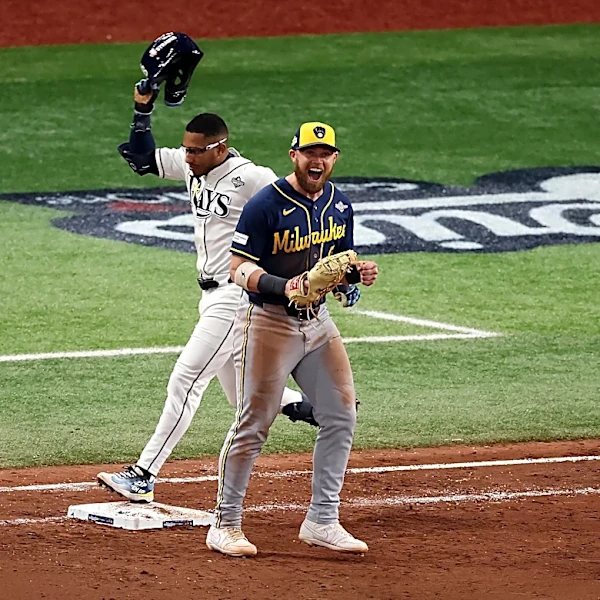
A few short hours ago, I wrote 1,100 words on whether Jake Bauers is a good fit for the Red Sox, ultimately deciding that he was not. I suppose I now have confirmation that Craig Breslow is not a regular reader, because he went and did the damn thing anyway, signing Bauers to a four-year deal worth $58 million. Because Bauers was extended the qualifying offer by the Brewers, the Sox will also forfeit a second round pick in the upcoming draft.
I won’t rehash my analysis
from this morning. The long and short of it is that the 2026 version of Jake Bauers would be a great fit for the Red Sox lineup, but, in his previous 8 years in the bigs, Bauers had never come anywhere close to hitting like that. Ergo, the smarter move was to pay a slight premium for someone like Seiya Suzuki, who is a solid bet to give the team similar if not better production, along with more defensive value.
Breslow is obviously betting that whatever led to Bauers’ huge jump in production is sustainable. That’s a question that will be answered in due time. But before we even get there, I want to address one other nugget of analysis that I’ve already come across repeatedly on Red Sox Twitter, and even within our own Slack channels: The idea that, because $58 million over 4 years is such a relatively small contract in both total dollars and total years, the Bauers signing represents no real risk for the Red Sox.
This type of thinking is now ubiquitous amongst the baseball chattering class and you hear variations of it all the time, e.g. “there’s no such thing as a bad one-year deal.” As long as a contract doesn’t hamstring a team’s long term payroll, so the thinking goes, then there’s no downside. But this type of thinking depends on viewing players solely through one, severely limited lens: the lens of contract value. And, unfortunately, good contracts don’t win baseball games, good baseball players do.
When you consider the unshakeable fact that there are only 26 roster spots on a baseball team, then you immediately see that, yes, of course there is such thing as a bad one-year deal. And, likewise, there is such a thing as a thing as a bad 4-year deal for $58 million. Because the Red Sox aren’t simply signing Jake Bauers — they are choosing hand Jake Bauers one of those 26 roter spots over other alternatives. In this case, they’re most directly choosing him over Seiya Suzuki. Hell, you could even argue that they chose him over Pete Alonso who, at this point, is owed $124 million over the next 4 years, is a much better bet to outproduce Bauers over the length of those deals, and obviously would’ve improved the 2026 team, too.
Then there’s the question of how Bauers fits into the team. He’s a poor fielder who will spend some time spelling Willson Contreras at first (and perhaps play a few innings in the outfield corners every now and again) but is mostly going to be the primary DH. If he is unable to replicate his 2026 production — or if he is only able to replicate about 80% of it, say, then he’s not helping the team all that much. The fact that he provides no defensive value further complicates things. What happens if Triston Casas is healthy and mashing in AAA? What happens if Curtis Mead is so bad with the glove that he becomes a better fit at DH than at second?
The risk with Jake Bauers isn’t that his contract will hamstring your payroll. At just $58 million, it won’t. The risk is that he simply doesn’t end up helping the team that much. The risk, in other words, is not that he costs the Red Sox money, but that he costs the Red Sox wins.