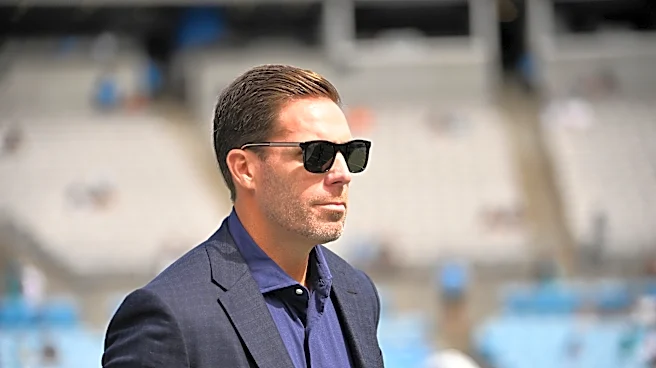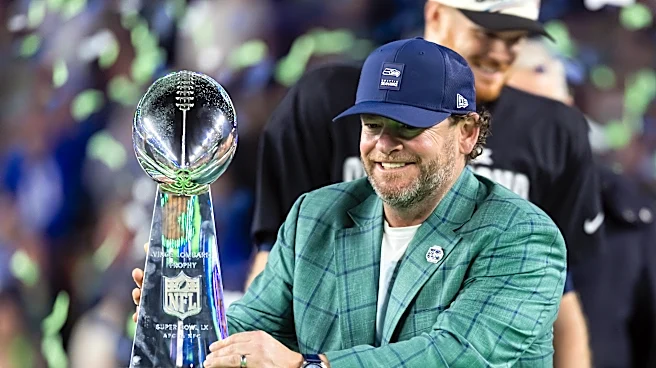



Sports Illustrated’s Albert Breer recently wrote up a fascinating column on Seattle Seahawks general manager John Schneider. If you don’t know it by now, the two-time Super Bowl champion has spent decades chronicling his thoughts in a journal, dating back to when he was with the Green Bay Packers’ front office.
“A, it’s a stress reliever,” Schneider said in a quiet moment over lunch at last week’s owners meetings. “And it’s a reminder of how you were feeling in this negotiation, or this period of time.
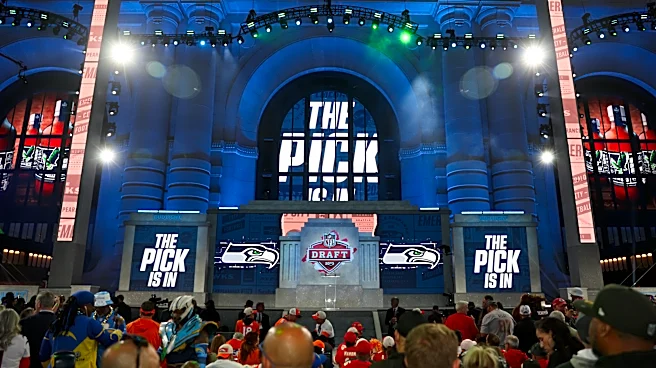
What was going on? You can go right back to the moment instead of having revisionist history. It’s being disciplined enough, say, the night before the draft, knowing, O.K., this is where we picked and this is what it feels like when you’re waiting. Or this is what it looks like when you don’t have a second-round pick, what that feels like when however many players are coming off the board.
“You discipline yourself to not be going crazy, to not do something drastic, whether it be for the next year or the back half of the draft. Like, Chill out, everything’s gonna work out.”
Among the fascinating details in Breer’s conversation with Schneider is a certain blockbuster trade the Seahawks made over a decade ago. After their Super Bowl repeat bid was thwarted by the New England Patriots, Seattle went bold with a seismic trade. Having become the first (and, as of now, only) team in Super Bowl history not to target a tight end, the Seahawks landed Jimmy Graham from the New Orleans Saints. Longtime center Max Unger and a first-round pick went New Orleans’ way, and while Graham holds several TE records in Seahawks franchise history, the trade also was one of the many factors in the unraveling of Seattle’s offensive line.
Schneider even told Unger that he regrets ever trading him away.
As a result of paying his offensive skill guys and defensive stars, Schneider had to go young and cheap on the offensive line. It hurt the Seahawks, in his words, “Because you rob Peter to pay Paul, and offensive line’s a hard position to acquire anyway.” He has even told ex-Seattle center Max Unger that he regrets including him in the Jimmy Graham deal in March 2015 (which is not to say he wouldn’t deal for Graham again, just that he should’ve valued Unger more).
“In retrospect, he was such a centerpiece,” Schneider says. “He could’ve helped us through that process where other players couldn’t have because he was such a foundational stud.”
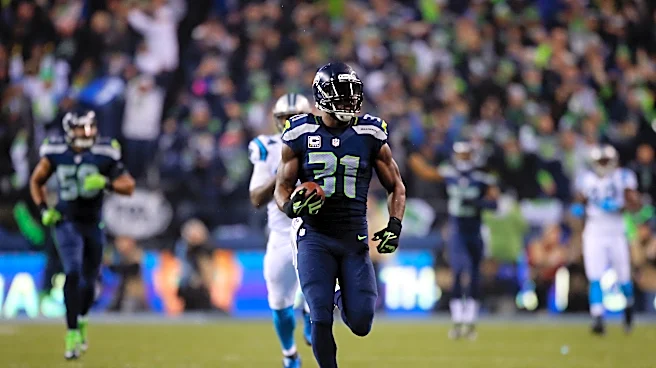
It’s often forgotten that prior to the start of the 2012 regular season, Schneider gave Unger an extension that made him one of the highest paid centers in the NFL. The immediate payoff was a first-team All-Pro nod. The aftermath of losing Unger was ugly; Drew Nowak was the replacement and he didn’t make it a full season before he was let go. Patrick Lewis took over the back-end of the year, while Justin Britt was able to win the center job in 2016. Since Britt’s departure in 2020, the Seahawks haven’t had the same Week 1 starter at center in consecutive years.
As noted in the article, the Seahawks went heavy on retaining their best defensive players, including Richard Sherman, Kam Chancellor, Earl Thomas, Michael Bennett, Cliff Avril, Bobby Wagner, and K.J. Wright. At the same time, the offensive line whittled away from being the NFL’s most expensive group in 2013 to perennially cheap but bad—Luke Joeckel, Bradley Sowell, and Oday Aboushi were signed as starters, while Germain Ifedi, Rees Odhiambo, Mark Glowinski, and others never lasted beyond their rookie contracts.
This offseason saw the Seahawks lose Riq Woolen, Coby Bryant, and Boye Mafe as free agents, all of whom were either starters or regular rotational players on the NFL’s best defense. What did happen, however, was Seattle retained receiver and return specialist Rashid Shaheed. Schneider had anticipated losing Shaheed but was able to re-sign him on a three-year contract.
In the case of receiver Rashid Shaheed, it actually caused Seattle to take a U-turn and retain him. Initially, Schneider thought Shaheed would be gone, after he had dealt fourth- and fifth-round picks for the ex-Saint at the trade deadline to get him. In fact, one of the things he had taken from previous entries then written down after the season was, “Hey, we’re trying to get him back, we want him back, but it’s O.K. if we can’t do it.
“Don’t be super passionate about the [trade] compensation.”
But at the same time, Schneider had also jotted down all the different ways Shaheed had affected games down the stretch of the regular season, then into the playoffs, both on offense and on special teams. So as the receiver market settled, Schneider had resolved to stay loose, rather than just coming to terms with an impending departure and, to the surprise of some, worked out a three-year, $51 million deal with Shaheed.
The whole article is worth your time, and perhaps it might shape your opinion (or confirm your priors) regarding any potential philosophical differences between Schneider and Pete Carroll.