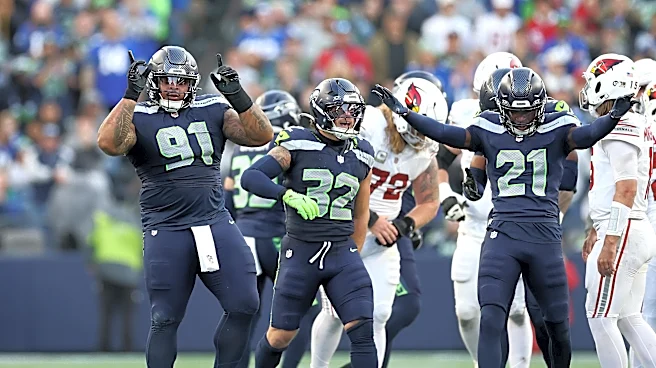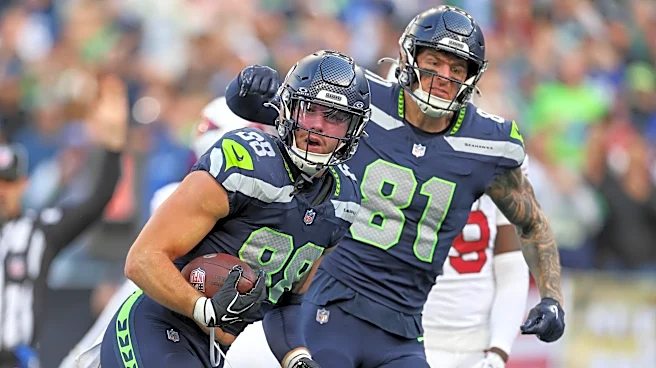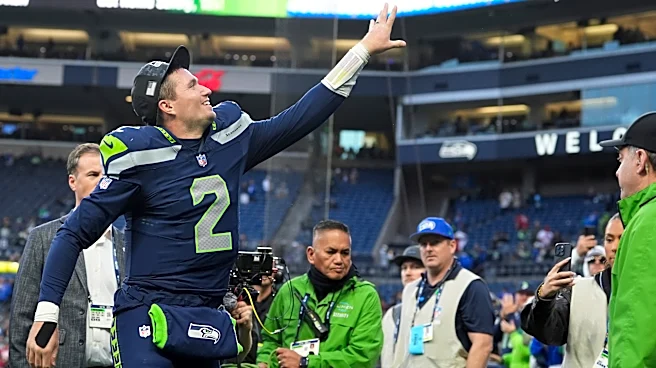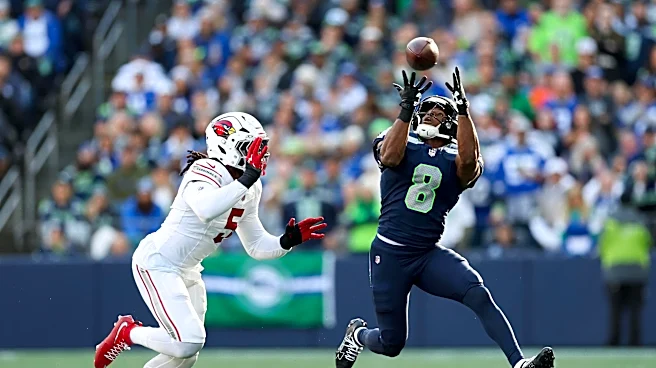



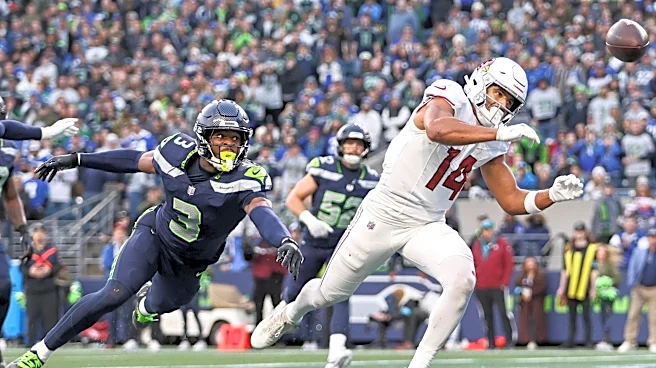
The Seattle Seahawks bounced back from their loss to the Chicago Bears, defeating the Arizona Cardinals at home to move back above .500. Beating Arizona wasn’t enough to restore all the confidence Seattle had lost or completely revive its playoff hopes. Still, with seven players ruled out, including Sam Darnold, Quenton Nelson, Charles Cross, Leonard Williams, Uchenna Nwosu and Rashid Shaheed, this was a game the Seahawks simply could not afford to lose.
Despite facing an opponent that never looked
particularly threatening, Seattle showed resilience and, more importantly, a few signs of improvement. The 17-3 victory wasn’t spectacular, but there were encouraging developments on both sides of the ball.
Let’s take a look at the good, the bad, and what the All-22 tells us about Seattle’s performance.
The Bad
The offensive line still has a long way to go
The Seahawks’ offensive line continues to struggle with consistency. Injuries certainly haven’t helped, and the anticipated impact of Quenton Nelson’s arrival has been delayed by a few weeks.
Speaking of Nelson, there was plenty of discussion about whether Anthony Bradford should remain in the starting lineup while Grey Zabel moved to the bench once Nelson returned. I think this game provided another reason why that shouldn’t happen. Bradford’s limitations remain evident, while Zabel still offers considerably more long-term upside.
Here, Bradford’s immediate loss in pass protection (on the game’s first play, nonetheless) prevents Drew Lock from getting to any secondary reads. He’s easily beaten by Walter Nolen’s hand technique and has no opportunity to recover once the pressure gets through.
You might argue that Bradford isn’t particularly good in pass protection, but at least he contributes to the running game. That’s true to some extent, but his run blocking has been far from consistent. He was thoroughly dominated by Walter Nolen and Andrew Billings throughout the game. On this play, his poor timing and angle leave the defensive tackle free to blow up the entire run.
That doesn’t mean Zabel has been playing particularly well, either. I simply believe his potential is considerably higher than anything Bradford has shown so far. On this snap, Zabel fails to properly set up his pull block, missing the opportunity to create space and ultimately blowing up the play.
Abe Lucas also hasn’t returned to his previous level of play. On this snap, he’s beaten by LJ Collier. There’s not much more to explain here: it’s simply a bad rep from the right tackle.
As mentioned earlier, this isn’t a problem isolated to one player. We also see issues when the offensive line has to work together. Bradford is completely lost in his assignment here, but the bigger issue is that communication breakdowns have become a recurring problem for this unit.
Here’s another communication breakdown. The protection slide appears to be directed toward the right, which means Zabel should be responsible for the more interior gap, especially considering Josh Jones’ movement. I also believe Sundell could have adjusted after seeing No. 50 move in the opposite direction. These are the kinds of technical, communication, and adjustment issues that need to be cleaned up.
The defense still has room to improve
The defense’s numbers were impressive. Seattle contained the running game, showed progress in the red zone and, for the first time this season, kept an opponent out of the end zone. However, against a dysfunctional Cardinals offense, there were still areas that need attention.
Arizona finished with just 198 total yards, including 50 rushing yards on 18 attempts (2.8 yards per carry). Gardner Minshew completed 21 of 30 passes for 166 yards without a touchdown or interception, and Seattle recorded three sacks. After allowing a field goal on Arizona’s opening possession, the Seahawks shut the Cardinals out for the rest of the afternoon. They also forced a turnover on downs on Arizona’s final red-zone opportunity. That’s an excellent response, especially considering the absences of Leonard Williams and Uchenna Nwosu.
The edges of the defensive line remain one of the most vulnerable areas against the run. I’ve noticed a recurring tendency for the EDGE defenders to attack the more interior gap aggressively, while the rest of the defense fails to execute the necessary replacement responsibilities. This creates running lanes that opponents can exploit. It’s something that needs to be addressed with some urgency.
Another issue has been the space between defenders and the way offenses manipulate Seattle’s second level. Routes attacking those areas have repeatedly found openings. This is something to keep an eye on, particularly with Brock Bowers coming up next week.
The Seahawks are playing man coverage against this Cardinals empty formation, designed to spread out the defense. Drake Thomas has a clear opportunity to make an easy tackle, but he loses the rep to Gardner Minshew. If the quarterback doesn’t give himself up, he might even have a chance to reach the end zone.
Josh Jobe’s reps tend to be repetitive. When he wins at the line of scrimmage with his press technique, he has a chance to make a play. When he loses that initial battle, things usually go downhill quickly. Here, he ends up in trail position behind the receiver, but fortunately, Minshew is sacked before he has time to deliver the ball.
The Good
The Price and Charbonnet duo gives Seattle reasons for optimism
This was the second game with Jadarian Price and Zach Charbonnet sharing the backfield, and there were some encouraging signs.
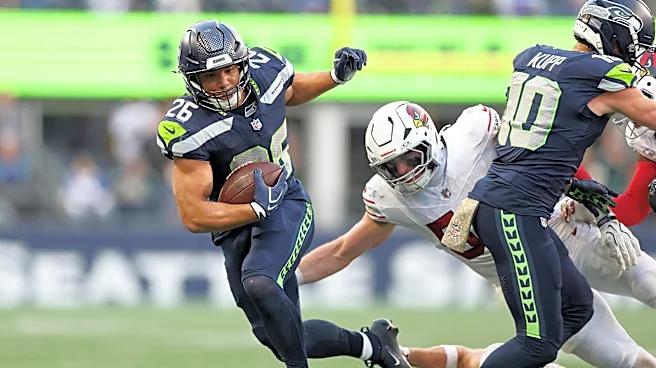
Charbonnet finished with 16 carries for 77 yards (4.8 yards per carry), adding one reception for nine yards. Price recorded nine carries for 24 yards and made an even bigger impact as a receiver, catching all four of his targets for 54 yards. That gave him 78 yards from scrimmage, while Charbonnet finished with 86.
Those performances offer some hope for greater consistency in the running game, particularly once Nelson returns and Seattle gets its offensive line closer to full strength.
And speaking of consistency, the Seahawks have a running back who provides plenty of it. I don’t necessarily see Charbonnet as an explosive runner who will consistently threaten defenses with long gains, but he’s always looking for ways to keep the offense moving.
Here, AJ Barner’s block gets beaten, forcing Charbonnet to make an immediate adjustment. Notice how he doesn’t waste time searching for some magical running lane. Instead, he finds a way to salvage the play and pick up positive yardage. He then runs through contact, continuing to fight for every extra yard.
This is the kind of play that can turn into a highlight. The initial design appears to send the run toward the right, following the fullback’s block and the offensive line’s movement, particularly the center. Charbonnet changes direction, making things difficult for the center angle. Billings does an excellent job initially, but Charbonnet somehow escapes, breaks another tackle and picks up the first down to help seal the victory.
Unfortunately, another excellent play by Charbonnet was wiped out by a questionable decision from Sundell, who committed an unnecessary roughness penalty at the end of the play.
There’s still room for improvement. The split-zone concept creates an opening on the left side, but Charbonnet decides to cut in the opposite direction. Still, this is consistent with what I mentioned earlier: Charbonnet doesn’t live and die by the big play. His approach is to take what’s available, even when that means settling for a smaller gain.
Another important detail is that the offensive line appears to be more productive running inside zone concepts than wide zone. That has somewhat limited Price’s production while making things easier for Charbonnet, whose running style is better suited to this approach. Here, Lucas takes too long to establish his block, forcing the running back to move laterally more than the play design intended.
Price needs to improve the extra steps he takes when making cuts, particularly when attacking inside. His vision has improved, but he sometimes takes unnecessary steps before committing to a direction. Those extra movements can be the difference between a modest gain and a significant run. It’s something he should continue to develop as he gets more experience.
Notice how his change of direction is much more decisive here, with sharper and more defined cuts. That’s the kind of improvement we want to see from him.
Where Price really made his presence felt was as a receiver. His four catches for 54 yards represented a career high in receptions and receiving yards, dating back to his time at Notre Dame. During his college career, he never caught more than three passes in a single game, and his opportunities to produce significant receiving yardage were limited. Against Arizona, he showed a different dimension to his game and gave Seattle another way to use him offensively.
Lock recognizes the pressure developing and sees that an EDGE defender is responsible for covering the running back in man coverage. Price beats his defender with the route and makes an excellent catch. It’s a good example of how Seattle can take advantage of mismatches by getting its running backs involved in the passing game.
The Cardinals completely lose track of Price as a receiving threat here, and he makes them pay. He understands how to find space, has the explosiveness to make defenders miss and delivers an excellent cut to pick up the first down. It was one of his first truly impactful plays as a Seahawk, and a promising glimpse of what he could bring to this offense.
Drew Lock is a fighter, but he has a ceiling
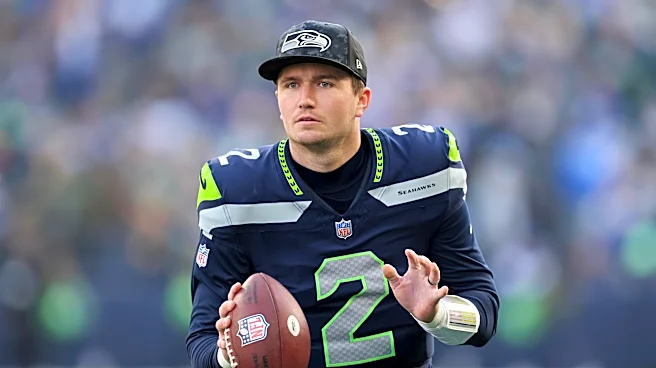
Drew Lock did exactly what Seattle needed from him in this game. He completed 19 of 28 passes (67.9%) for 175 yards and one touchdown, with no interceptions. He also added 16 rushing yards on five attempts. Perhaps the most important number, however, is zero: he wasn’t sacked once.
There was nothing particularly spectacular about his performance. He didn’t consistently create explosive plays or put the offense on his shoulders. Instead, he played conservatively, avoided unnecessary risks and, most importantly, didn’t give the defense opportunities to put Seattle in difficult situations. Considering how much the offensive line has struggled, simply avoiding sacks and turnovers was a significant contribution.
He also deserves credit for putting his body on the line despite dealing with two injuries. It takes resilience to keep playing under those circumstances. Here, he executes a quarterback sneak to move the offense away from its own end zone. It also looks like Fleury learned something from the game against the 49ers: sometimes, keeping things simple is the best approach.
Lock completed most of his conservative throws, but there were moments when he showed he could attack tighter windows. Here, he recognizes JSN working behind the linebacker and delivers an accurate pass into a narrow throwing window.
Another example of Lock trusting his read and throwing into a tight window. Barner has no defender lined up directly across from him at the line of scrimmage. Lock recognizes that before the snap and, once he sees the linebacker drop into coverage and Barner begin his route, he pulls the trigger. The throw gives the tight end an opportunity to make the catch and score his first receiving touchdown. It’s good to see Seattle making better use of its tight ends in the red zone!
Not everything was positive, though. Lock missed a few throws, including this screen pass, which had the potential to turn into a pick-six. Fortunately, it ended up as a positive play for Kupp instead.
Barner runs a good route here, and Lock has adequate protection. He should put the ball further out in front of the tight end, giving him a chance to make the catch and gain additional yardage. Instead, the pass ends up too far inside, allowing the linebacker to get a hand on it and break up the play.
Here’s a pre-snap recognition issue. Kupp and JSN are lined up on the same side as an EDGE defender and a linebacker. Lock should recognize the alignment and adjust his progression toward that side. Instead, he initially reads the opposite side before coming back to Kupp and JSN. Kupp would have been open, but by the time Lock gets back to that side, the pressure arrives. Had he started with that read, he might have had enough time to make the throw.
This time, Lock does a much better job recognizing the coverage before the snap. He sees the defense playing off coverage and understands that Horton’s route will create an opportunity for an inside throw. It’s a good pre-snap read and the kind of consistency he needs to maintain.
Mike Macdonald is showing some new tricks
One of the more encouraging aspects of this game was Macdonald’s willingness to adjust. With the pass rush dealing with several injuries, Seattle blitzed at a rate approaching 40%, considerably higher than its usual approach.
The reasoning makes sense. The Seahawks were missing important pieces up front, while the Cardinals had essentially one consistent passing threat in Trey McBride. That may have given Macdonald more confidence to send extra rushers and create pressure through different looks. It could also be an interesting approach to consider against the Raiders next week.
Speaking of new tricks, here’s an almost unconventional defensive formation. Macdonald deploys Connor O’Toole and DeMarcus Lawrence as interior defenders, while Derick Hall and Nick Emmanwori line up as EDGE defenders in an obvious passing situation. The Cardinals decide to run the football despite the unusual alignment, but they don’t get very far. It’s an interesting way to disguise responsibilities and give the offense something different to process before the snap.
This is the kind of flexibility that makes Macdonald’s defensive scheme so interesting. He doesn’t necessarily need to rely on the same personnel combinations or rush patterns every week. When injuries limit his options, finding alternative ways to create pressure becomes even more important.
Final Thoughts
There’s a saying in Brazilian soccer that goes something like this: “There are no ugly goals; the only ugly thing is not scoring.” That applies pretty well to this victory. The Seahawks might not have produced a particularly impressive performance, but this was the win they needed.
There are still plenty of issues to address. The offensive line needs to become more consistent, the defense has to do a better job protecting the second level, and Lock’s limitations will become more apparent against stronger opponents. Still, there were encouraging signs, particularly from the running backs and Macdonald’s willingness to adjust his defensive approach.
Next week, Seattle faces a tougher opponent than the Cardinals. But once again, the Seahawks need a win, whether it’s pretty or ugly. Getting that victory would allow the team to enter its bye week with some momentum, recover injured players and prepare for the final push toward the playoffs.
Go Hawks!