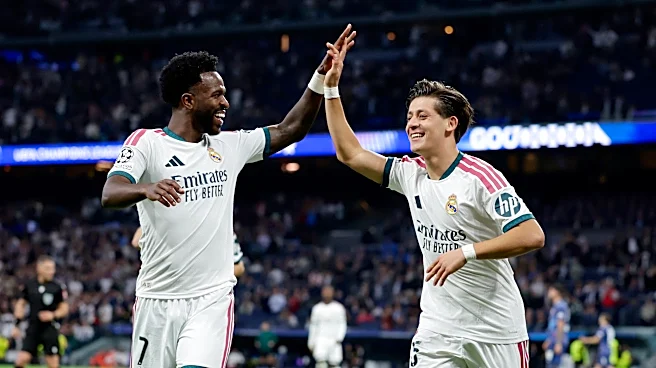




Real Madrid trailed PSV Eindhoven 1–0 at half-time and could easily have been further behind. As against Celta Vigo, José Mourinho’s side started slowly. The first-half problem was clearest when Fede Valverde made a run beyond his marker. Madrid could open the passing lane, but too often the next pass went backwards. When they tried to go long, the ball tended to land where PSV wanted it.
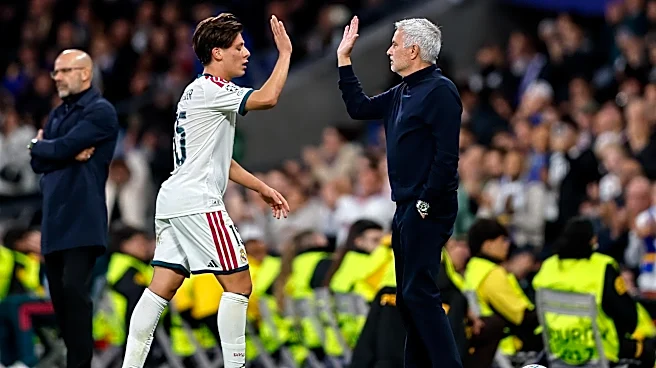
Mourinho’s substitutions changed who played those passes and how early Madrid could release their runners. The
numbers by half give some indication of how different the two performances were.

Why Real Madrid struggled to play through PSV’s press
Madrid had ways out of the press before half-time. In the seventh minute, Valverde drifts inside, taking Van Bommel with him and opening a passing lane from Éder Militão to Yan Diomandé on the right touchline. As soon as Diomandé receives, Valverde runs beyond his marker. That gives the winger two options. He can carry the ball into the half-space Valverde has just vacated or play him through. Diomandé plays back to Aurélien Tchouaméni, and Madrid settle into possession.

Ten minutes later, Valverde moves behind PSV’s first line of pressure to receive from Thibaut Courtois. He lays the ball off to Antonio Rüdiger, who can now find Vinícius Júnior on the left. Vinícius drops towards the ball, Sergiño Dest follows him, and Valverde moves into the space they leave. The exchange gives Vinícius an angle to find Valverde and helps Madrid establish possession beyond the press.

The difficulty came with the pass from the middle third into the final third. Madrid rarely found a runner in behind or isolated a forward one-on-one. Even when the first line of pressure was beaten, PSV usually had time to recover.
How Huijsen and Bellingham opened up the right
No other centre-back in Madrid’s squad has Dean Huijsen’s range of passing. The passing networks show how the change at centre-back affected the buildup. Huijsen and Ibrahima Konaté exchanged fewer passes with each other than Militão and Rüdiger had in the first half, and both played forward more often.

One of Huijsen’s first passes cuts between PSV’s front two and finds Jude Bellingham. Bellingham lays it off to Valverde, who feeds Diomandé near the right touchline and immediately runs in behind. Van Bommel tracks Valverde, while Diomandé stays high and wide to occupy Kostić. This time, Bellingham is there to lift the ball over Van Bommel and into Valverde’s path.
Neither Kylian Mbappé nor Vinícius can reach Valverde’s ball across goal, but the move shows what Madrid had missed. With so much of their first-half play concentrated on the left, Valverde had rarely had a midfielder on the right in position to pick out his next run.

How Vinícius and Güler pulled PSV’s markers out of position
Vinícius also took up narrower positions after half-time. He took more touches inside and repeatedly attacked the channel behind Dest.

In the 68th minute, it is Güler who peels wide and Vinícius who makes the inside run. Güler’s pass takes Dest out of the move and puts Vinícius through on goal, though his shot goes straight at the goalkeeper.

The equaliser brought together that inside movement and the wide combinations we highlighted against Racing Santander. Bellingham takes Mbappé’s place in the centre, freeing the Frenchman to drop behind Vinícius and Marc Cucurella on the left. From there, Mbappé has the angle to pick out Vinícius as he runs beyond Dest.
Vinícius gets to the byline and crosses to Diomandé at the far post. Diomandé brings the ball down for Arda Güler, who sets up Valverde. Having started so many of Madrid’s attacks on the right, Valverde arrives late in the middle to slide the equaliser into the bottom-right corner.

Madrid’s rotations forced PSV’s defenders to decide when to pass a runner on to a teammate. In the 53rd minute, Dest wants to step up to Bellingham, but he has to wait for Geertruida to take over marking Vinícius. If Dest goes too early, Bellingham can play Vinícius in behind him. That hesitation gives Bellingham the extra yard he needs to turn towards the right half-space.
There, Wanner leaves Güler to close down Bellingham just as Mbappé comes short and draws Obispo out. Güler is free, already side-on and able to see the space behind the centre-back. His through ball finds Mbappé, but the forward delays his shot long enough for Obispo to recover and clear.

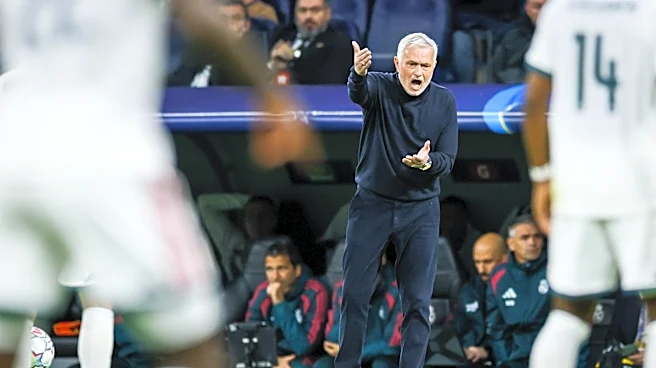
After the game, Mourinho explained what he wanted from his midfield. “Our biggest change was to have Bernardo and Arda, two guys who play football, nothing defensive, and that changed the dynamic and gave us absolute control.”
Watch Güler before Bellingham’s go-ahead goal. As Madrid move the ball across the back line, he checks over his shoulder. Cucurella finds Vinícius coming short, and Güler waits. His marker retreats and turns towards the ball. By the time Güler receives, he has the separation he needs to thread a pass into Cucurella’s run. Cucurella picks out Mbappé, whose layoff finds Bellingham. The midfielder juggles the ball before lifting it over the goalkeeper.

Huijsen’s ability to pass with either foot comes into play again before Madrid’s fourth. PSV are ready to close him down if he plays wide, but he spots Vinícius edging infield. That opens a route through the press with an up-back-and-through combination.
Brahim Díaz makes the decisive turn. A body feint wrong-foots Ryan Flamingo, and Brahim lets the ball run diagonally across him before slipping a pass behind Obispo. Mbappé rounds the goalkeeper and finishes.

The final score was 5–1, but Mourinho kept coming back to the opening 45 minutes in his post-match assessment.
“No, there’s still a long way to go. Because when we start matches like this, there’s still a long way to go. I can’t get my team to play the same way from the very first minute. Obviously, coming from behind feels good. But with the risks we’re taking, things can go wrong. And I don’t want to have that feeling, that question mark over whether we’re going to start well or badly. That’s why there’s work to be done.”
Mourinho can take encouragement from how quickly his players applied the changes. Valverde was making runs behind PSV from the seventh minute. Within minutes of the restart, Huijsen and Bellingham had found a way to get the ball to him there. The concern for Madrid is how much the comeback owed to PSV leaving chances unfinished. Against a more clinical opponent later in the Champions League, the same half-time intervention could come with a much larger deficit to overturn.