


April is Autism Awareness and Acceptance month. Learn more here.
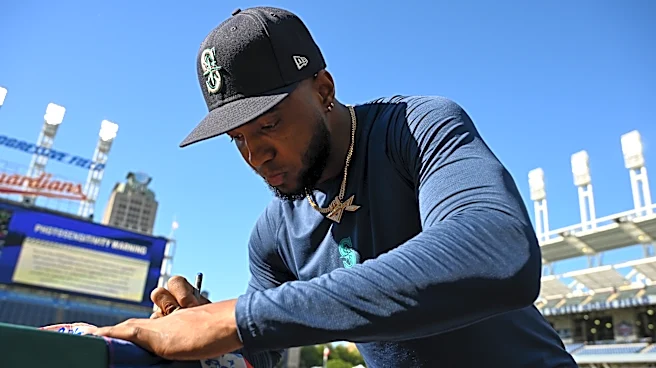
You might have noticed that current Dodgers outfielder and former Mariner Teoscar Hernández has been sporting some new gear this season: his guards feature rainbow-colored interlocking puzzle pieces, a symbol for autism awareness since 1963. Hernández has been wearing the gear, which the company EvoShield custom-designed for him, in honor of his six-year-old son, Teoscar Jr., who has autism spectrum disorder (ASD). Hernández described
it as a way to let his son know that his dad sees him as special, not different. In doing so, Hernández also let current Mariners outfielder Victor Robles know that he sees him and his family.
When Hernàndez revealed his gear on Instagram earlier this spring, Robles reposted the image, captioning it in Spanish: “el que no la vive, no la entiende” – “if you don’t live it, you don’t understand it.”

“That post really hit home for me, because my son was diagnosed with autism,” Robles said through team interpreter Freddy Llanos. “And it’s true, unless you’ve lived it, you don’t really understand it. So I’m excited to help bring awareness for my son, for all the families in the world who are in this situation.”
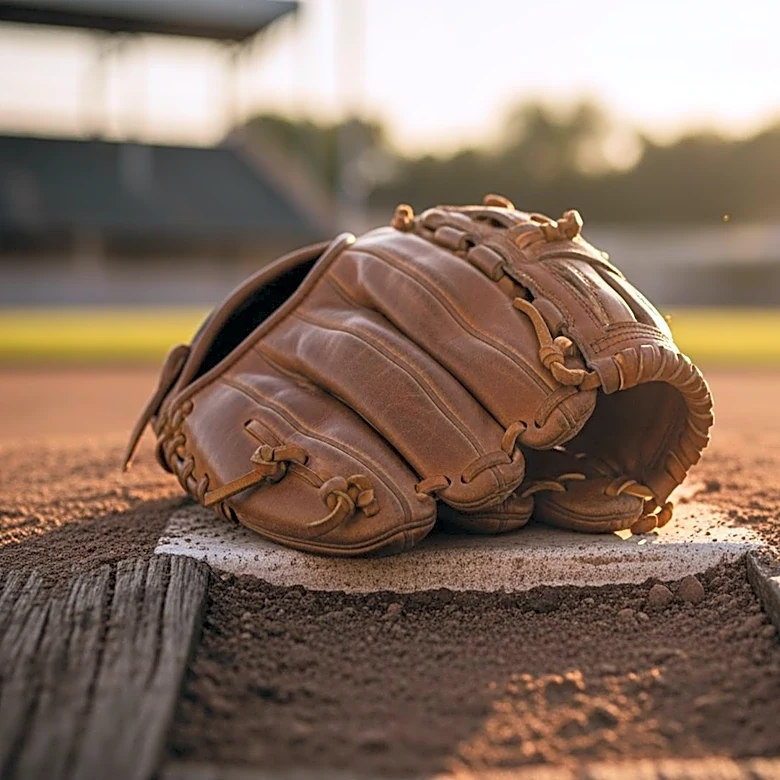
Robles said he’d heard that Hernández and he had this in common, but it wasn’t until he saw the post that he reached out, calling it a “beautiful message.” Robles went about making his own custom autism awareness gear, hand-drawing the interlocked puzzle pieces on his glove.

Robles also designed a t-shirt with the puzzle pieces and two figures – a father and a son – holding hands and walking down a street with the text “you’ll never walk alone.”
“I wanted to do something like this because it can be difficult, at first, to have a child diagnosed with this condition, and people have to understand it, be able to interact with it. So helping people know a little bit more about autism and bringing awareness to that, it’s very special for me.”
“It’s showing support for myself, my family, anybody else who’s going through this, but especially my son. As long as I’m alive, my son is never going to be by himself. He’ll always have my support.”
Victor’s son – also named Victor Jr. – is five years old now; he was two when Robles and his wife started to notice trends that concerned them.
“We started seeing some tendencies that were different from the other kids. He would cover his ears when there were loud noises. Sometimes he would hit himself. So we took him to the doctor and he was diagnosed with autism.”
Families who receive diagnoses of autism in the Dominican Republic can face significant challenges. While understanding of autism spectrum disorder (ASD) has increased among practitioners and the general public, the Dominican Republic remains a developing country, and accessing support can be difficult for even affluent families. Special needs students in the Dominican Republic weren’t entitled to a free and appropriate public education (FAPE) until 2008, when the D.R. signed on to the United Nations Convention on the Rights of Persons With Disabilities (compare that to the US’s IDEA Act, adopted in 1975). Even today, support for families living with autism remains largely privatized and restricted to those who live in the major cities like Santo Domingo, isolating rural families living with autism even further.
“You really didn’t see it much, growing up in the Dominican Republic,” said Robles. “It wasn’t until maybe six or seven years ago that you started to see more kids being diagnosed with autism. And it’s hard over there, because care is expensive. It’s not like here [in the U.S.] where it can be less expensive or even free. Even for families that can afford it, it’s a challenge.”
Robles recognizes that he is one of the lucky ones; his wife stays at home in the Dominican Republic during the season and cares for the couple’s two children, taking Victor Jr. to the appointments Robles is acutely aware they’re fortunate to access.
“I call her my warrior, because she’s out there taking care of them by herself. And sometimes I ask myself, how can she do this all by herself? But God has given us the strength to be able to overcome this and keep going forward.”
“So I really try to put myself in the shoes of some of these families in the D.R. and understand their difficulties.”
Every April, with Holly Robinson Peete – who has a child with autism – the Dodgers host a sensory-friendly workshop for kids with autism, including activities like painting and friendship bracelet-making. This year, Teoscar Hernández joined in.
It’s something Robles would like to replicate with the Mariners some day, to connect with families who are facing some of the same struggles as him and let them know he knows what it’s like to be in their shoes. He also wants to help raise awareness of what autism looks like to encourage empathy and understanding among those who do not.
“There are so many families living with this condition, and you see more every day,” said Robles. “And it can be a challenge, sometimes. You take your kid out to a restaurant and he wants to throw things or interrupt other people. So I understand why some families feel shame. But I’m trying to take my kid out everywhere I can, get him familiar with the world, to interact with others.”
In addition to letting families know they are seen and understood, Robles hopes those who don’t know what it’s like to live with autism gain empathy through learning.
“They’ll see someone displaying some of these characteristics and they start judging. So having that empathy and realizing there’s a lot more going on, that’s what I wish for.”
He also hopes that baseball will move as a whole to become more actively inclusive of those with autism, both fans and future (or current) players.
“It would be special, because this league is a worldwide league, so being able to have that connection – maybe at the World Series – to be able to show people having those certain identifying characteristics, and showing support for them and their families, I think that would be a beautiful moment.