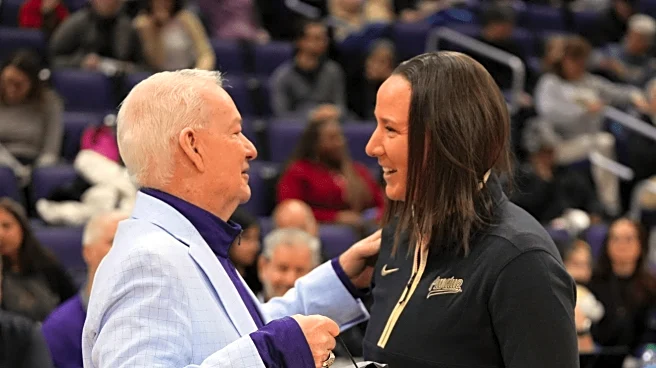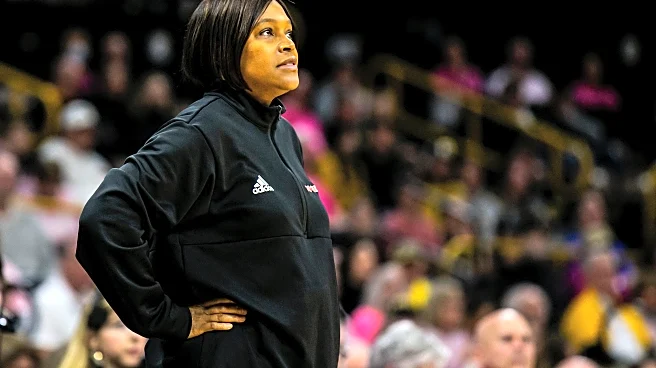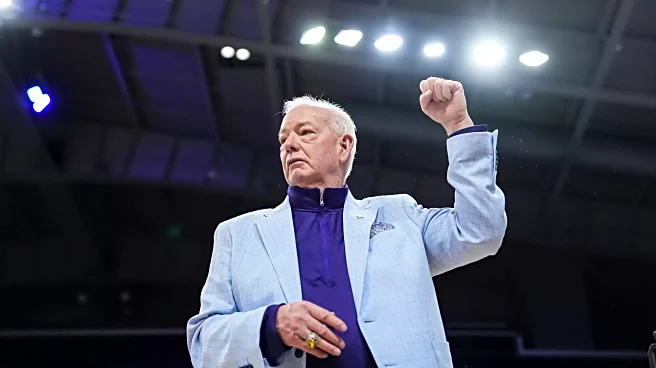

Joe McKeown is a legend in every sense of the word.
The now former Northwestern women’s basketball head coach finishes his 49-year coaching career as perhaps the greatest head coach in both Northwestern and George Washington history. His list of accolades is long.
777 wins as a head coach. In 19 years at George Washington, he won four A-10 tournament championships, 10 A-10 regular season championships and qualified for the NCAA tournament 15 times, making it as far as the Elite Eight. In 18 years at Northwestern,
he won 268 games — the most in school history — and delivered the program’s first NCAA tournament victory is 28 years. He coached 41 All-Big Ten players and seven All-Americans, including the first Wildcat to be drafted to the WNBA in Amy Jaeschke. He is the architect of one of Northwestern’s two regular season Big Ten titles, earned in the pandemic shortened 2019-20 season. If not for COVID-19, he very well could have made a run at the conference tournament, and even the whole darn thing.
McKeown is an easy guy to like and a better man than most.
Yesterday, in his opening statement after the final game of his head coaching career — a 67-62 loss to Purdue — McKeown began by thanking the crew of Northwestern student journalists in attendance, noting that women’s basketball did not receive this current level of coverage when he began coaching in 1978. McKeown has consistently made himself available to student-run media outlets more than any other Northwestern head coach. He granted Inside NU, the Daily Northwestern, WNUR and Northwestern News Network one-on-one interviews throughout his final few seasons. He jokes with student journalists postgame and makes a point to know the students who cover him frequently by name.
He also has a son on the autism spectrum, and he has dedicated his non-basketball life to charity work to improve the lives of children like his own. When asked how he will spend his retirement, his first answer was that the added free time will allow him to pour more effort into that important work.
McKeown announced that he intended to retire from coaching at the end of the 2024-25 season, and this year has served as a quasi farewell tour for head coach to receive his flowers from the many programs, coaches, players and families he’s positively impacted in his 49 years.
Yet however great his coaching career — however long the list of accolades and the list of lives he’s impacted throughout his time in the businesses — the end has been too long.
McKeown’s Northwestern team failed to win 10 games in each of his final four seasons and did not qualify for the Big Ten Tournament in the final two, the only ones in which the conference has eliminated the bottom three teams from postseason contention. No other Big Ten program has won less than 10 games more than twice in that span. His final year at Northwestern ended with 11 straight losses, nine of which came by more than 10 points, including one against Penn State, who will also miss the Big Ten Tournament
This run of sustained awfulness should not be tolerated anywhere in Northwestern athletics — and would not be tolerated on the men’s side, despite that program’s lesser overall record of success. Northwestern cannot claim to be a champion of women’s collegiate athletics while this team continues to languish in the basement of the Big Ten.
These final four years will not be Joe McKeown’s legacy, but his retirement tour has hampered that proud program he helped build. Northwestern gave McKeown his ride into the sunset off of three years of uncompetitive basketball. It cannot have been surprising that his final year resulted in a fourth. Northwestern’s eight victories in 2025-26 represent its lowest win total since McKeown’s first year at the helm in 2009.
Northwestern’s coaching staff is talented and capable, and the Wildcat assistant coaches no doubt played an elevated role during McKeown’s final years. Yet the existing power structure — with now 69-year-old McKeown at the top — still produced by far the worst team in the Big Ten since 2022, and Northwestern remained satisfied with the status quo.
If McKeown’s farewell tour served as an audition for one of Northwestern’s assistants to take the top job — Tangela Smith is probably the top internal candidate — a measly 17 combined wins over these last two seasons should be enough evidence for Jackson to look elsewhere. And if the plan has always been to promote internally, Northwestern should have used this year to try out one of its assistants in an interim capacity.
This season was wasted, callously and coldly. It’s a move dripping in neglect.
These four seasons of extended futility have occurred as women’s basketball has experienced a nationwide boom in popularity and financial success. Northwestern has been left behind.
Buoyed by the superstardom of Iowa’s Caitlin Clark, women’s college basketball especially has garnered more interest than ever before. According to a report from Deloitte released last March, revenues from women’s basketball were projected to top $1 billion for the first time in 2025, up from $710 million in 2024. The 2025 women’s college basketball national championship game drew more than twice as many viewers as the 2021 finale, even without Clark. The 2024 women’s national championship between Clark’s Iowa and undefeated South Carolina was the first to garner more viewership than the men’s game.
There may have been financial reasons for Northwestern and athletic director Mark Jackson waiting to find McKeown’s replacement. Northwestern recently settled the wrongful termination lawsuit levied by former head football coach Pat Fitzgerald. The terms of that settlement were not revealed, but Fitzgerald’s originally sued the school for $130 million. The final deal undoubtedly included a sizable financial commitment from the university.
In April 2025, President Donald Trump froze $790 million in federal research funding, citing allegations of antisemitism following an investigation into the school’s handling of Pro-Palestine demonstrations during April 2024. Northwestern agreed to pay the Trump administration $75 million in November in order to restore to frozen federal money.
Yet in the face of these financial pressures, Northwestern has not shied away from spending money of football or men’s basketball. Jackson has not made a head coaching hire since he took the Northwestern job in August 2024, but he oversaw the hiring of Chip Kelly as Northwestern football’s offensive coordinator and a contract extension for Chris Collins, the Northwestern men’s basketball head coach. As signing and retaining talent has become increasingly expensive across college sports, Collins recently landed the highest rated recruiting class in school history and the highest rated class of transfers as well.
Northwestern has remained competitive across its other proud women’s programs, although the financial pressures they face are undoubtedly different. Football and men’s basketball — and women’s basketball, to a lesser extent — are the only sports that generate revenue in most of Division I athletics. Minnesota men’s hockey was the only non-football or men’s basketball program to turn a profit during the 2025 fiscal year, per the recently released financial reports for the Big Ten’s 16 public schools (Northwestern and USC didn’t release reports as private institutions).
Still, Northwestern field hockey and women’s lacrosse all have either competed in or won a national championship since Jackson was hired. Northwestern is rightly proud of these programs’ successes, but it cannot continue to champion itself as a leader in women’s sports while its women’s basketball program has been left brutally and painfully behind.
Northwestern women’s basketball has managed to find relative success on the recruiting trail and in the transfer portal over the last years of McKeown’s tenure, even as he decried the changes wrought by revenue share and NIL in his final press conference.
Xamiya Walton, one of four members of Northwestern’s 2025 recruiting class, was ranked as the No. 55 recruit in the country by ESPN when she signed with the ‘Cats. Tayla Thomas was similarly highly rated, and she, along with her peers in the class of 2024 — Walton, Kat Righeimer and Claire Keswick — has shown flashes of excellence in her first two years in Evanston. Northwestern’s two high school recruits in its class of 2025, Amparo López and Angelina Hodgens, have also shown potential.
The portal has also given Northwestern some elite talent, including 2025-26 leading scorer Grace Sullivan, who will likely earn All-Big Ten honors for her performance in her final year in Evanston after transferring in from Bucknell two years ago. Even has the overall roster has proved incapable of winning games in the Big Ten, stories like Sullivan’s are reasons for optimism.
Jackson now has a hire to make.
The impending search for McKeown’s replacement represents an opportunity for Northwestern to right the wrongs of this extended run of ineptitude with a substantial investment in the program.
Jackson has showed his willingness to invest in football and men’s basketball during his first 18 months leading Northwestern’s athletic department. He now needs to get serious about women’s basketball.
It’s been way too long.