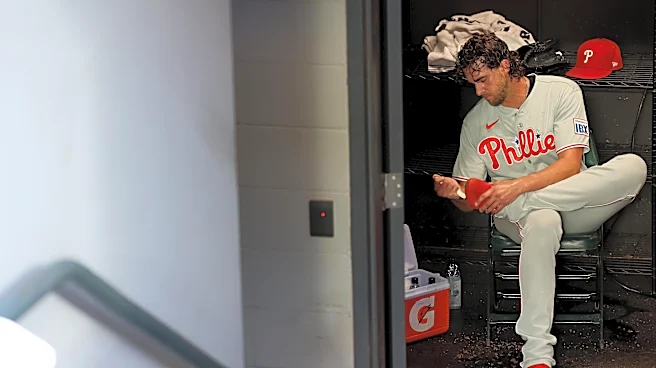

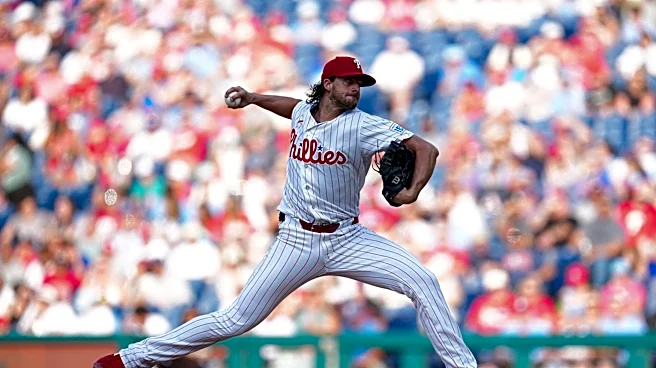
When the Phillies signed Aaron Nola to a seven-year contract extension, there was concern. Concern that at some point, the years and mileage on his arm would come and claim him, concern that the contract would age poorly, concern that there really was no reason to give him a deal that long. After the dust settled on his 2025 season and he was a playoff starter for a mere two inning stint, more out of desperation than anything else, all of those concerns seemed to come true at once. During last season,
he looked worn down, was injured, was prone to the long ball, all the things that we feared.
Once 2026 started, those same concerns came back to the forefront. When the sun set on the month of June, Nola was sporting a 6.04 ERA and had lost confidence. He looked bad on the mound, his body language looked worse and the Phillies were in need of a solution. They needed starters for the rotation, relying too heavily on their top three and a wing and a prayer for the remaining two.
Since July began, the tide has turned for Nola. In these past two month, Nola has made ten starts, throwing 58 innings and posting a 3.57 ERA for his efforts. The 4.76 FIP suggests that maybe that ERA isn’t as deserved as maybe it should be, but has struck out more hitters now than he has (23.1% before 7/1 vs. 27.9% after). He’s even going longer during his starts since he has reliably gotten hitters out with more regularity.
One of the lead reasons he has been better has been the pitch that was his bread and butter has made a sterling comeback as one of the better pitches in the game.
Go on Nola’s Baseball Savant page to use those fun percentile sliders and you’ll notice something. While there has been a lot of waffling with how much red is assigned his profile, one thing that has remained steady has been his breaking ball run value. Blessed with a very good knucklecurve, the run value for the pitch has hovered on the 90th percentile or higher. Last year’s nightmare season saw the run value for the pitch dip into the negatives for the first time in his career (-3 on the pitch), but he has recovered in a big way. As curveballs go out of style, Nola’s has regained its place near the top of the game.

Click around the list you see, toggling back and forth between the different categories and you’ll see that no one throws the pitch more than Nola and while it may not be the best on a per pitch basis, it remains one of the best in the game.
It’s been the key to his season turning around too.
No doubt as you looked at Nola’s Savant page, you also noticed something else as well. Nola’s fastball combination (sinker and four-seam) are literally two of the worst pitches in the game. In fact, through Wednesday’s games, Nola’s sinker is, by run value, the worst sinker in the game today among those who have thrown a qualified number of them (-13 RV) while the four-seam is fourth worst (-14 RV). He has had to rely on his secondary stuff, something he has done more often.

What has been most interesting about Nola turning his season around has been the increase in his using a changeup. It makes sense that he does it since he has generated more whiffs on the changeup in these past two months than he did in the beginning of the season, which means he’s able to play it off of his fastball. He’s seen his whiff rate rise on his curveball, which combined with the better changeup, likely explains the success he has seen these past few months.
Thanks to his terrible 2025, there is still the underlying feeling that the rug is going to be pulled out on Nola’s current run. Two months worth of games should be a decent amount of run to show that he has been meaningfully better than he was at the beginning of the season and that is should be pretty sticky. There might still be some trust issues when it comes to a potential playoff start, but at least now, if he were to get a start, there would be some feeling he could go more than two innings.
Sometimes, baseball just throws you a curveball.
Aaron Nola has taken that to heart.