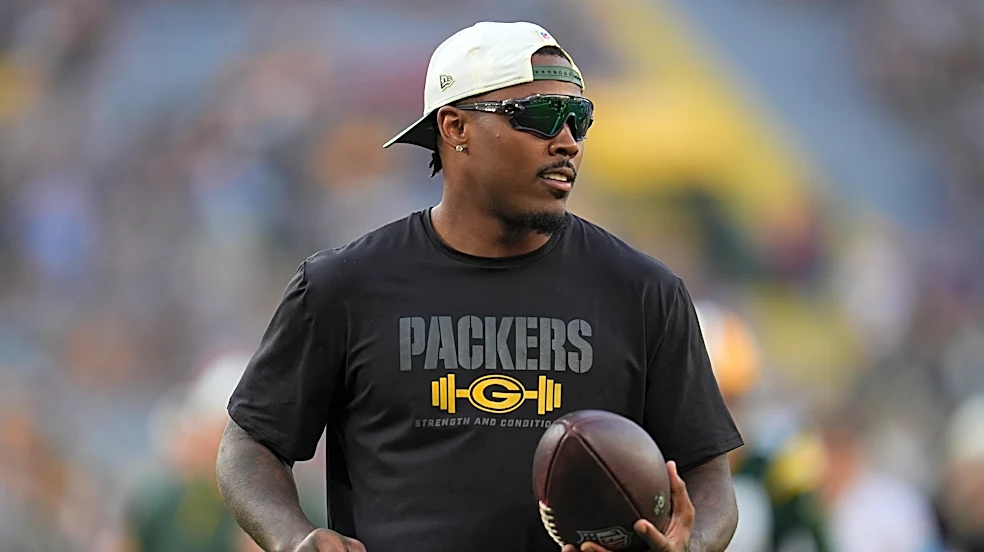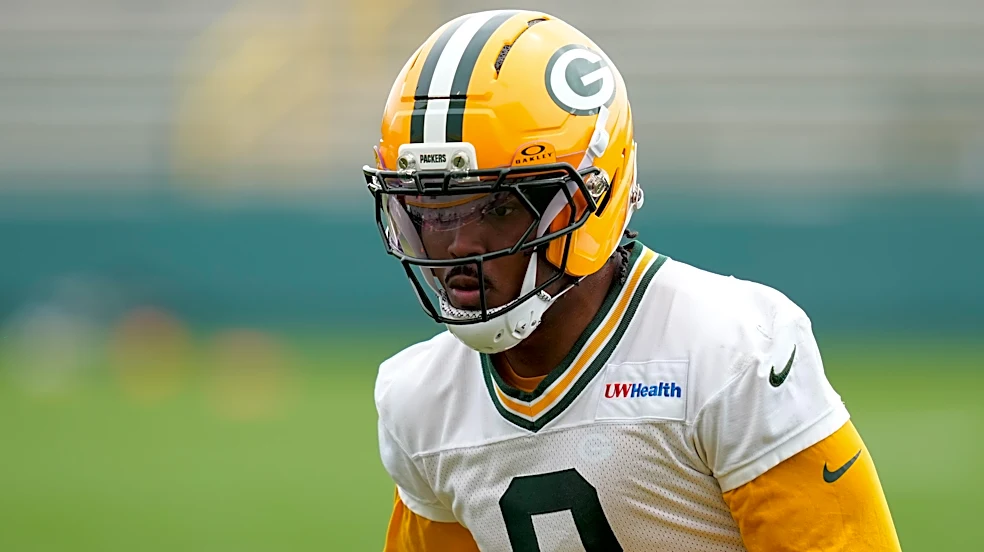




According to WBAY, Green Bay Packers running back Josh Jacobs is suing the Hobart-Lawrence Police Department, which is in charge of deciding whether or not a video from Jacobs’ garage will be released as part of his battery and criminal damage to property case. Yesterday, it was reported that the police department delayed the release of evidence, requested by media outlets, on the basis that the department “has received written notifications from attorneys representing the record subjects of their
intentions to seek judicial orders restraining disclosure.”
One would guess that the subjects would be Jacobs, who initially filed the first temporary seal of evidence in the case, and the victim, who filed a permanent seal of evidence in the case, but we do not have confirmation of that. Earlier in the legal process, a judge ruled that the Hobart-Lawrence Police Department should make the final judgment on whether or not to seal the evidence permanently, not the judge.
Reports claim that the NFL is attempting to access the video, but that they haven’t been able to yet. On record, head coach Matt LaFleur has stated that neither he nor the Packers have seen the video, either.
Currently, Jacobs is on the league’s commissioner exempt list, a placeholder for a suspension. The league will treat Jacobs’ time on the exempt list as time served toward a suspension, but they only have one opportunity to suspend Jacobs for a single violation of the personal conduct policy, as the NFL learned the hard way after the Ray Rice incident — when Rice was originally suspended for two games, later suspended indefinitely when video of his domestic abuse incident was published by TMZ and then the league had to eventually pay Rice back for all the games he missed beyond the two-game suspension.
Below is what WBAY wrote about the lawsuit:
Online court records show Jacobs filed a lawsuit Thursday for, “Permanent Injunction, Protective Order, and Order Restricting Access to Records Under Wis. Stat.19.356.”
The materials include police reports, dispatch audio, investigative notes, and specifically video footage recorded inside Jacobs’ private residential garage that was obtained via a search warrant.
Jacobs argues in the suit that releasing interior footage of his garage exposes his home’s layout, access points, security setups, and valuables. Because his professional sports schedule and travel dates are public, he argues this creates a severe, irreversible risk of targeted burglary, break-ins, or harassment.
Jacobs joins and supports the requests of the identified victim (identified as “ANM” in the document), arguing that public disclosure would violate Wisconsin victim privacy rights (known as Marsy’s Law), cause re-victimization, and lead to public exposure that cannot be prevented by simple redaction due to modern AI identification tools.
“ANM is a crime victim who seeks closure, not public attention,” the suit states.
Jacobs is asking a judge to issue a permanent injunction barring the police department from releasing the garage footage and any identifying or sensitive details regarding the victim, arguing that personal safety and privacy far outweigh the public’s interest in seeing the records.
According to the document, the Hobart-Lawrence Police Department has 20 days to respond.