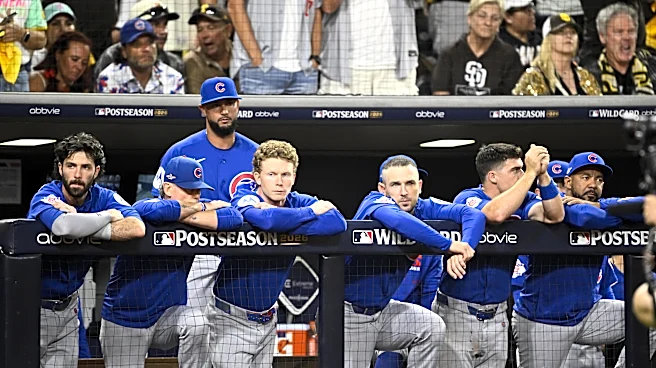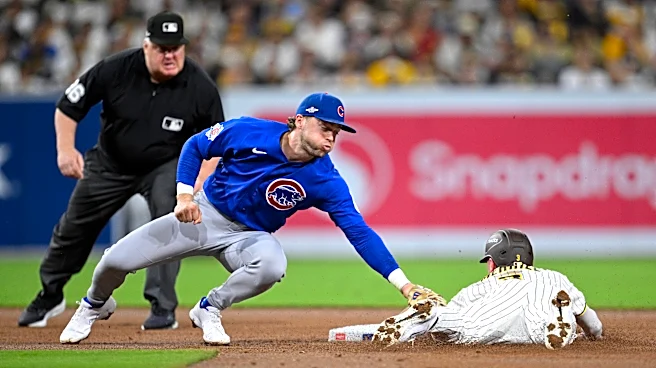


And just like that, the season comes to an end with barely a whimper. Over two days, the Cubs looked completely and totally over matched. If you’re a decades long Cubs fan, you’ve seen this before. There were exceptions along the way in the playoff era, but generally the Cubs have a really good season, then get trashed in the playoffs. Here’s the thing though. The Red Sox? Got trashed. The Astros? Showed some fight against the White Sox, but got trashed. By the White Sox of all teams. But then, the Astros were an 81-win
team winning a division and reaching the playoffs. I only half jokingly feel like if you can’t win a majority of your games that they should replace your division with another Wild Card for the playoffs. Of course, interleague play was so lopsided this year that you’d only be sliding in another team that barely had a winning record.
So it happens. The playoffs can take a hypothetical two to five percent difference between two teams and make it look like one of the teams is scrimmaging against its Triple-A affiliate. I’ve no doubt that if the Cubs had ever found their footing in this series that it could have looked very different. But the moment can swallow you when it goes bad. The team finishes the season with 53 regular season games and two playoff games since they last won a game where they didn’t homer. That’s a mighty long stretch.
From where I sit, there are exactly three ways to break down methods of winning. First, you can hit a lot of home runs. Second, you can have a really good pitching staff. Keep the score low and you don’t need to score as many runs. This is aided by having a really good defense to make your pitching even better. Third, you can find other ways to manufacture runs. Taking walks, aggressive baserunning and situational hitting.
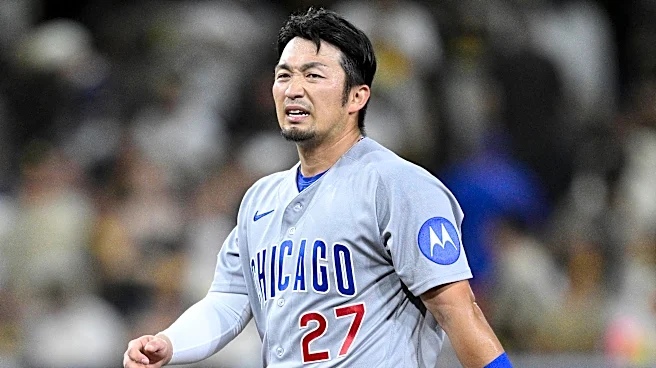
Hit a lot of homers. Check. This Cub team was built to do that. They spent nearly the entire year at or near the top of the home run leaders as a team. What do I think their long term prospects are there? That’s a tricky question. I felt some of their players underachieved here. Most obviously was Michael Busch. So I’d expect a few guys to post higher numbers next year. But can either Pete Crow-Armstrong or Alex Bregman do what they did again next year? Is Seiya Suzuki back? What do you do with your two corner outfield spots and your designated hitter position? All three of those spots are historically slugger spots in MLB. It doesn’t mean they have to be. The Cubs championship team didn’t actually end up getting great power numbers from the corner outfield and, of course, that was pre-NL designated hitter.
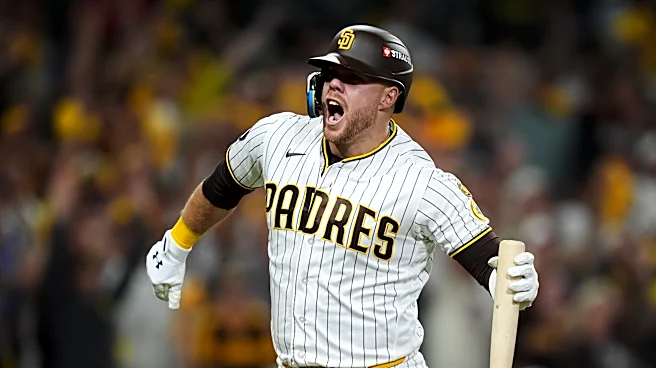
Have a really good pitching staff? Well, no. Two games is a very small sample size. And the day two pitchers were a fair bit more effective than the day one pitchers were. Poor Daniel Palencia. I didn’t see where the numbers ended up, but I know well into the season there had been just one homer on a Palencia pitch over 100 miles an hour. So he puts 101 right in the wheelhouse of Gavin Sheets and Sheets might never have squared a pitch better in his whole career. But for that one pitch, Game 2 might have been a really classic game. That cushion made everything easier for the Padres.
If one were to draw conclusions from those two games, they might decide pitching wins playoff games. That might feel like a sweeping generalization from just two games. But boy I’m sure I’m not the only one who’s ever heard a form of it. I always found an irony that from the moment Theo Epstein and crew came to Chicago they began drafting a slugger in the first round every year. And in those days, the picks were near the top of the round. It felt like they were putting together some slow pitch softball team designed to bludgeon their opponents to death. And in the end, that team was propelled by one of the best pitching staffs in the storied history of this organization. It was aided by an excellent defense.
This organization has got to get better on the pitching side of things. I have one theory on top of all of the obvious ones. The obvious ones being find more of those guys that can dial it up into the high 90s and more. Find more of those guys with the stuff that dances all over the place. Ryan Zeferjahn makes us all nervous because it feels like he doesn’t know where the ball is going when he releases it. I don’t know if he’ll ever fully harness his stuff. But I know that Ryan is exactly what the Cubs need more of. A lot more.
My theory? This team started fixating some years ago on strike throwers. It doesn’t like allowing walks. For all of the ire the pitching staff received, they only allowed the 12th most runs among MLB teams. That is actually pretty decent. Of course, they were significantly aided by the best defensive unit since the current defensive metrics were put in place. One reason for that: They were ninth in fewest walks allowed. Two guys who have been susceptible to allowing a ton of homers are Jameson Taillon and Shōta Imanaga. Both work a ton in the zone and neither has particularly elite stuff. I’d argue that in getting allergic to allowing walks, they’ve found guys who are susceptible to homers. Walks are almost always bad. I do like the idea of limiting them. But a bad pitch in the zone will get you killed.
That last point was a nod towards small ball. It’s a lost art. The Cubs do have a lot of team speed. They also had one of the more prolific base stealers in baseball. And yet, they were 10th in steals. They drew a lot of walks. And they probably led the league in singles that advanced all of the runners exactly one base. This team was so good at getting runners on base that they tended to wait around for one big hit. In the regular season, those hits often came. But there were still long stretches where the offense would vanish. This isn’t new, we’ve been saying it since 2017. I don’t watch other teams or deep dive them statistically. I suspect to some degree or another these things happen to all of the teams. So this is probably not something to overthink.
Still, when the margins decrease, being able to actually put down a bunt or hit the ball to the other side. Those are dying arts. I know that is widespread. Chalk that up to one of the negative side effects to numbers crunchers getting heavily involved with the sport. There is value to those soft skills. I will grant that so many pitchers throwing 98 plus really makes that complicated. It was definitely easier when you were seeing a lot of pitches in the 80’s back in the day when starters were throwing every three or four days and throwing regularly into the seventh and eighth innings.
The game evolves. That’s part of what keeps the game interesting. I definitely liked the old game where the starters were of paramount importance and guys who knew how to have productive at bats with runners on were more valuable. But it’s hard not to appreciate teams like the Padres and their next opponent, the Brewers, with all of their pitchers with really elite stuff. The game is changing. Some of the old stuff works. A three-run homer has been effective for all of baseball history and will likely never go out of fashion. But there are other ways for sure.
Happy Wait Til Next Year Day to all who celebrate.
Three Postives:
- David Peterson faced five hitters and recorded five outs. He did allow a hit, but also picked off a runner. I would have probably had him start one of the games. I don’t expect it would have changed much.
- Nico Hoerner had two more hits, one a double. Might want one or two more of these guys who handle velocity well.
- Tyrone Taylor had a hit in his only at bat of the series. I’m not sure he’d have been in the lineup even if Alex Bregman had been able to play the field. It would have been nice to see Taylor and Conforto rather than Pedro Ramirez and Matt Shaw (particularly against right-handed pitching).
Game Two, September 30: Padres 4, Cubs 1 (0-2)

Reminder: Heroes and Goats are determined by WPA scores and are in no way subjective.
THREE HEROES:
- Superhero: Nico Hoerner (.109). 2-4, 2B, RBI
- Hero: Carson Kelly (.068). 1-3, HBP
- Sidekick: David Peterson (.027). 1.2 IP, 5 BF, H, K
THREE GOATS:
- Billy Goat: Dansby Swanson (-.171). 0-3
- Goat: Daniel Palencia (-.113). 1.2 IP, 7 BF, H, R, 2 K
- Kid: Pete Crow-Armstrong (-.104). 0-4
WPA Play of the Game: Gavin Sheets hit a two-run homer in the fourth, effectively ending the series. (.176)
Cubs Play of the Game: Nico Hoerner batted with runners on first and second in the top of the fourth and one out. He singled and a run scored. (.114)
Cubs Player of the Game:
Game 1 Winner: Nico Hoerner received 38 of 67 votes.
Up Next: Nobody really knows. The offseason looms after the rest of the playoffs unfold. I’ll be rooting for the Rays the rest of the way. I’m always going to throw my support behind the teams that excel in scouting and player development. After the playoffs? A work stoppage. The sides seem intent on this being a long one. Everyone is making a ton of money and baseball feels like it has made something of a resurgence in popularity. Definitely time for a work stoppage.
I’ve never been put into the position of a mediator, though I do mediate very regularly. Were I asked to mediate, I would give both sides an opening statement that would say that both of you do put forth some good arguments about why the other side frustrates you and is difficult to deal with. I get why the friction is there. I get where there are goals that are very much in contradiction to one another.
I’d tell them that you should have come to me with a very clear list of things you wanted. Then I’d tell you that you aren’t getting all of them. That’s the way mediation works. Neither side is going to get everything it wants. Ordinarily, you’d say that each side figure out their number one priority and try to satisfy that. I’m afraid that it would generally look like one side wants a much more formalized salary structure and the other wants no part of it. I guess I’d try to come up with some loosely formalized salary structure and a significant increase in the amount of revenue going to the players. You take this thing that you don’t want, but you get what you really want. At the end of the day, the players want an increasingly large amount of money. Shouldn’t we all?
That has to look like teams at the bottom spending (way) more. The players get a larger chunk of the revenues. The players share is absolutely indexed to inflation or a standard increase or whatever, so they don’t have to collectively bargain increases. And the owners get some very basic structure that is a bit more harsh than what exists now. I suspect this is the outcome. Or close to it.
How long will that take? Who knows. Until then, extra time to rest and recharge and remember all of the other things we do for fun. I’ll try to pop in from time to time in the offseason. Until then, thanks for your clicks, your comments and a kind word from time to time. They keep me going when the days seem to stretch without end. I wish all of you well in whatever comes your way.
Maybe next year will be the year, right?
Go Cubs.