


In 1969, Major League Baseball expanded from 20 to 24 teams, adding franchises in Montreal, San Diego, Kansas City, and Seattle. The Seattle Pilots went 64-98 that year and finished last in the American League West. They were also poorly run by a man, Dewey Soriano, who barely had the cash to purchase the team in the first place. They played in a poorly maintained stadium and struggled at the gate. After just a year, the plug was pulled, and Soriano got in touch with a car salesman in Milwaukee.
His name was Allan H. “Bud” Selig.
The Milwaukee Brewers played their first season in 1970 and went 65-97. The team’s star was its 29-year-old third baseman, Tommy Harper. A year earlier, he’d stolen 73 bases for the Pilots, a mark which still stands as a franchise record. In 1970, he hit .296 with 31 homers, 35 doubles, and 38 steals. 56 years later, it’s probably the best season ever by a Brewer third baseman. He became the first Brewer ever to make it to an MVP ballot.
A few days into the 1971 season, Milwaukee traded for a slugger named John Briggs, who was the team’s most reliable source of offense over the next four-and-a-half years. Also that season, a journeyman reliever named Ken Sanders operated as the team’s relief ace for the second straight season, and led the majors in appearances and saves.
After the season, the team made a trade that brought back the first real star of the franchise. George Scott was a good player in Boston; by the end of the 1971 season, he’d already won three Gold Gloves and had received MVP votes twice. But Boston jumped at a package headlined by Harper, and “Boomer” became the new Milwaukee first baseman. From 1972-76, Scott played virtually every game the Brewers played, he won five straight Gold Gloves, and he finished as high as eighth in MVP voting when, in 1975, he led the AL in homers, RBI, and total bases.
In 1973, the Brewers acquired a new guy at the hot corner. Don Money had been dreadful at the plate in 1971 and 1972, and the Phillies packaged him in a deal that got them, among others, Sanders. In 1976 he became the franchise’s first multi-time All-Star, and when he retired after his 11-year run with the Brewers, he’d made four All-Star games and compiled almost 1,200 hits.
During the 1974 season, a new player joined Money and Scott in the infield, an impossibly young shortstop from Southern California. He was a little aloof and didn’t always seem to like playing baseball. He was talented, but it would take a while for the kid to figure out how to channel those talents. His name was Robin Yount. For a little while, he’d get to play with another Milwaukee baseball legend when Henry Aaron returned to the city and hit his 755th and final home run in 1976 as a member of the Brewers.
A couple years later, another talented infielder debuted alongside Yount, a hitting savant and ultra-speedster who finished second in Rookie of the Year voting in 1978. Paul Molitor ended up playing in Milwaukee for 15 years in a career that ended with well over 3,000 hits and a ticket to Cooperstown.
The same year that Molitor debuted, the Brewers, for the first time, won more games than they lost. It was the tenth year of the franchse.
That young team kept acquiring talent. In 1976, in an echo of the trade they’d made years earlier, Scott was sent back to Boston for another young first baseman. Cecil Cooper spent the next 11 years in Milwaukee, won a couple of Gold Gloves, three Silver Sluggers, had thre top-five MVP finishes, and hit almost 350 doubles and over 200 homers as a Brewer. Sal Bando, a veteran of the dynastic Oakland Athletics of the early 1970s, joined up in 1977 as the franchise’s first major free agent splash. A gruff center fielder named Gorman Thomas was nearly given away but miraculously reacquired just before his breakout. A young Puerto Rican outfielder named Sixto Lezcano had a three-year run that stands with just about any such stretch in team history. A year after leading the AL in RBI with the Twins, Larry Hisle had one last hurrah as a Brewer in 1978, when he finished third in MVP voting. That same year, the Brewers traded for Ben Oglivie, a scrawny outfielder with surprising pop.
The 1979 Brewers won 95 games, but something was missing, and in 1980 the team took a step back. After the season, the Brewers were involved in one of the most momentous trades in team history: they sent Lezcano and others to the Cardinals and acquired a mustachioed reliever named Rollie Fingers, a star catcher named Ted Simmons, and a blue-collar righty (and future movie star), Pete Vuckovich. In the next two seasons, two of them would win Cy Youngs, and though it took some time, two of them would end up in the Hall of Fame.
In the strike-shortened 1981 season, the Brewers broke into the postseason for the first time on the back of a historic relief season for Fingers, who won not just the Cy Young but the MVP. They took the Yankees to a decisive Game 5, but couldn’t get past Reggie Jackson and the Bronx Bombers.
Then, 1982. The Brewers had one of the great offenses in the history of baseball. Yount, the guy who took some time to figure things out in the 70s, ascended and had one of the best seasons ever by a shortstop. He received 27 of 28 MVP votes. Four players hit at least 29 home runs. The team won its first playoff series when, in the bottom of the seventh inning of the decisive Game 5 of the ALCS, Cooper knocked in Charlie Moore and Fond du Lac native Jim Ganter to flip a 3-2 deficit into a 4-3 lead. Milwaukee won the pennant.
In the World Series, they faced the Cardinals, the same team who they’d gotten Fingers, Simmons, and Vuckovich from a little over a year earlier. They took a 3-2 lead to St. Louis, but it wasn’t meant to be.
It would be 44 years before the Brewers made it back.
Fans watched Yount and Molitor build Hall-of-Fame careers. They watched Juan Nieves throw a no-hitter. They watched Rob Deer and Dale Sveum hit dramatic home runs. They watched an exciting young team of upstarts win 92 games in 1992, led by rookies Pat Listach and Cal Eldred.
They watched in sadness when Molitor left as a free agent after that season, feeling undervalued, and then had to watch him win World Series MVP with a different team. They watched with elation with Yount, still with the Brewers 20 years after his debut, hit a soft liner into right field for his 3,000th hit.
There were lean years. 12 straight losing seasons, when fans were left to find silver linings with players like Greg Vaughn, Jeff Cirillo, John Jaha, Dave Nilsson, Fernando Viña, Jeromy Burnitz, Geoff Jenkins, Carlos Lee, and Richie Sexson—the totemic players of my youth. Fans were left to pin their hopes on guys like Marc Newfield, Jeff D’Amico, and José Capellan. The Brewers were represented at the All-Star Game by Ricky Bones, Kevin Seitzer, Bob Wickman, José Hernández, and Dan Kolb. Fans found amusement in quirky relievers like Mike Fetters and Derrick Turnbow, and in rare individual triumphs like Chad Moeller’s cycle. The team switched leagues and built a new stadium.
Finally, in the new millennium, reasons for optimism became more frequent. An affable kid from Mississippi, fresh off of triumph in the Olympics, made the All-Star Game as a 22-year-old rookie. Three years later, Ben Sheets had what was the best season anyone had ever seen from a Brewer starting pitcher.
A new scouting director, Jack Zduriencik, was having success behind the scenes. He snagged a tall, under-the-radar outfielder in 2000. The next year, his second-round selection was used on a handsome shortstop. In 2002, Zduriencik used his first pick on the burly son of a two-time MVP runner-up. A year later, he used the second overall pick on a dynamic infielder with an impossibly quick bat. Two years later, the first-round selection was a smooth Florida kid who seemed to make good contact on everything.
By 2005, the results were starting to show on the field. For the first time since 1992, the Brewers didn’t have a losing record. Two years later, they won more games than they lost for the first time in 14 years. In 2008, the team—built around the aforementioned draft picks Corey Hart, J.J. Hardy, Prince Fielder, Rickie Weeks, and Ryan Braun—found itself with an opportunity to reach the postseason for the first time in a generation. To shore up their chances, they made a bold move at the trade deadline for a reigning Cy Young winner. In just a few months with the team, CC Sabathia etched his name into Brewers lore and led the team back to the playoffs, with an assist from a Braun home run that made this writer kick a full cup of soda across my college house’s living room.
Three years later, after the addition of another former Cy Young winner, Zack Greinke, that core (with Hardy swapped out for team legend Yuniesky Betancourt) coalesced into a potent, dangerous team. Braun won the MVP. Fielder finished third. Milwaukee won its division, and a postseason series, for the first time since 1982. The eccentric Nyjer Morgan and his alter-ego, Tony Plush, gave a new generation of Brewers fans a core postseason memory.
But those same Cardinals who’d dashed Milwaukee’s hopes in 1982 stood in the way again, and the 2011 team’s run ended in the NLCS.
The next few years weren’t easy. The Greinke trade didn’t really work out. Braun fell from grace. Fielder left as a free agent. And while there were bright moments, competent teams, and outstanding individual performances by players like Carlos Gómez, Jonathan Lucroy, and even Jonathan Villar, the franchise needed another jolt to get itself to the next step in its journey.
The jolt came on January 25th, 2018, a day I remember well. First, the Brewers sent four prospects to Miami for a 26-year-old outfielder who’d had a solid four-year run with the Marlins as a slick-fielding doubles hitter who could steal bases and pop a few homers. Later that same day, they handed the largest free-agent contract in team history to one of the players they’d sent out for Greinke years earlier. With Lorenzo Cain playing league-best-level defense in center field and Christian Yelich ascending to best-player-in-the-league status, the 2018 Brewers won 96 games, a team record, and made it all the way to Game 7 of the NLCS.
But, in an ending that would repeat itself multiple times over the next decade, The Brewers could not get past the mighty Los Angeles Dodgers. Over the next seven years, the Brewers played excellent baseball. Led by players who’ve already moved on like Corbin Burnes, Freddy Peralta, Josh Hader, Willy Adames, and Devin Williams, Milwaukee became a regular-season machine, with five division titles and seven postseason appearances in eight years from 2018-2025. It was a sustained run of success that had never been seen in the history of the franchise, but they just couldn’t seem to get over the hump in the postseason. A bad bounce. A tough catch. A bad inning from a star closer. The greatest player of all time. Something always stood in their way.
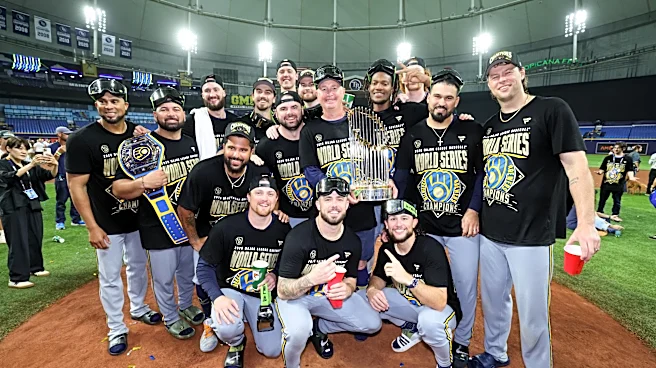
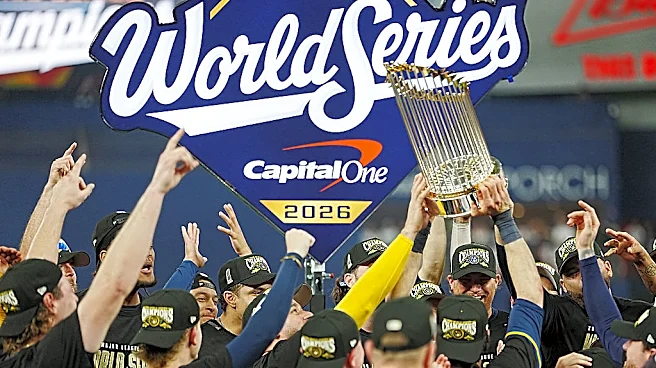
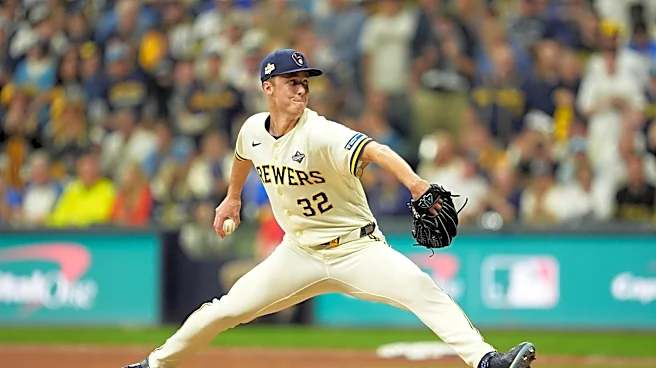
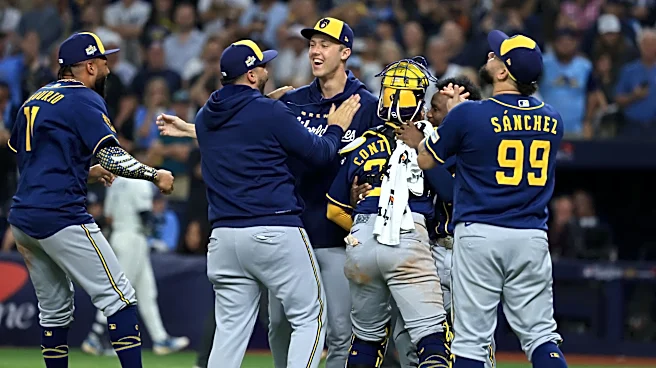
In 2026, things changed. The Brewers didn’t just beat their old wins record; they demolished it, with six more wins (103) than their previous record, set just a year earlier. The man who started it all became captain. A lanky young pitcher created a new understanding of what it meant to be a flamethrower. A slick-fielding second baseman became one of the best all-around players in the league. A pit bull of a catcher led on the field and flipped a switch when he needed to. A journeyman former top prospect found his zen. A whole group of young position players, led by the winning smile of a 22-year-old Venezuelan superstar, took the Brewers to heights the franchise had not previously seen.
Now, names like Jackson Chourio, Jacob Misiorowski, and William Contreras, Jake Bauers and Cooper Pratt and Aaron Ashby, Brice Turang and Trevor Megill and Robert Gasser and everyone else, have etched their names into the history of this franchise in the same way that guys like George Scott, Jim Gantner, Cecil Cooper, Jim Slaton, and Geoff Jenkins did before them. Yes, this team did something that no Brewers team has ever done, and for that they’ll be remembered forever. But this journey was 57 years in the making, years of joy and heartbreak, of angst and elation.
It’s a fun exercise to ask a die-hard Brewers fan who their favorite player was when they were a kid. Yes, you’ll get a lot of Robin Younts, a lot of Ryan Brauns. But you’ll also get Yovani Gallardo, or John Axford, or Ellie Rodriguez, or Davey May, or Casey McGehee, or Brady Clark. They’re all part of the same fabric, part of what makes this game, and fandom in general, beautiful.