
No. 7 Gonzaga is back in the Kennel on Thursday night to face the Redhawks of Seattle-U for the first time as legit WCC opponents.The Zags barely escaped San Diego on Tuesday, and the win at the Jenny Craig Pavilion came with long stretches of sloppy execution, loose defensive possessions, and decisions that turned manageable moments into unnecessary stress. If that game were just two minutes longer there’s reason to believe the Zags would have coughed up a 21-point second half lead and notched a loss
somehow more embarrassing than the 40-point drubbing against Michagan.
The Redhawks arrive at 12-3 overall and already own wins over Washington and Stanford. This group finds ways to tilt games that rarely follow clean statistical logic, including a 14-point win over WSU on Tuesday night despite losing the rebounding battle 54-28 and getting buried 25-2 on the offensive glass.
Friday’s matchup against Seattle U. tips off at 6:00 PM PST on January 2 and coverage is provided by KHQ locally and ESPN+ nationally. The game lands back in the Kennel with the students still away for winter break, putting a little extra on the crowd to welcome the Zags home after a road swing defined by grind, discomfort, and uneven control.
Meet the Redhawks
Seattle’s whole identity is built on its defense. The overall KenPom ranking sits at 112, though that number reflects an offense still finding coherence far more than any weakness on the other end of the floor. Defensively, the Redhawks grade out at 41st nationally, and the film backs up the math. There is not a team in college basketball with a winder margin between their offensive and defensive efficiency metrics according to Kenpom. This group wins possessions with discipline, positioning, and physical perimeter work on the defensive side rather than gambles or schematic tricks.
The offense carries less certainty. Seattle turns it over about 12 times per game and shoots a respectable but unspectacular 47% from the field. Scoring often arrives through flow rather than force, which can stall when spacing tightens. What keeps them afloat comes from depth. 10 players see regular minutes. Nearly everyone clears double figures in playing time so legs stay fresh and defensive intensity remains high. Rebounding follows the same pattern, with team-wide balance replacing any single dominant presence.
Expect a defense that stays compact, pressures without chasing, and trusts its rotations completely. For Gonzaga, the test lives in executing cleanly across possessions, because Seattle’s defense rarely breaks itself.If there’s a shorthand for the kind of basketball Gonzaga needs here, this shapes up as a “Braeden Smith game,” one that values patience, spacing, and clean decision-making rather than leaning into controlled chaos or trying to improvise solutions against a defense built to punish it.
Keys to Victory
1. Get the bigs back on track
This game needs to run through Gonzaga’s frontcourt again. Over the past week, Graham Ike and Braden Huff have stayed productive, though the dominance that defined earlier stretches has softened under the weight of fatigue, foul trouble, and a few mental lapses that pulled the offense away from its foundation. Seattle offers a matchup that rewards simplicity, and Gonzaga should lean into it by establishing the paint early and letting everything else grow outward. When the Zags operate inside first, the offense gains structure and stops drifting toward improvisation.
That means we need to see another 20+ point performance from Huff built on finishes and touch rather than put-backs and turnarounds. We also need to see a version of Graham Ike who can control the glass, stays composed, and lead through presence as much as production. Seattle has size and depth and will rotate bodies until they find something that works.
Alongside Will Heimbrodt, seven-foot center Austin Maurer patrols the paint and provides enough interior size to keep clean looks from coming easy; off the bench they bring in 6’10” Houran Dan to make sure their starting bigs stay fresh and out of foul trouble. Huff and Ike will need to share the ball, pass cleanly out of doubles, and get to their spots early in the shot clock before Seattle has a chance to fully set and adjust. They’ll also need to avoid foul trouble by contesting shots vertically and playing defense with their feet instead of their arms.
2. Key in on Junseok Yeo
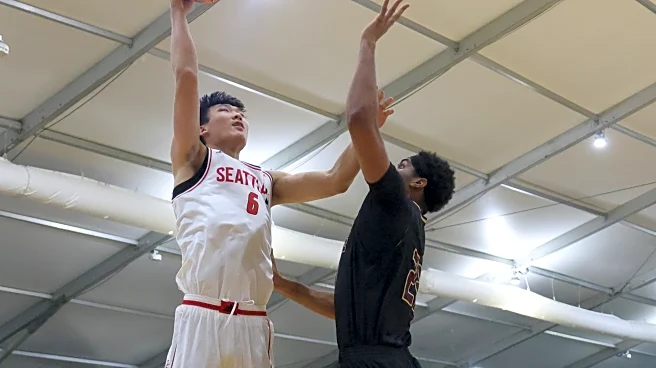
Gonzaga fans already understand who Junseok Yeo is, after his two years off the bench as a Bulldog. He was a fan favorite in Spokane, a player whose physicality, strength, and athleticism were always evident even when his role stayed understated, and the Zags remain well acquainted with the way he occupies space and absorbs contact. At Seattle, Yeo has stepped into a well defined role with more responsibility layered on top, averaging close to 12 points per game while shaping the flow of nearly every lineup he anchors.
He does a little bit of everything, rebounds in traffic, keeps the ball moving, and stabilizes spacing from the wing while logging heavy minutes (29+ per game). Essentially, Ye. fills the same connective role once held by Anton Watson for Gonzaga, the kind of player whose value lives in sequencing, coverage, and decision-making on the wing rather than box score spikes.
Seattle has also integrated Yeo as a three-point option this season, asking him to take real volume (roughly five attempts from outside per game) even if the results have fluctuated. If being back in the Kennel restores his shooting touch, the geometry of this matchup shifts quickly, because Seattle’s offense gains a whole other dimension when Yeo can punish space without forcing the issue. Contain him, disrupt his rhythm, and the Redhawks struggle to flow. Let him settle in, and he becomes the stabilizing force that allows everything else to line up behind him.
3. Defend with containment, not recovery
What broke down against San Diego showed up before the ball ever reached the paint. Coverages were late to form in the half-court, transition assignments looked confused, and opposing ball handlers got interior penetration far too easily, forcing Gonzaga into scramble mode possession after possession.
This becomes especially dangerous for a team with almost no margin at the rim. Right now, Gonzaga simply does not have back-line protection to absorb repeated perimeter mistakes defensively. Tyon Grant-Foster leads the team with 17 blocks, Ismaila Diagne sits next at 10, and after that the drop-off gets steep. Braden Huff and Graham Ike have combined for 16 total blocks across 15 games. That reality puts enormous pressure on the first line of the defense to hold.
The perimeter protection has to be sharper, and that starts with awareness and discipline rather than effort alone. Steele Venters has been shooting the ball well, though defensively he has struggled to stay in front, too often becoming a point of attack teams can target on the way to the rim. Grant-Foster has been excellent on the glass, though he has also found himself out of position defensively more than Gonzaga can afford. The guards have to keep the ball out of the interior and force ball handlers laterally instead of downhill. Against Seattle, clean defensive possessions begin with containment rather than correction.
Final thoughts
Gonzaga already knows where the problems live after the San Diego game, and Seattle arrives as a team well suited to press directly on those weak points. The Redhawks will test patience, discipline, and attention to detail, and they will happily let the Zags beat themselves if structure slips.
Seattle will not cooperate. They will stay organized, physical, and composed defensively, waiting for mistakes rather than chasing advantages. If Gonzaga responds by staying grounded, defending cleanly, and letting the game come back to them, this becomes a reset opportunity rather than another grind. If those fixes lag, the night will once again be longer than it needs to be.