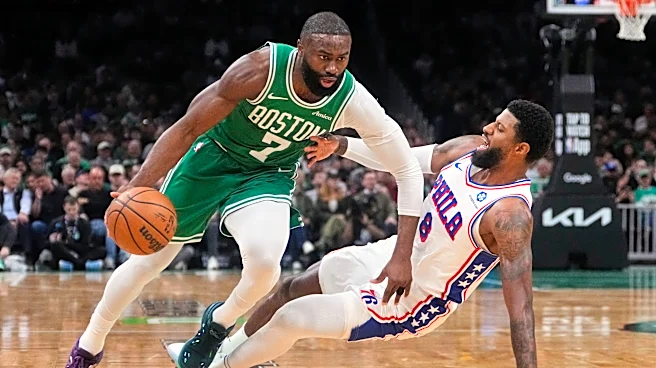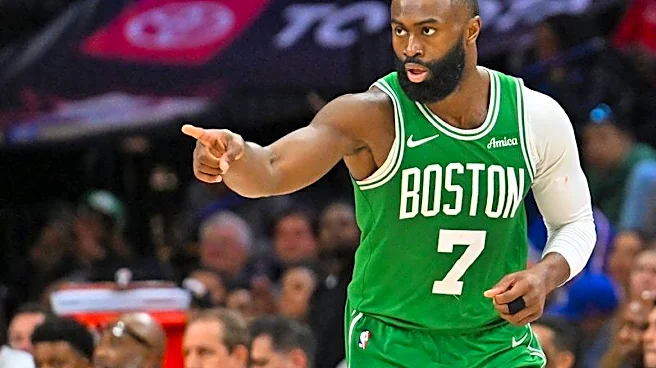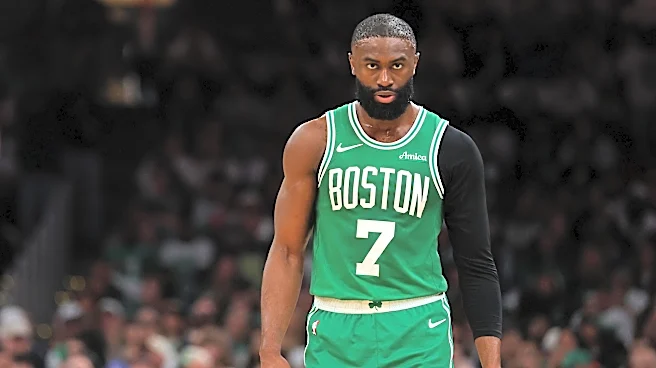



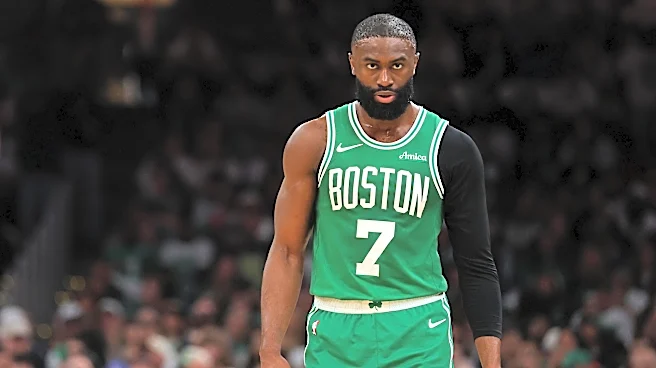
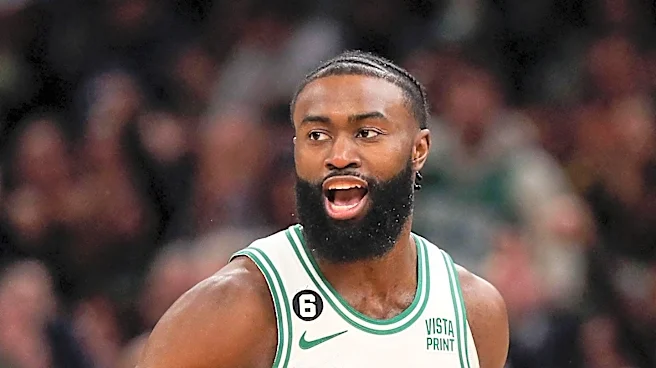


In the summer of 2024, Jaylen Brown was on top of the NBA world.
He was named Finals MVP as the Boston Celtics secured their historic 18th championship. He was a two-way force, helping slow down the ever-dangerous Luka Doncic as the Celtics dispensed of the Dallas Mavericks in five games. It cemented his legacy for a legendary franchise.
Brown, who isn’t even 30 yet, boasts a resume that will likely have his No. 7 hanging in the rafters of TD Garden one day. He’s a five-time All-Star, a two-time All-NBA
pick and, of course, a champion — with both NBA Finals and Eastern Conference Finals MVPs.
It’s amazing how quickly the narrative changes.
Since his stunning blockbuster trade to the Sixers last week, those accomplishments have faded to the background. Suddenly, the argument is Boston’s accomplishments were almost despite Brown. As if he were just along for the ride as the Celtics enjoyed as much success as any NBA team during his tenure.
Brown isn’t perfect. Adjustments will need to be made as he joins forces with Tyrese Maxey, Joel Embiid and VJ Edgecombe.
But the spin from the NBA media painting Brown as an albatross Boston has untethered itself from is approaching insanity.
What’s funny is nothing even needs to be referenced here. If you’ve been following along since news broke that the Sixers were shipping Paul George, two first-rounders and two second-rounders to Boston for Brown, you’ve seen this odd smear campaign against Brown.
His usage rate this past season ballooned to 36.2% as star teammate Jayson Tatum missed most of the season while recovering from a torn Achilles. With that, Brown didn’t have his most efficient season at 57.3% true shooting. To be fair, that’s also not bad efficiency at that usage rate. Many have pointed to Brown’s on/off splits with the Celtics. It’s true — over the past few seasons, Boston has outscored opponents by a bigger margin with Brown off the floor than on.
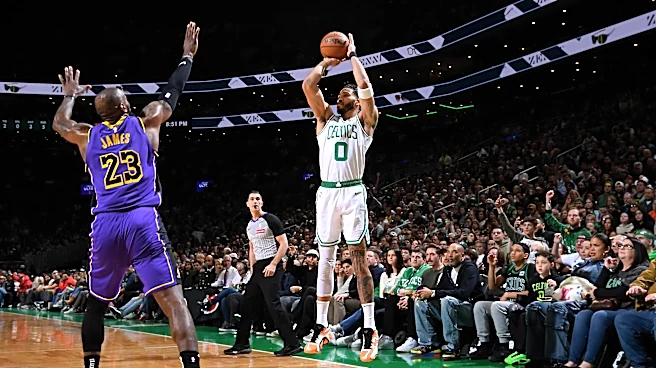
Brown’s on/off splits were in the 24th percentile in 2025-26, according to Cleaning the Glass. While Tatum’s splits were elite to start his career, they’ve fallen off a bit over the last few seasons. Ironically, in 2023-24, a campaign where Tatum finished sixth in MVP voting — like Brown did this past season — Tatum’s on/off splits were in the 42nd percentile. There were no character-limit pushing social media posts about Tatum’s inefficiency after that season.
This isn’t to discredit Tatum. He’s a great player. It’s just to show how imperfect on/off splits and analytics can be — and how they can be used to fit agendas at times. If you want to make the argument the Tatum-Brown duo had run its course, that seems like the fairest one to make. Both players could be characterized as tough shot-makers who take a lot of tough shots. If you want to make the argument Brad Stevens was getting ahead of a potential future financial crunch, that’s also fair. George has only a player option remaining on his deal after this season, meaning his contract could be moveable and be used either to acquire another star-level max player or split up to acquire more depth.
The eye test does still matter, though. Analytics are a tool. Much like Brown, they’re not perfect.
Brown is a physical specimen at 6-foot-6 and 223 pounds. He plays with rare physicality and force on the wing that most at his position don’t possess. He gets to his spots and can make difficult shots. He needs to be accounted for when he has the ball in his hands. His scoring gravity alone should help the other four players on the floor. And, again, we all saw how that physical presence helps defensively when he was going up against one of the game’s most gifted offensive players in Doncic. All of these attributes — physicality, iso scoring, on-ball defense — lend themselves best to postseason basketball.
As with most things, the truth is somewhere in the middle. Brown has his deficiencies. He’s an improved but still below-average passer. He’s never been particularly good at limiting turnovers, a big demerit in the analytics community. He continues to be right-hand dominant, despite improvement there as well. While his on-ball defense can be elite when he’s locked in on an assignment, he’s prone to off-ball lapses.
Maybe his salary should be more reserved for MVP-level players under this current CBA; how can Brown be blamed for that? Stevens and company had no issues doling out that deal back in 2023. Brown hit the benchmarks required to earn such a contract. The Sixers choosing to pay Brown over the 36-year-old George feels like a no-brainer.
Perhaps Stevens, who initially dangled Brown as part of a trade package for Giannis Antetokounmpo, saw potential financial pain with Brown’s contract in the future. He had a player who contributed significantly to the franchise, but whose max deal could push his payroll too close to the dreaded second apron for comfort — and the analytics backed such a decision.
Perhaps Mike Gansey simply saw an All-NBA performer who plays his ass off every night, wants to win and has won — analytics be damned.
There’s only one way to find out who’s right.
As Brown enjoys saying, throw the ball up.