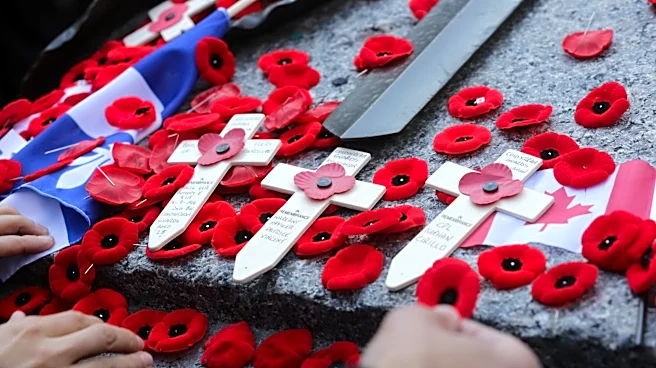




Two years ago, my wife and I joined other volunteers to place candles at each of the 3,500 crosses at Calgary’s Field of Crosses. As we moved from cross to cross, we paused to offer a quiet thank you to every individual represented. The experience was sobering. Most of the men and women honoured on the crosses were in their twenties—some even younger, in their teens. The oldest I noticed was just 47, still far too young.
Some crosses included brief biographies, reminding us that these were real people
who once led ordinary lives before leaving to defend our freedom. Many notes revealed they were buried in Belgium, France, England, Italy, or other places far from their Canadian homes.
It made me realize how fortunate I am to have been born in a rare time in the past century when growing old without facing war was possible. I know I could never endure what they did—I’m soft and content.
A while ago, I sat with some tennis friends as they recounted stories of family members who served in the war. One friend’s father, a doctor, was injured and scheduled to fly to England for surgery. During the flight, the plane caught fire and was forced to make an emergency landing. Only his father and one other man survived, both of them strapped to stretchers at the back of the plane.
Another friend spoke of his uncle, who served in the war and suffered from undiagnosed PTSD. Though he never discussed his experiences, the effects stayed with him for the rest of his life.
Years ago, my son’s class visited the local air museum, where our guide shared his own war story. He had flown a Lancaster Bomber and was shot down over Belgium. After parachuting to the ground, he and his crew evaded capture for a time before being apprehended in France. He was sent to Stalag Luft III, the site of the famous Great Escape. Although he didn’t escape himself, he helped dig the tunnels through which 50 men fled. All but three were recaptured or killed, but the escape drew German soldiers away from the front lines, aiding the war effort.
He described being transferred from prison camp to prison camp, always moving closer to Berlin as Germany was overrun from both sides. When the Russians approached, the guards released the prisoners and sought to surrender to the advancing Allies, hoping to avoid Russian captivity. I consider myself fortunate to have heard his story firsthand.
We owe an immeasurable debt to those who sacrificed so much for us. Take a few moments to remember their courage and generosity.
The one poem I can still recite is “In Flanders Fields.” My grade eight Language Arts teacher made us memorize it, and it has stayed with me ever since. She wasn’t my favorite teacher, but that lesson remains vivid (we also studied the Beatles, which I enjoyed). I wish I could remember her name now—I wonder if she’s still alive. I also recall that year’s contest to guess the teachers’ ages; I remember her reviewing our guesses, shaking her head at some of the wilder ones. She was probably in her early thirties, though some classmates guessed much higher.
Flanders fields, the poppies blow
Between the crosses, row on row,
That mark our place; and in the sky
The bird, still bravely singing, fly
Scarce heard amid the guns below.
We are the Dead. Short days ago
We lived, felt dawn, saw sunset glow,
Loved and were loved, and now we lie,
In Flanders fields.
Take up our quarrel with the foe:
To you from failing hands we throw
The torch; be yours to hold it high.
If ye break faith with us who die
We shall not sleep, though poppies grow
In Flanders fields.