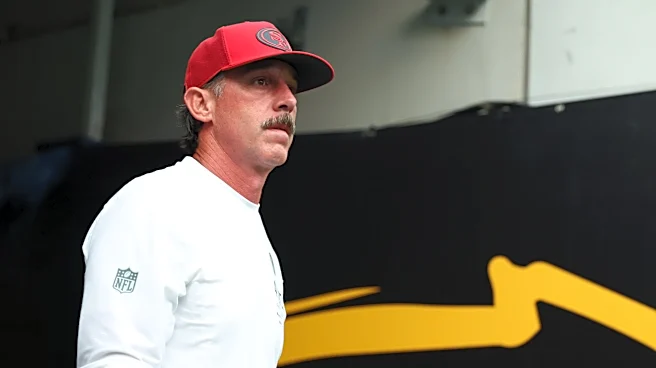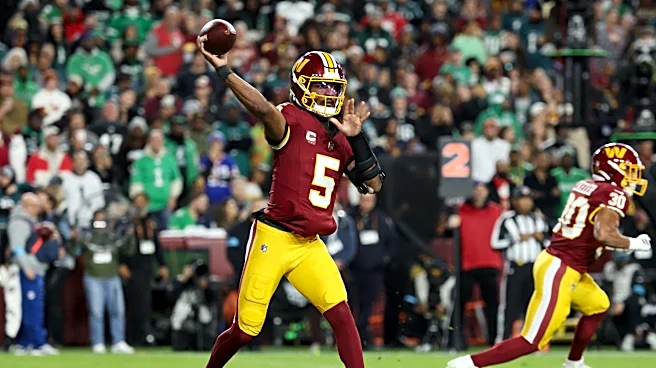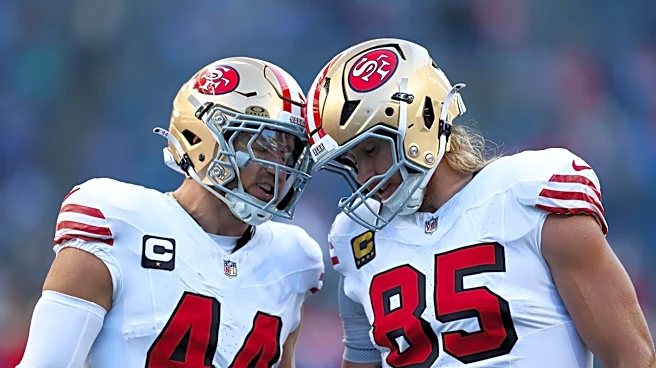

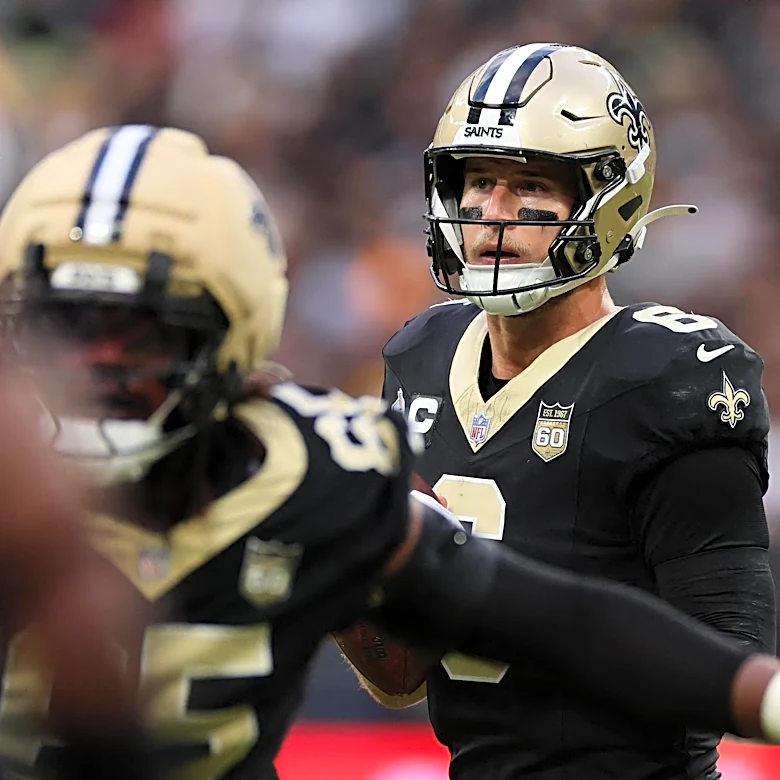


The Las Vegas Raiders are in the AFC playoff picture with a 4-4 record heading into Week 9, but the Raiders haven’t proven they can beat a playoff-caliber team yet. Facing off against the NFC-leading 6-1 San Francisco 49ers
this Sunday is a great opportunity for Las Vegas to announce itself as a legitimate postseason contender by winning the three key matchups below and the game.Raiders’ Defense vs. Juszczyk Packages
While fullbacks have become less common in modern NFL offenses, Kyle Juszczyk has become one of many valuable weapons in Kyle Shanahan’s
offense over the years. In 2026, the 49ers have leaned on 21 personnel more than any other personnel package, leading the league with a 34.5% rate (6.6% more than any other team) and 141 total plays (22 more plays than any other team), per Sumer Sports.
Unsurprisingly, San Francisco also tops the charts in total EPA (11.21) when using 21 personnel, according to Sumer. While Shanahan’s crew dips to eighth in EPA per play (0.08), all of the teams ahead of them have 10 or fewer plays in those packages this season. Additionally, they are one of two offenses to have a positive EPA per pass (0.05, ranks 13th) and per rush (0.1, sixth) in 21 personnel. The New York Jets are the other club, and the Jets have just four plays with that grouping on the field.
Juszczyk’s unique skill set allows the 49ers to lean so heavily on these packages. While his 58.8 run-blocking grade from Pro Football Focus might seem low, that ranks fourth among fullbacks with at least 27 run blocks and is only 1.8 points behind the position’s leader, Adam Prentice (60.6) from the Denver Broncos. Additionally, Prentice has less than a third of the run-blocking snaps that Juszczyk has (30 to 99).
On top of that, of running backs who have at least 20 carries with 21 personnel on the field, San Francisco’s Kaelon Black has the highest yards per carry (4.52) and Christian McCaffrey is second (4.49), per Sumer. Meanwhile, the Raiders’ defense has only seen 27 rushes against 21 personnel, but ranks dead last in EPA per rush allowed (0.133) and 28th in success rate (48.1%).
Additionally, the fullback’s impact extends to the passing game. He has a modest eight catches for 76 yards and two touchdowns, but the pair of scores highlights how he needs to be accounted for as a receiver in the red zone. Also, of tight end George Kittle’s 34 catches and 425 yards this season, nine catches (26.5%) and 139 yards (32.7%) have come in 21 personnel, and all nine grabs are charted as “impact plays” by Sumer.
Las Vegas is closer to the middle of the pack when it comes to defending the passing game against said packages, ranking 15th in EPA per pass (negative 0.104) and 19th in success rate (50%). However, the sample size is small with just 18 plays, and Shanahan doesn’t always use his fullback in the traditional sense.
Per PFF, Juszczyk has lined up as a tight end or wide receiver (66 snaps inline, 45 in the slot and 17 out wide) more often than he has in the backfield (52 snaps) this season. That goes back to his versatile skill set, as Shanahan uses 21 personnel to run 12 personnel plays with the “fullback” and Kittle on the field at the same time.
That’s been an issue for the Raiders’ coverage unit, facing 60 pass plays with two tight ends on the field and ranking 22nd in EPA per pass (0.169) and 20th in success rate (51.7%), according to Sumer. Additionally, the defense had a tough time against the New York Jets’ 12 personnel packages last week, giving up 0.32 EPA per pass and a 50% success rate, and 0.3 EPA per rush and a 57.1% success rate on the ground.
So, whether Juszczyk is lined up as a traditional fullback or at tight end, the Silver and Black have to find answers when he’s on the field. Those packages are a big factor in the 49ers’ offense that ranks fourth with 28.1 points per game.
Raiders’ IOL vs. 49ers’ Interior Pass-Rush

We’re essentially at the halfway point of the 2026 season, and it’s pretty clear that the Raiders are a passing offense. For context, they rank third in passing yards per game (265.1) and are second-worst in rushing yards per game (77.3). Diving even deeper into the efficiency metrics, the Silver and Black are sixth in EPA per pass (0.18) and second-to-last in EPA per rush (negative 0.24), according to Sumer.
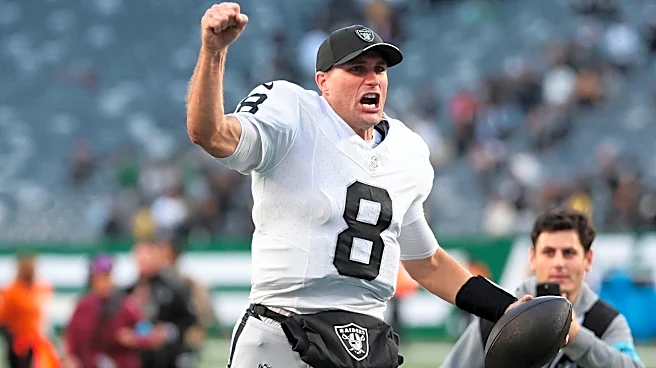
That’s led to a career resurgence for Kirk Cousins, who has the third-most passing yards (2,124) and second-most touchdowns (19) in the league through eight weeks. However, he’s a different quarterback when under pressure.
With a clean pocket, PFF has Cousins with the 10th-best passing grade (88.4), tied for seventh in “big-time throws” (seven) and tied for the eighth-fewest “turnover-worthy plays” (two) out of 35 qualifying quarterbacks. However, those figures dip to 15th in passing grade (50.1), tied for 17th in BTTs (three) and tied for the 13th-most TWPs (five) when under pressure. That’s where the 38-year-old’s lack of mobility and arm strength show up.
Meanwhile, defensive tackle DeForest Buckner will be making his return to San Francisco on Sunday after the club traded for him during the bye week. Buckner, who was the 49ers’ first-round pick in 2016 and spent four seasons with the team, has a reputation as one of the better interior pass-rushers in the league.
In seven games with the Indianapolis Colts, he registered 20 pressures (tied for 16th among defensive tackles), per PFF, and four sacks this season. The 11-year pro also has three batted passes (tied for sixth) and a 73.7 pass-rush grade (17th) on the campaign.
But San Francisco’s pass-rush goes beyond the new acquisition who hasn’t played a snap for the team yet. Osa Odighizuwa is 15th among defensive tackles in pressures (21), while rookie Gracen Halton has flashed on limited opportunities to post a 70.7 PFF pass-rush grade (27th).
Those three could be problematic for the Raiders’ interior offensive line.
Left guard Spencer Burford has surrendered the third-most pressures (19) and has the 10th-lowest pass-blocking grade (41.0) at his position, while right guard Trey Zuhn III will make just his second career start. Zuhn had a decent showing last week by yielding just two pressures on 27 opportunities, but the Jets don’t have nearly the same interior pass-rush as the 49ers do.
Luckily, center Tyler Linderbaum should be able to help the two guards out. While the big-ticket free-agent signing has faced some scrutiny for not living up to his contract so far this season, that’s primarily due to the ground game, as he’s been stingy in pass protection. Linderbaum has surrendered just eight pressures on 307 opportunities and is 13th among centers with a 70.3 pass-blocking grade.
For the record, he’s been better as a run-blocker over the last two weeks with back-to-back PFF run-blocking grades above the baseline (60.0) after being below it in four of the first six contests.
Especially with edge rusher Nick Bosa missing the last five games with a calf injury — and potentially on a pitch count if he returns this week — San Francisco’s interior pass-rush figures to be a key factor on Sunday.
Mayer vs. Warner
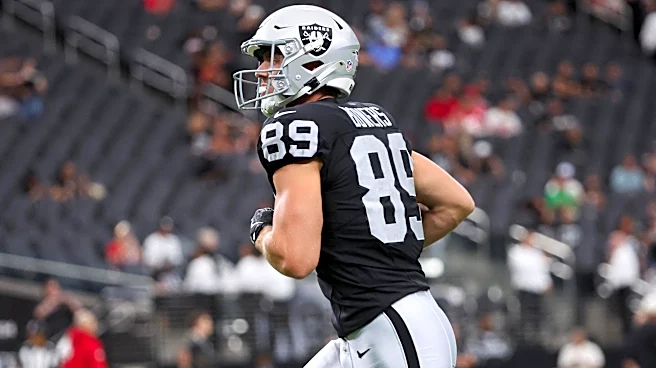
Brock Bowers may draw the headlines in Las Vegas’ tight end room, but Bowers is used more like a wide receiver in Klint Kubiak’s offense. According to PFF, nearly 85% of his pass snaps have come either out wide or in the slot. As a result, Michael Mayer is the Raiders’ more traditional tight end, spending 72.5% of his pass snaps inline. Also, he’s having a career year.
Eight games into the season, Mayer has already logged personal bests in catches (36) and receiving yards (351). Additionally, those figures rank fourth and ninth among tight ends, and one more receiving touchdown will match his previous single-season high with two.
The fourth-year pro’s YAC ability — which accounts for 180 or 51.3% of his yardage total — has provided Cousins with a reliable check-down option in the passing game. Mayer has the seventh-most YAC at his position, is 22nd in YAC per reception (5.0) and has forced five missed tackles (tied for seventh), helping record the fourth-most first downs (22) among tight ends. However, he hasn’t faced a linebacker of Fred Warner’s caliber yet.
The four-time first-team All-Pro has established himself as the best player at his position in the league, partially due to having a well-rounded skill set. In coverage this season, he ranks tied for third among linebackers with three forced incompletions, tied for fifth in forced incompletion rate (13%) and tied for 14th in coverage stops (10), per PFF.
While Warner has yielded 98 of his 155 receiving yards after the catch and has four missed tackles at a 13.3% rate in coverage, that’s primarily come against running backs. According to Sumer, he’s surrendered just five catches for 37 total yards to tight ends in 2026, with a measly three yards coming with the ball in their hands. That sets up an interesting battle between him and Mayer.
In the running game, Warner primarily lines up as an inside backer (265 out of 452 snaps or 58.6%), per PFF, where he’s taking on blocks from offensive linemen more often than not. But he has recorded 153 snaps (33.8%) as either an off-ball or line of scrimmage outside linebacker, where he’s more likely to draw tight ends in the running game.
That could be a challenge for Mayer, whose 58.7 PFF run-blocking grade is tied for 46th among tight ends, and his five “impact blocks” from Sumer is tied for 19th at the position. Meanwhile, Warner leads linebackers with a 91.6 run defense grade, is tied for 13th in run stops (16) and is ninth in run-stop rate (10.1%).
In other words, the Raiders’ tight end has to bring his ‘A-game’ on Sunday since he’ll likely see the 49ers’ best defender and the NFL’s top linebacker early and often.