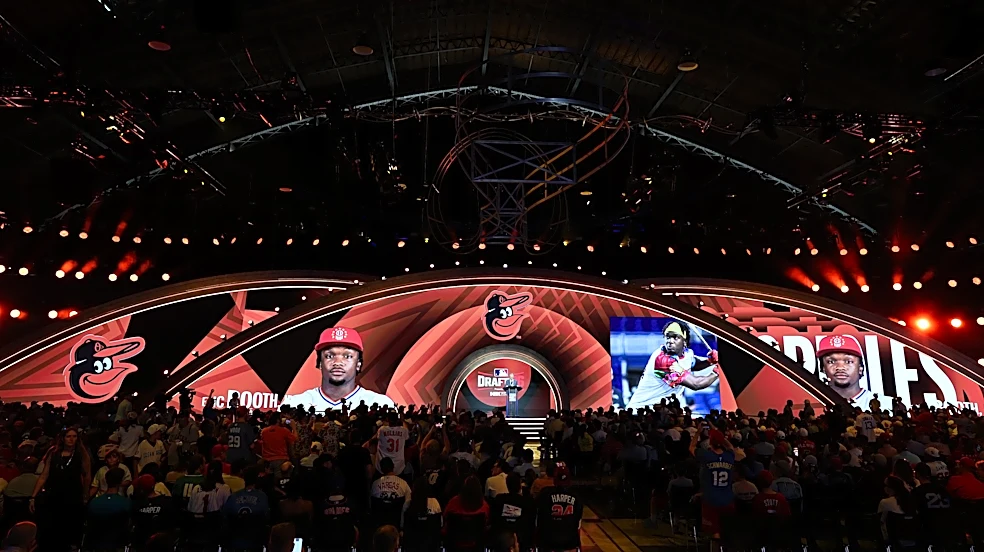




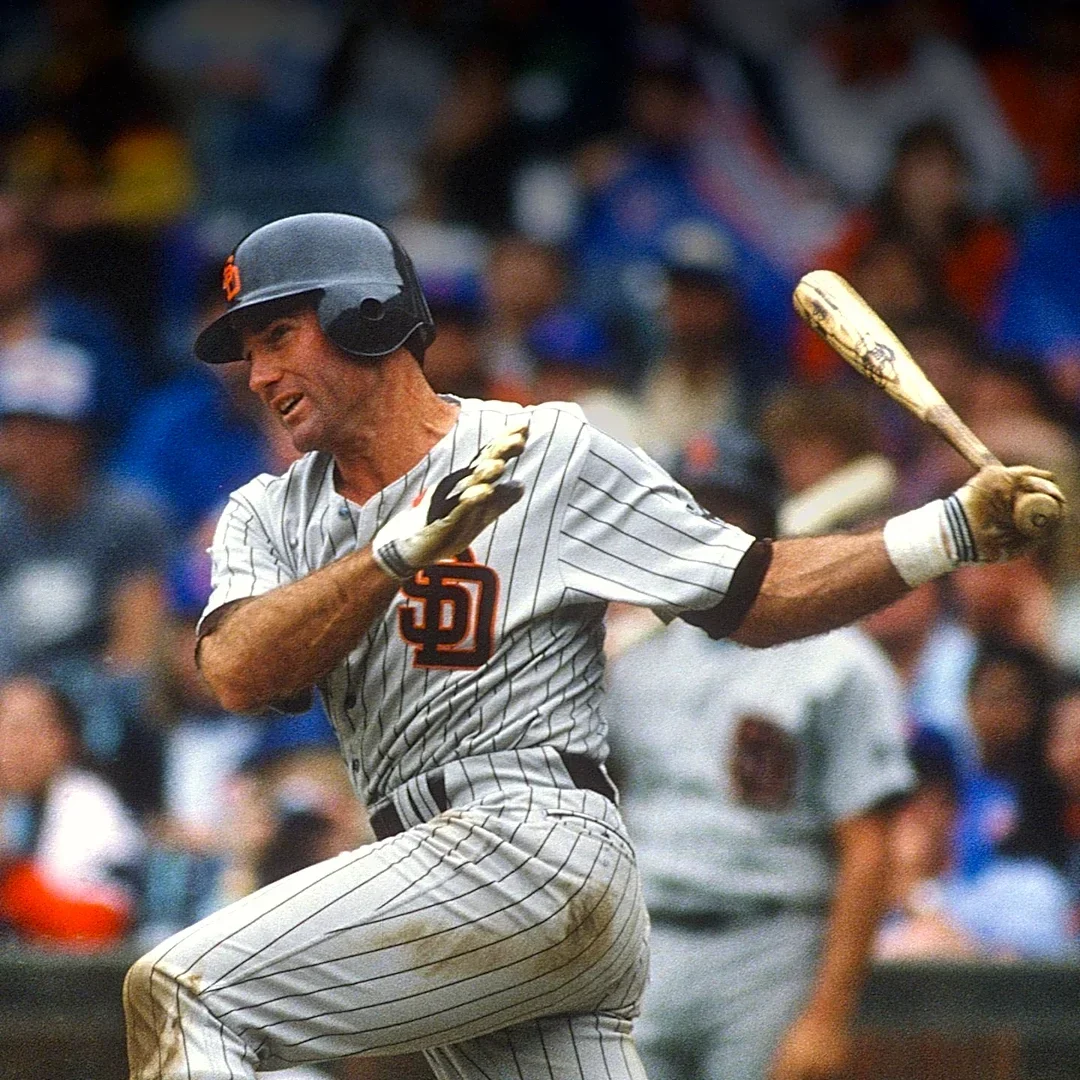


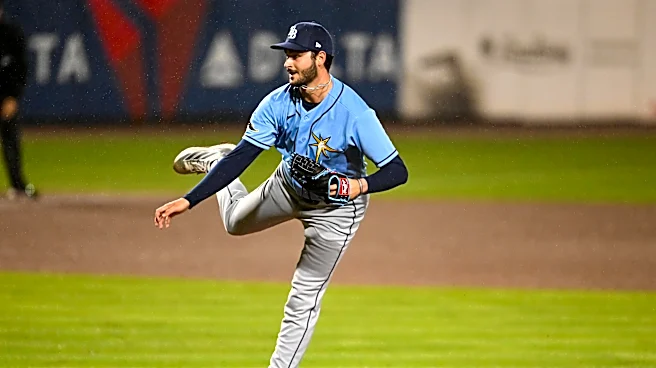
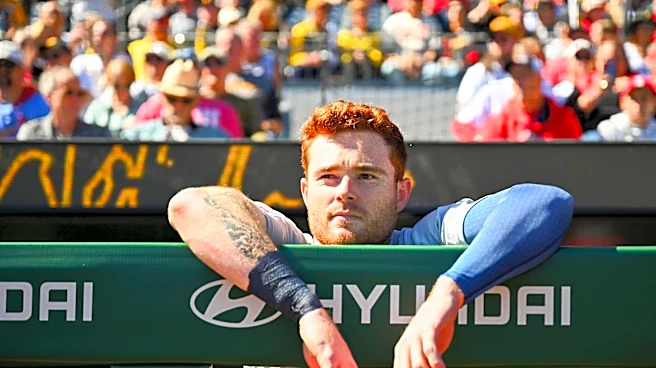

The Orioles went into the 2026 draft with a clear candidate in mind, it seems: southpaw, speedster, outfielder. At #7, they selected Eric Booth Jr. out of Oak Grove High School in Hattiesburg, Mississippi—a high schooler, but a very toolsy one. At #46 overall, the Birds then chose Ty Head, a lefty bat with great control of the strike zone. Both Booth and Head got a taste of pro ball this summer, and in a small sample size gave us a little to chew over.
Start with Booth. A big-bodied lefty, Booth makes
the rare high schooler selected with the top pick by Mike Elias. Well, considering that the other one was Jackson Holliday, it seems that the O’s don’t mind their high schoolers, but they’d like them to be pedigreed. Baseball runs in the family for Booth Jr., sort of: Eric Booth Sr. turned down the Blue Jays as a 34th-round pick in 1993, then went to Southern Miss and returned punts.
In four seasons at Oak Grove, Booth hit .441/.612/.803. MLB Pipeline had him sixth in the class and its top outfielder. He was committed to Vanderbilt, but the Orioles signed him on July 18 for $7,324,700. Will Robertson, the Orioles’ VP of domestic scouting, raved about Booth’s “huge engine” after the pick.
Booth’s best tool is his speed. Pipeline grades it a 70, and Baseball America calls him an 80-grade runner. He gets from home to first in a little over four seconds. He ran a 6.33-second 60-yard dash at the East Coast Pro showcase, the fastest time there. Pipeline gives him a 55 overall, with 55s on the hit and field tools and 50s for power and arm.
His swing is the part that gives some pause. His setup is unconventional, with his hands away from his body, so his left-handed stroke can look choppy. BA mentions a “deep hand press.” Even so, he makes consistent contact and barrels the ball. BA credits him with “elite hand-eye coordination and bat speed.” He won the home run derby at the 2025 Perfect Game All-American Classic. Pipeline thinks he could hit 20 to 25 homers a year if he smooths out the swing and lifts the ball more often. In center field, he still needs to improve his reads and routes, and the same goes for his basestealing instincts. His arm used to be his biggest weakness, but he has worked it up to average.
The Orioles took Ty Head 46th overall, in the second round, out of NC State. He was one of the better all-around players in the 2024 high school class, and is said to have had a chance to have gone in the third round but for his intentions to join the Wolfpack. Head broke out as a sophomore this spring, going on to hit .291/.460/.556 with 14 homers and 26 steals, with just 23 strikeouts to 57 walks. Baltimore went a little over slot to sign him for $2.43 million.
Head is a little harder to read as a pure prospect. Pipeline gives him 50 for hit, 45 for power, 60 for run, 45 for arm and 60 for field, with a 45 overall. On approach alone, he’s one of the most disciplined hitters in the class. He attacks strikes, rarely chases, and almost never swings and misses, especially against fastballs. But he was a career .283 hitter in college and did little damage in ACC play. Scouts blame his big leg kick, with potential to throw off his timing and produce weak contact. But if he straightens out his timing, he has the pull-side power to become a solid hitter with power, to boot. Defense is the safer part of the profile. Pipeline calls him a “no-doubt center fielder” with plus range, and BA rates him the more polished defender of the two. He has 20-20 upside.
As for the debuts, Booth signed in mid-July and was assigned to the FCL Orioles before playing his first official games at Low-A Delmarva in mid-August. He hit .284/.390/.328 in 18 games (82 PA) there. The on-base skills showed up right away, as he walked 14.6 percent of the time. The power didn’t show up yet. He had three doubles and no homers, and he struck out 23.2 percent of the time. He stole only 3 bases in 5 tries, which shows the baserunning still needs work. That’s about what you’d expect from someone who had just turned 18 and was facing full-season pitching a month after his draft.
Head made more noise, perhaps befitting his greater seasoning in college. He hit .321/.400/.491 with two homers and eight steals in 15 games at Delmarva. That was enough to get him a September promotion to High-A Frederick, where he played six games before the season ended. There he hit .278/.381/.278 and added four more steals. One thing to watch is the strikeouts. He struck out 20 times in about 82 pro plate appearances, which is a far higher rate than his college numbers. That’s very little data, but it’s worth watching for a hitter whose whole case depends on his contact skills.
Mike Elias has been nothing if not consistent in his drafts, prioritizing left handers who can play up-the-middle, especially shortstops and outfielders. Eric Booth Jr. and Ty Head fit right in this mold. Despite their relative youth, both have indicators that their talent is worth relying on. Booth has the higher ceiling; Head could move faster, with a potential ETA by 2029. If both hit their ceilings, however, the Orioles may have finally found a long-term answer in the outfield.