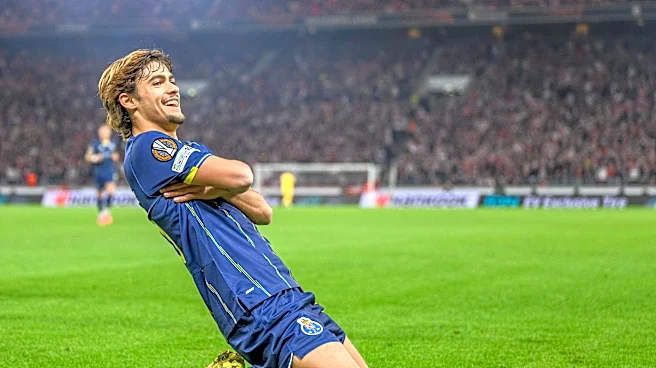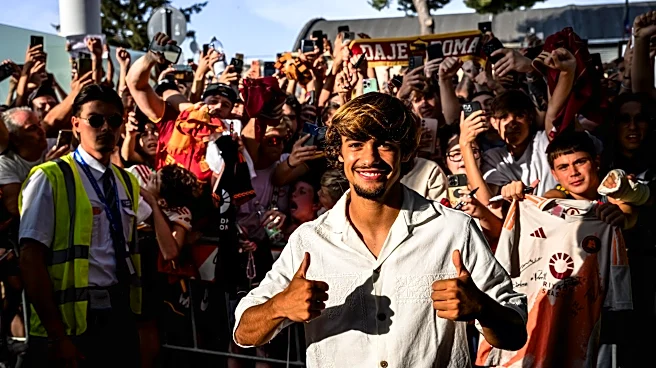



It took far longer than any of us would have expected a week ago, but Rodrigo Mora is finally a Roma player. Despite the hemming and hawing from Porto president Andres Villas-Boas regarding the structure of the transfer, Mora touched down in Rome yesterday and was greeted by over 600 Romanisti before finalizing his deal with the club:
According to Roma journalist Filippo Biafora, Roma and Porto finally landed on a deal
where the Giallorossi have paid €27 million for Mora’s services. Although he is now fully owned by Roma, Porto has also retained the right to 50% of any future fee Roma may receive for selling Mora. If Roma want to get rid of that clause, Tony D’Amico can “buy out” the remainder of Porto’s stake for an additional €25 million. While in a way this harkens back to the Walter Sabatini Era of co-ownerships and byzantine transfer deals, this structure does offer the best of both worlds for D’Amico; he can bring in a world class young talent who is reportedly deeply desired by Gian Piero Gasperini, while also keeping his powder dry for at least one more transfer in before the close of the summer mercato.

Mora has chosen to wear the #86 kit while at Roma, the same number he wore at Porto. Coincidentally, his decision to wear this kit means that a player has now worn every possible number for the Giallorossi.
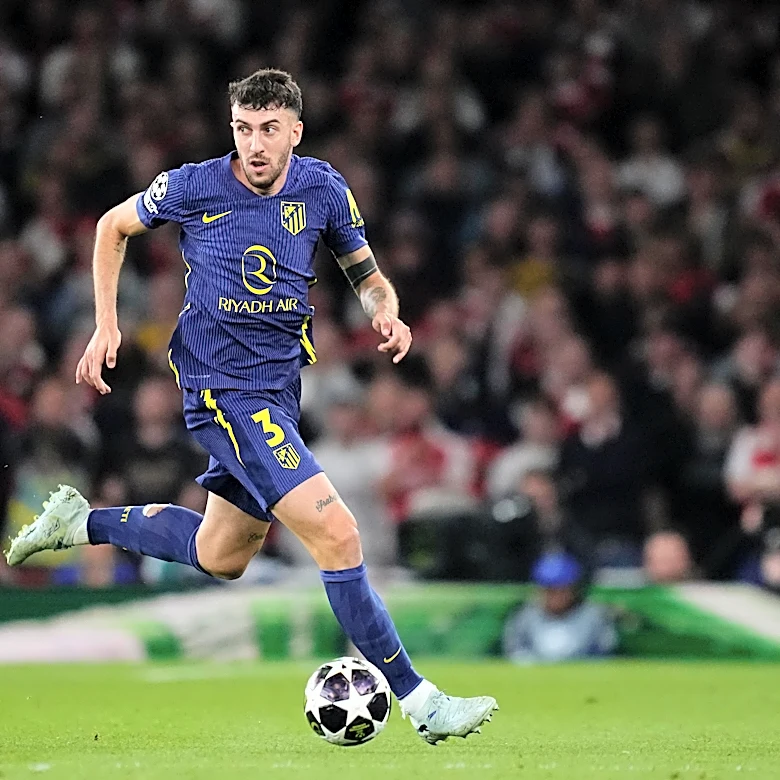
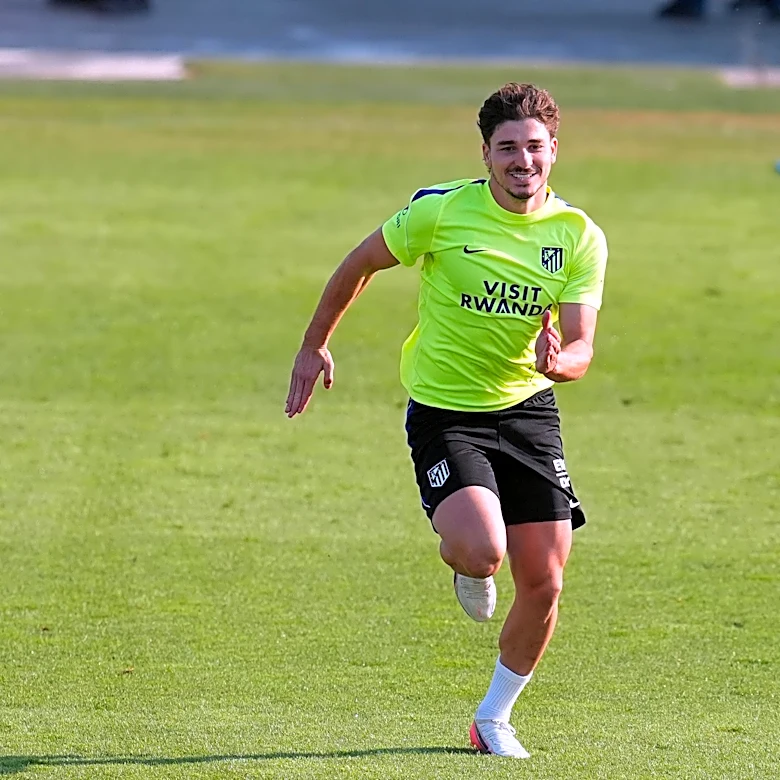
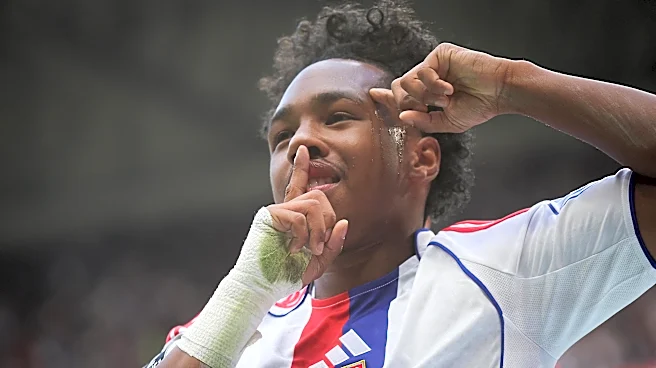
But there’s a lot more to be excited about for this transfer than the fact that Roma made a smart business deal, or that Roma has now had a player wear every number from one to 99. Mora is exactly the kind of signing that Roma have been missing since they brought in Paulo Dybala. He’s a creative player with enormous potential who can contribute now and become the next Giallorossi superstar. He’s only 19 years old, but Mora racked up over 50 senior appearances for Porto once he broke through to their senior team. While he has now left his boyhood club largely due to tactical and financial reasons, he is leaving Porto having developed a reputation as one of the most exciting young talents in Europe, often mentioned in the same breath as Lamine Yamal and Yan Diomandé:
Still, relatively muted expectations for Mora, at least during his first few months at the club, would be wise. While I would love for him to light the league on fire from the moment he steps on the pitch at the Olimpico, Gasperini will have to figure out how best to utilize him in an attack that is becoming more potent by the day. Mora will have to adjust to a new league, a new country, and a considerably different tactical environment. But those are good problems to have, and the kinds of problems that a player as talented as Mora will handle with ease.
Paulo Dybala may have just signed a one-year renewal with the Giallorossi, but there’s no doubt that Mora has been brought in as a potential long-term replacement for La Joya. Yes, that’s a story we’ve heard before, but with all due respect to some of the young creative players who have tried and failed to prove themselves at the feet of the master, Mora has more(a) to him than a Tommaso Baldanzi.
The numbers back up the idea that Mora is a different sort of prospect. His breakout 2024/25 campaign saw him score 10 goals and provide four assists in just 23 Primeira Liga appearances, putting up 14 goal contributions before his 18th birthday. He also scored seven times in the UEFA Youth League the prior season, sharing the competition’s scoring lead, and was the Golden Boot winner at the 2024 European Under-17 Championship after scoring five goals and adding two assists for Portugal. While Mora’s 2025/26 league numbers were less spectacular—one goal and one assist in 1,181 minutes—he was operating in a Porto side that was hardly a picture of attacking consistency, one that decided to win a title instead of creating beautiful football, and one that placed him as a central midfielder instead of his natural home as an attacking midfielder or on the wing. Those realities bring me confidence that Mora will have a season more similar to his 2024/25 campaign now that he’s in Rome, instead of his 2025/26 one.
More broadly, the experience Mora has developed at the top flight of European football (and in European competitions) makes it clear that compared to some of Roma’s prior investments, the Portuguese attacker is less of a lottery ticket and more of a smart investment in a blue-chip stock. He’s played dozens of first-team matches for Porto, received a senior Portugal call-up, and has been trusted to play meaningful minutes against grown men despite being one of the youngest players on the pitch. Some Romanisti have worried about Mora’s slight build and diminutive stature and how that may play in Serie A; while I understand the hesitation, I would point to the success of players like Papu Gomez under Gasperini (or Lionel Messi in general) to show that talent shines through, particularly when supported by good managers, no matter how small the player may be.
Simply put, if Mora becomes a world-class player in a Giallorossi kit by the time 2028 rolls around, the €27 million transfer fee will seem like peanuts before long; so will buying out Porto’s 50% resale clause for another €25 million. If it doesn’t, Roma will still have a 19-year-old with 50-plus senior appearances, double-digit goals in a top European league before his 18th birthday, European goals already on his résumé, and a considerable amount of room to grow. With that in mind, Romanisti should buckle up: Mora might just be the key to help bring La Maggica back in full force, both in the Champions League and in Serie A.