






Barring a trade involving the selection, the Boston Celtics are currently slated to hold the 27th overall selection in the 2026 NBA Draft.
This will mark just the second time in franchise history that the team has selected from this exact draft position. The first instance came in 2018, when Boston accomplished precisely what it hopes to replicate this year. With the pick, the Celtics selected Robert Williams out of Texas A&M, a raw but immensely talented big man who eventually developed into one
of the NBA’s premier defensive anchors. Williams not only became a cornerstone of Boston’s defense but also served as a key asset in the trade that brought Jrue Holiday to the organization.
There are a ton of trade rumors circulating around this time every year so in this world (article) where trades are turned off, let’s look at some potential big man options that could be there at pick 27.
Tarris Reed Jr. | 6’10’’ – 263 | UConn | 22
15 pts | 9 rebs | 2 asts | 2 blks | 1stl | 60/0/62 | 61 TS%

Tarris Reed Jr. may not be one of the flashier prospects in the 2026 NBA Draft class, but he has quietly established himself as one of the most dependable and NBA-ready big men projected to be available in the late first round.
After transferring from Michigan to UConn, Reed put together a breakout campaign that showcased many of the traits NBA teams covet in a modern role-playing center. Reed possesses the size, strength, and physicality necessary to compete against professional frontcourts from day one.
Reed’s greatest strength is his work in the paint, particularly as a rebounder and rim protector. His 24.5 defensive rebound percentage and 14.2 offensive rebound percentage, both ranked in the 82nd percentile illustrating how he can consistently impact games by controlling the glass on both ends of the floor. Reed uses his strength and positioning to carve out space and secure possessions. His motor rarely wavers, and he embraces the physical battles that come with playing center.
Defensively, Reed is an effective shot blocker who relies more on timing and positioning than pure athleticism. Reed does an excellent job protecting the rim, relying on both strong positioning and verticality while also possessing the ability to elevate and make plays as a weak-side help defender. Although drop coverage projects as his ideal defensive scheme at the next level, he has shown impressive fluidity on the perimeter for a player weighing 265 pounds. Several of his steals this season came from jumping passing lanes near the top of the key and turning those opportunities into transition dunks. His average of three stocks per game (two blocks and one steal) highlights the quick hands, instincts, and reaction time that should translate well to the NBA.
Offensively, Reed thrives in the role of a traditional center. He is a powerful screen setter who creates space for ball handlers and excels as a roll man in pick-and-roll situations. He shot 69% at the rim last season and has also shown an array of different finishes around the paint area. One of the more encouraging developments in his game has been his growth as a passer. Reed has shown an improved ability to read defenses from the high post and make quick decisions, a skill that should help him fit seamlessly into NBA offenses that value ball movement and decision-making from every position. He posted a career high 17.8 assist percentage last season which ranked in the 95th percentile for his position. He should be ready to go day one as a handoff passer.
The primary concerns surrounding Reed revolve around his perceived potential as an older prospect and limited offensive game. For a team like Boston, however, Reed’s strengths should outweigh those things. It would be astronomically good for Reed’s career if he was to develop a reliable three ball, but I just don’t think he needs it.
The Celtics have consistently valued intelligent, physical players who understand their role and contribute to winning without requiring touches. Reed checks each of those boxes. If he can do the hustle/dirty work big man things and make smart passes for a playoff team he will be just fine.
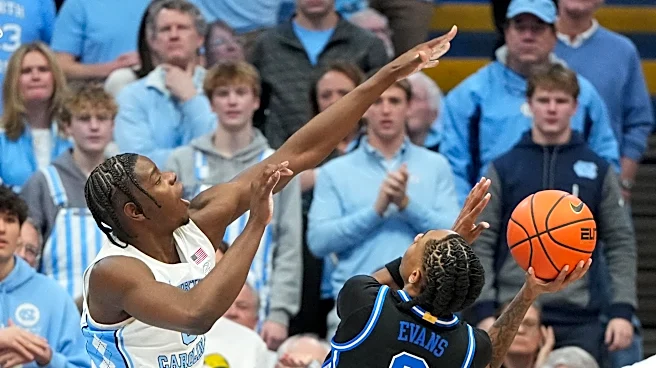
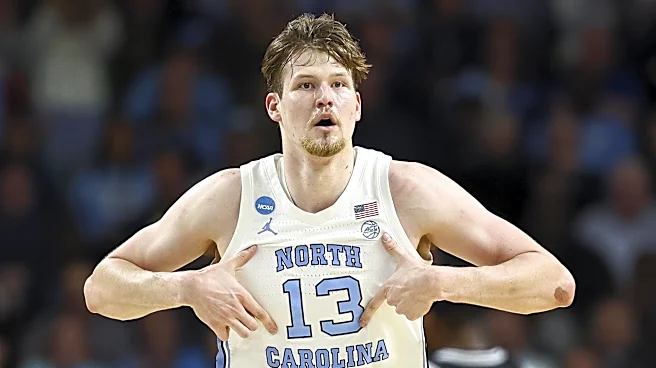
Henri Veesaar | 6’11 – 227 | North Carolina | 22
17 pts | 9 rebs | 2 asts | 1 blk | 60/43/61 | 66.4 TS%

Originally from Tallinn, Estonia, and developed through the prestigious Real Madrid system before coming to the United States, Henri Veesaar emerged as one of the more intriguing international big men in college basketball.
Offensively is where Veesaar will make his mark, and his greatest strength is his versatility. He is a legitimate shot maker at the big spot who can knock down three-pointers, particularly in pick-and-pop situations (1.24ppp), while also possessing touch around the rim and in the mid-range. The accuracy at which Veesaar converted his attempts as a player that shot an array of shots from every distance was really impressive. His 67.7 2-pt percentage, Relative True Shooting percentage (9.9), and Effective field goal percentage (66.7%), all ranked in the 98th percentile or higher last season.

Any way you want Veesaar to score, he has the skills to do so. Unlike many shooting bigs, he is comfortable putting the ball on the floor for a few dribbles, attacking closeouts, and making the extra pass when defenses rotate. He also flashed the potential to be more than just a handoff passing big. He does a good job of connecting the team and getting the ball to guards quickly to keep the action going, but he has some rip and run reads that are super fun.
He isn’t a great athlete, but he was still able to be really effective as a finisher at the rim. He can be a vertical spacer catching lobs and someone who shows touch down there with hooks and floaters. He also plays with extreme fire and an intensity that I see every time I watch him. Defensively, Veesaar isn’t going to be an explosive shot blocker, but he does have the height and wingspan/standing reach to be solid down there. He played drop most of the time at UNC, and I expect that to be his main coverage in the NBA. I thought he moved solidly enough for a player his size but not well enough to switch onto guards of course and even get out to stretch bigs effectively. He can really benefit from a team at the next level honing in on his closeout technique as I think he can be so much more impactful there.
Veesaar cleaned the glass well last season, posting a 21.9 defensive rebounding percentage. Even though he was a monster in this aspect for the majority of the season, there were certain matchups that could negate his size on the boards with seals and very physical play. From an NBA perspective, Veesaar projects as the type of center every team is searching for: a floor-spacing big who can pass, move the ball, and fit into modern offensive systems. His combination of size, shooting touch, and feel gives him a relatively high floor, while continued physical development is essential for him growing his game at the next level. The biggest questions revolve around strength, physicality against NBA-caliber centers, and whether his defensive mobility will hold up against the best of the best.
If Veesaar can show enough of the skill and shot making ability to get him on the floor early on and work through some of the physical and defensive stuff, he can turn into a really good pro.
Chris Cenac Jr. | 6’10’’ – 240 | Houston | 19
9 pts | 8 rebs | 24 minutes | 48/33/62 | 54.6 TS%

In a world of superheroes like Spider-Man, Superman, and Batman, 19-year-old Chris Cenac Jr. is Potential-Man. He arrived at the University of Houston as a five-star recruit after starring at Isidore Newman and Link Academy, where he built a reputation as a high-level finisher, rebounder, and emerging perimeter threat.
His profile blends rare physical tools, developing skill, and a still-evolving sense of consistency, making him one of the more intriguing big men in the 2026 NBA Draft class. Offensively, Cenac is best described as a face-up big with the upside to have real shot making versatility. He is comfortable operating from the elbows and perimeter, where he can attack closeouts, take straight-line drives, or rise into mid-range jumpers after relocating to open space. His shooting mechanics are generally considered clean and projectable, and he has shown enough perimeter confidence, spot-up threes and occasional pull-ups, to suggest real long-term floor-spacing potential if his efficiency stabilizes.
However, he is not yet a consistent self-creator, and much of his scoring comes from transition runs, cuts, putbacks, and finishing plays as a roll man or lob threat which can give a team a reason to play him early while he develops. His athleticism and motor on the glass strike me as the most translatable skills for Cenac off the jump. His 26.1 defensive rebound percentage illustrates his glass cleaning ability.
Defensively, Cenac offers more upside than polish, but I cannot express how special his movement skills look on some possessions.
His length, agility, and vertical pop allow him to protect the rim in spurts, rebound outside his area, and switch onto smaller players. He also has some impressive plays in two on one situations, shutting down multiple options as he moves. At Houston, he was often deployed in a physical, defense-first system that highlighted his activity level and rebounding instincts more than pure shot-blocking dominance. He does not yet anchor a defense consistently, but he shows the tools to develop into a multi-positional defender who can play both drop coverage and switch-heavy schemes depending on matchups. The main concerns are strength and discipline; he can get pushed off his spots by more powerful bigs and can drift into foul trouble or over-aggression on closeouts.
Because of the range of outcomes his potential brings, evaluators generally view him as a first-round talent with real long-term upside, but also a player who will need patience and development before fully translating his tools into reliable NBA impact which may cause him to slide on draft night. Boston is looking for contributors right now, but at some point, the value and intrigue might align.