


Game ones of a playoff series often show us how teams want to defend, attack, and use their strengths and weaknesses. They are also just the first step in a complex and sometimes long process that is followed up with adjustments and tweaks. Regardless, the opening game tends to give us a good idea of at least the foundation on which the teams want to build. So what did we learn about these two teams after Saturday night’s game? And what might it mean going forward?
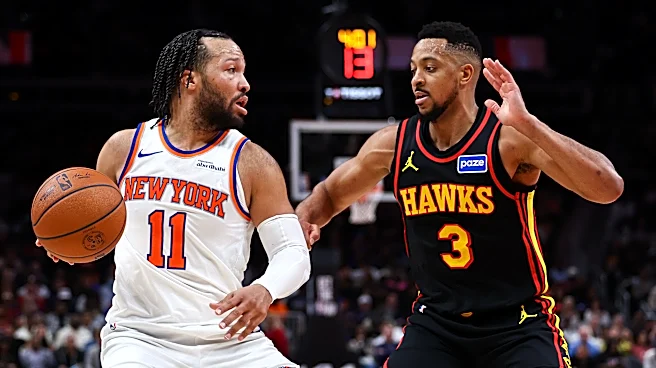
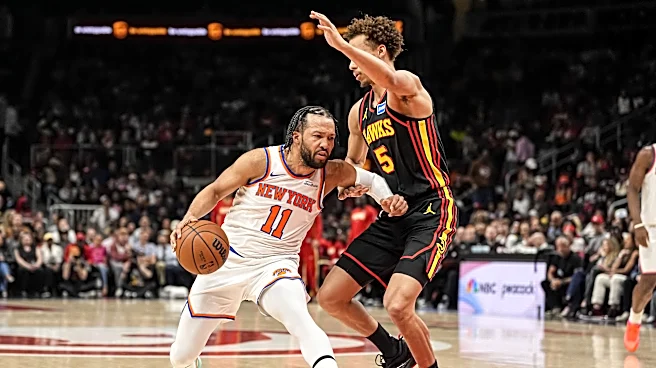
The Hawks want to attack Jalen Brunson, and the Knicks let them.
Over the last decade and change,
the league has leaned more and more into attacking the opposing team’s weakest defender and finding ways to make them defend your team’s best player. Unlike the early 2000’s and the decades leading up to that, the strength of a team’s defense is now more dictated not by the level of your best defender, but by the level of your worst defender.
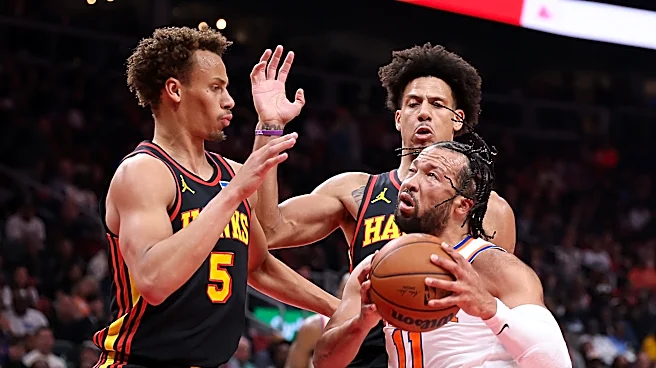
And last night, the Hawks, as every other team should, and often does, decided to attack Jalen Brunson as much as possible to make him expend more energy on that end of the floor, and, even more importantly, see if the Knicks’ team defense would dip to the level of their worst individual defender.
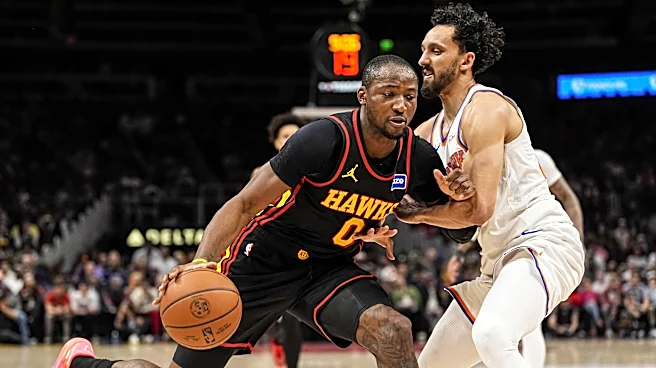
Spoiler alert, it did not. On multiple occasions, Atlanta looked to pick on the point guard, with Jalen Johnson, Nickel Alexander-Walker, CJ McCollum, and Jonathan Kuminga all taking turns at going at him. And while McCollum had a great game, New York saw some success with Brunson holding his own and forcing some tough contested shots.
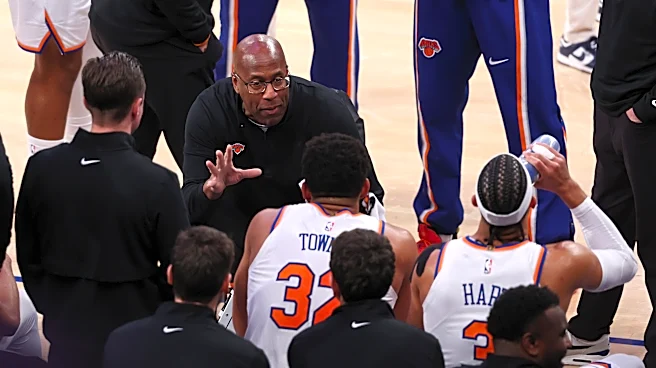
The biggest surprise, though, came not from how Brunson defended those players, or from how those players attacked him. It came from a much-welcomed change under head coach Mike Brown. During large portions of the regular season, Brown opted to send help when teams decided to isolate Brunson despite talking up the captain’s individual defense. This often leads to overreacting to switches, which in turn results in open layups and open threes.
Much to my surprise, Brown chose to trust Brunson and live with the results. The Hawks likely won’t, and shouldn’t, stop attacking Brunson. But they’ll likely need to do so more effectively and more creatively to keep this series close. If and when they do, the hope is Brown doesn’t overreact and fall back into the habit of over-helping.
Josh Hart’s rebounding may be needed more than ever.
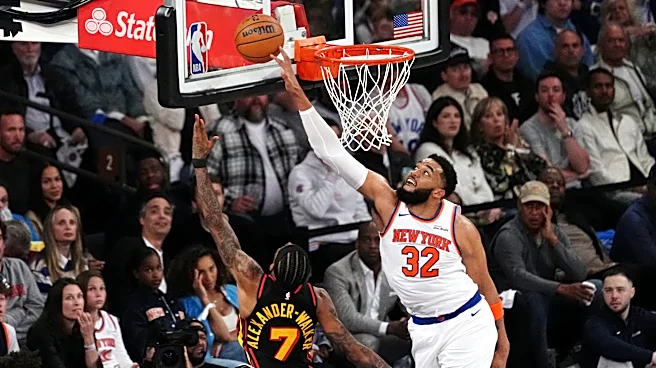
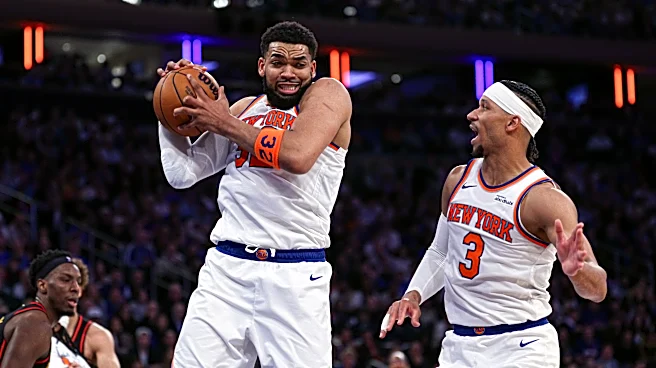
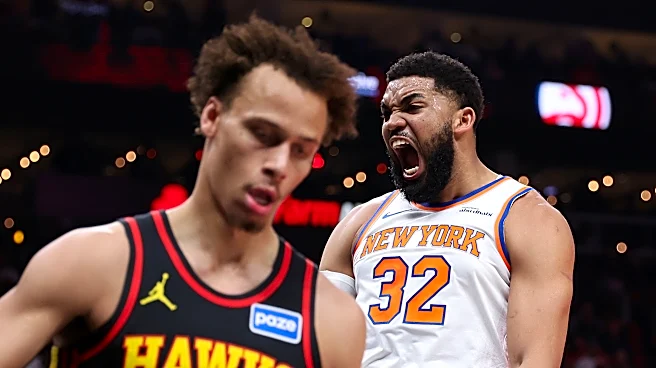
As many expected, the Knicks had Karl-Anthony Towns cross-matched onto Dyson Daniels for much of the game. In theory, this allows Towns to play off Daniels, roam, and act as a free safety. Daniels and the Hawks were able to have some success, though, in keeping Towns out of the paint defensively and having him engage in more perimeter actions. And to be fair to Towns, he had one of his best defensive games as a Knick.
But with Towns, one of their two best rebounders on the team, spending more time outside of the paint, the Knicks needed every single one of Josh Hart’s 14 defensive rebounds. Hart may have struggled to leave a positive mark on the game in his first quarter stint, but his work on the boards cannot go understated. While how and where Towns defends may change as the series goes on, chances are the Knicks will continue leaning on Hart to be the fearless rebounder he was Saturday night.
Can the Hawks help make up for Jalen Johnson’s deficiencies?
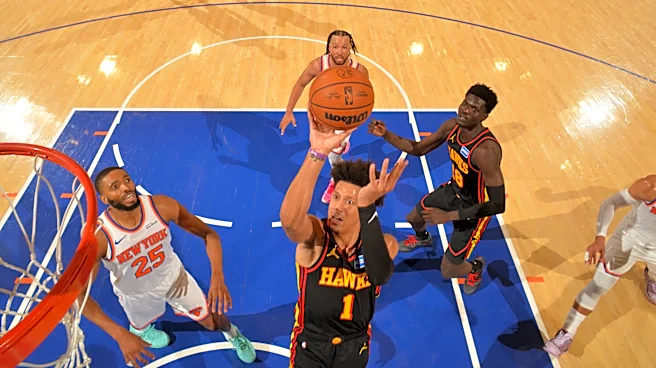
Johnson still ended the night with 23 points, but it took him 19 shots to get there. He had some big three-pointers, and had some ferocious dunks off of some nice cuts, and actions the offense ran for him. But when the game slowed down, he struggled to consistently get good shots against the Knicks, and in particular, Hart. While Johnson has the athleticism and size advantage over Hart, his lack of a mid-range game and his good, but not great, handle clearly held him back from being an even bigger and stronger force offensively.
It’s not unforeseeable that this ends up being his worst game of the series, but it’s clear that either he needs to find different ways to score, or the Hawks need to find more ways to get him downhill and into open spaces where he can really excel. If they can do that, they’ll not only unlock his scoring, but also his passing, which is arguably his most important skill set as it pertains to how it impacts the Hawks’ offense.
Towns needs to be great, and he was
We’ve seen multiple iterations of Towns and his role on the offensive end this season. In the early part of the season, we saw Brown try to turn him into a Domantas Sabonis-esque player with little success. We then saw Towns play a lesser role in the offense through the middle of the regular season. Then we saw Towns really find a solid balance between attacking, not forcing things, being decisive, and utilizing his passing abilities. And last night, we saw a lot of that.
While he did have a few turnovers where he got a bit overzealous or just overthrew passes after making the correct read, he was instrumental in the Knicks winning this game. Besides playing amazing defense, Towns started the game off being the focal point of an offense that saw Mikal Bridges and Brunson get easy looks off his gravity and decision-making. It was justifiably Brunson’s 19-point first-quarter outburst that got a lot of the attention, while Towns and his slow, inefficient start from the field frustrated some. But if you actually watched the game and didn’t rely simply on box scores to judge impact, Towns’ process, patience, and decision-making were every bit as important as Brunson’s.
Given how tightly the Hawks are playing Brunson and how nobody on the Hawks can defend Towns, he’ll likely continue to have a large role both as a passer and scorer this series. The more Towns can serve as an outlet and initiator for Brunson, the easier his job becomes.
Brunson may decide the floor of this team, but the ceiling of how good this team can be, and how far they can go, ultimately will be decided by Towns. And if he can continue to play even remotely close to the level he did yesterday, the Knicks should feel very good about their postseason run.
Depth difference
While most NBA fans look at the matchups between the starters and what they did, it can often be the bench players and the plays on the margins that really separate the great from the good. And last night, we saw some interesting takeaways from both benches.
One, while I am not someone who often reads too much into the plus-minuses of a single game, it was clear that the Knicks’ bench outplayed the Hawks’ bench. Atlanta’s bench struggled mightily with only one player, Mouhamed Gueye, having a positive plus-minus, and the other three bench players having a plus-minus no better than -5. Shoot, former number one pick, Zaccharie Risacher, may not play another second this series after the awful 120-second stint he had last night.
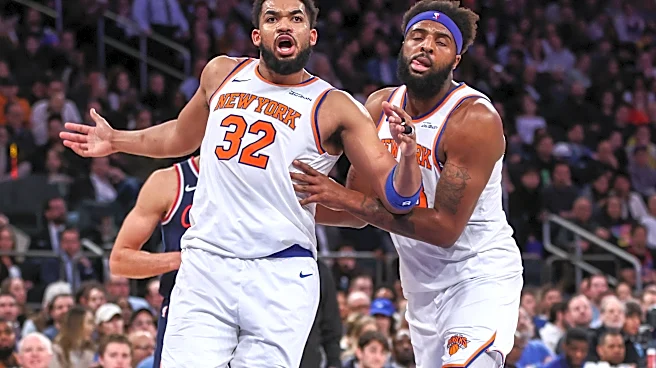
Meanwhile, the Knicks’ bench was all in the positive. Mitchell Robinson, as he often is, was a force to be reckoned with and was great on both ends of the floor. Deuce McBride, despite struggling with his shot in the first half, came alive in the second half and played his usual great defense. Landry Shamet couldn’t get much to go offensively, but he took the shots they needed him to continue taking, and he fought defensively. And last, but certainly not least, is Jordan Clarkson, whose game was eerily similar to the trajectory of his rollercoaster season. He started off the game shaky, but in the second half, he looked more and more like the re-invented version of him that we saw in the final weeks of the season. One who bought into ball pressure, offensive rebounding, and ball-handling.
The Knicks’ bench was actually so solid that they even put up a very commendable effort over a several-minute span to start the fourth quarter. If the Knicks’ bench can outplay the Hawks’ bench by this much and find a way to stay even close in their minutes without Brunson and Towns, this could be a very short series.
Hack a Mitch back in play?
Robinson’s free-throw shooting has been one of the only real weaknesses in his game throughout his career. And last night, as coaches have done in the past, Quinn Snyder decided to hack Robinson. This has multiple benefits besides just sending the poor free-throw shooter to the line. It also takes the Knicks and the rest of their players out of rhythm offensively, and it also can shake up the Knicks’ rotations a bit as they have to take Robinson out before they usually like to.
In a potential seven-game series, each game, every quarter, evolves into a series of chess moves between the coaches and players. Going forward, it will be interesting to see how Snyder and Brown counterplay each other when it comes to Robinson. Brown may respond to Snyder’s strategy by playing Robinson more in the early portions of quarters to get the Hawks into the penalty earlier. Regardless of how it plays out, with Robinsons being such an impactful force, it will be an interesting strategic back-and-forth to keep an eye on.
Same old story
It’s no secret that putting a big man on Hart and putting a wing on Towns is one of the most effective ways to slow down the Knicks offense. We saw throughout most of the game just how effective Brunson, Towns, and the rest of the Knicks were when the Hawks defended them in a more traditional way. When Atlanta did eventually decide to put Daniels on Towns and Okongwu on Hart, the Knicks’ offense looked significantly worse, with most possessions leading to Hart screening for Brunson.
I still don’t think Snyder goes to this to start games off. Nor do I think it becomes his most-used defensive scheme. I do think, though, that he goes to it more often and earlier. And when he does, it will be interesting to see what Brown and the Knicks have planned. Over the course of the season, while the Knicks never truly found a solution to beating this strategy, they seemed to be able to do just enough. That being said, it’s been almost two full seasons of teams doing this, and they’ve yet to have a consistent enough counter. If the Hawks end up winning the series, or even push it to six or seven games, it will likely be due to this strategy continuing to haunt the Knicks.