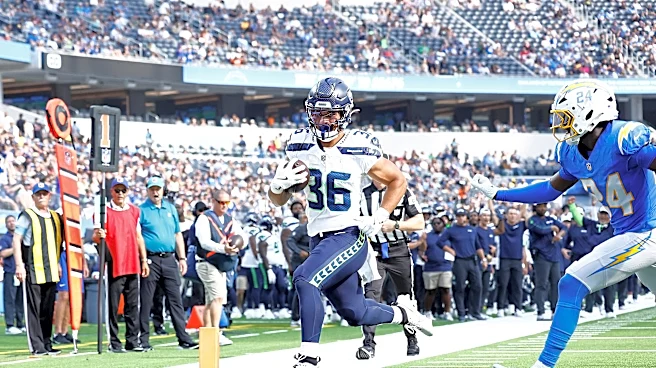



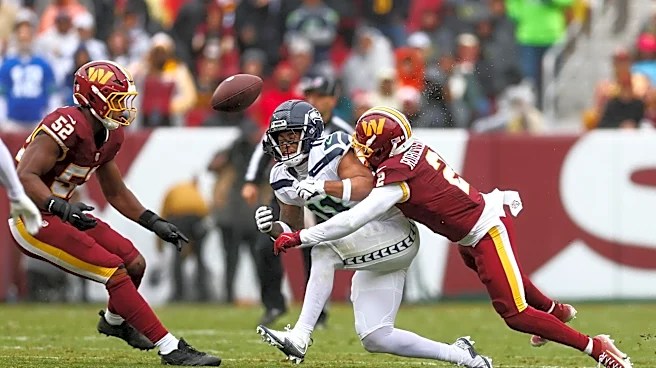
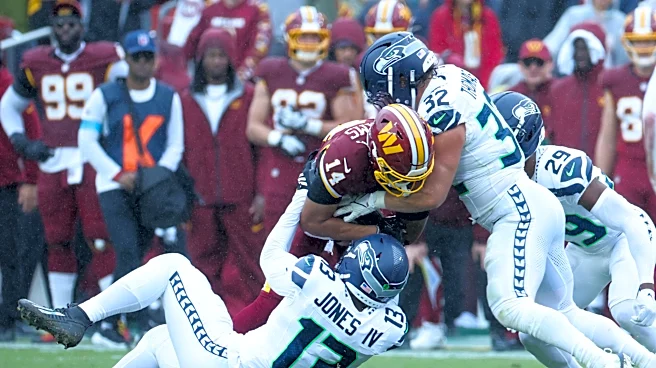
After opening the season with two wins, the Seattle Seahawks enter Week 4 looking to bounce back from an unexpected 33-31 loss to the Washington Commanders. On the other side, the Los Angeles Chargers are still winless in 2026. They lost to the Arizona Cardinals, Las Vegas Raiders, and Buffalo Bills, but the Chargers were in position to win their latest game after taking a 10-0 lead over Buffalo before eventually falling 24-16, despite forcing five turnovers.
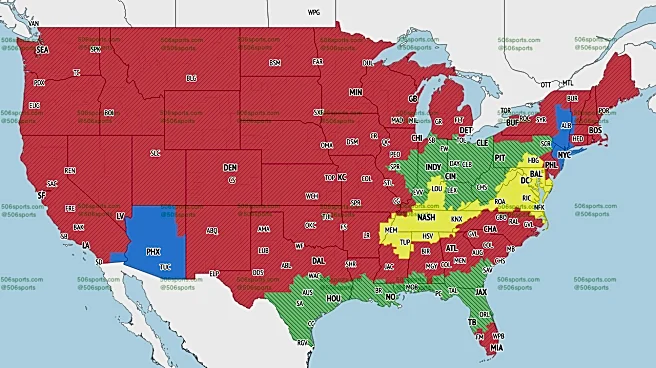
The matchup will be played at Lumen Field
in Seattle on Sunday, October 4, at 1:25 p.m. local time. It will be the first regular-season meeting between these teams since 2022, when the Seahawks defeated the Chargers 37-23 in Los Angeles.
For Seattle, this game is also an opportunity to prevent the loss in Washington from becoming the start of a negative stretch. The Seahawks committed three turnovers against the Commanders, and all three resulted in touchdowns, accounting for 20 of Washington’s 33 points. Seattle gained 437 yards compared to just 229 for Washington, but ultimately lost because it could not protect the football in the most important moments.
Can the Seahawks’ run game get back on track?
Perhaps the biggest question for Seattle entering this game is the running game. The Seahawks managed just 44 rushing yards against Washington after producing much better numbers during the first two weeks. The challenge now comes against a Chargers defense that has produced very different results from week to week.
Los Angeles allowed 116 rushing yards to Arizona in Week 1, then held Las Vegas to just 57 yards in Week 2 and Buffalo ran for 176 yards in Week 3, with James Cook accounting for 154 of them. Through three games, the Chargers are allowing about 116 rushing yards per game.
That means there is an opportunity for Seattle to try to re-establish its identity on the ground, but the matchup is not necessarily a simple one. Dalvin Tomlinson is an important piece of the interior defensive line, with Teair Tart and Jamaree Caldwell also there. Tomlinson might miss the game due to injury.
For Seattle, the goal will be to find a way to consistently gain yards without turning every run into a second- or third-and-long situation. After the struggles against Washington, establishing some offensive balance could also help take pressure off Sam Darnold.
The offensive line vs. the Chargers pass rush
The other major test for Seattle’s offense will come in pass protection. The Chargers have one of the more interesting pass-rush groups in the league, with Khalil Mack, Tuli Tuipulotu, and first-round rookie Akheem Mesidor giving them three players who can win from the edge.
Tuipulotu has already generated 12 pressures and two sacks through three games, while Mesidor has added five pressures and 1.5 sacks despite playing just 66 defensive snaps. Mack has also recorded two sacks this season.
The Chargers showed against Buffalo that they can create pressure without constantly sending extra rushers. Tuipulotu, in particular, was a problem for the Bills, finishing the game with 1.5 sacks and two quarterback hits.
That will be a major test for Seattle’s offensive line. Abe Lucas has been almost unrecognizable compared to the level we are accustomed to seeing from him this season, and this would be a good opportunity for him to get back to his usual level.
Grey Zabel will also need to rebound after a down game against Washington.
The Seahawks cannot afford to let the Chargers’ edge rushers consistently win early in the down. If Mack, Tuipulotu and Mesidor can create pressure without requiring additional help, Los Angeles can make life difficult for Darnold and limit the time available for Seattle’s deeper passing concepts.
Turnovers: the Chargers can take the ball away
There is an important similarity between these two teams entering this matchup: turnovers have already played a major role in their seasons.
Seattle turned the ball over three times against Washington, and all three turnovers became touchdowns.
The Chargers, meanwhile, just experienced almost the exact opposite situation. Against Buffalo, Los Angeles forced five turnovers — two interceptions and three fumble recoveries — but still lost.
That makes protecting the football particularly important for Seattle, especially for rookie running back Jadarian Price (assuming he plays after not practicing on Thursday). The Chargers have shown that their defense can create opportunities, and another game with multiple takeaways could give Los Angeles a path to victory even if the offense does not have a dominant performance.
Justin Herbert has given defenses opportunities
Justin Herbert remains the central figure of the Chargers’ offense, but there have been opportunities for opposing defenses to make plays against him this season.
Through three games, Herbert has thrown for 627 yards, three touchdowns and four interceptions, while taking eight sacks. More importantly for Seattle, his four interceptions do not tell the entire story. PFF has charted Herbert with seven turnover-worthy plays through his first three games.
That creates an interesting opportunity for Seattle’s defense. Herbert has already put the ball in harm’s way more often than his interception total suggests, and the Seahawks’ defense could be looking to turn those opportunities into actual takeaways.
Against Buffalo, Herbert finished with 226 passing yards, one touchdown and one interception. His interception came in the fourth quarter, when C.J. Gardner-Johnson undercut a throw intended for Marquez Valdes-Scantling near the goal line and returned it 41 yards.
Seattle’s pass rush vs. the Chargers offensive line
This matchup goes both ways. While the Chargers’ pass rush will test Seattle’s offensive line, the Seahawks’ front has a favorable opportunity against an offensive line that has had its share of problems through three weeks.
The Chargers’ interior has been particularly inconsistent. Cole Strange has allowed seven pressures through three games, while his PFF pass-blocking grade sits at just 25.6.
The unit has also struggled with penalties. Joe Alt was flagged four times against the Raiders in Week 2, and he was penalized again against Buffalo. That brought his season total to six penalties through three games, the most in the NFL.
That said, Alt’s season should not be reduced to those penalties. He had a strong performance against Buffalo and finished Week 3 with an 83.6 PFF grade, according to Chargers-focused reporting.
Still, the penalties are something Seattle can try to exploit. The Seahawks have the defensive line talent to make the Chargers play behind the chains, and the interior matchup against Strange could be particularly interesting.
Seattle’s pass rush will be particularly important here. Through three games, the Seahawks have generated seven sacks and 21 quarterback hits, with Leonard Williams and DeMarcus Lawrence leading the pressure production against Washington.
If Seattle can create pressure while maintaining its coverage integrity, there could be opportunities for the secondary to finally turn some of Herbert’s risky throws into turnovers.
Omarion Hampton vs. Seattle’s run defense
Los Angeles’ running game also deserves attention. Omarion Hampton has 193 rushing yards on 50 carries, averaging 3.9 yards per attempt, with two touchdowns. Against Buffalo, however, he was held to just 56 yards on 15 carries.
That will be another interesting test for Seattle’s defense. The Seahawks have allowed only 261 rushing yards through three games, an average of 87 per game.
The middle of Seattle’s defensive line has remained difficult to run through, but the edges gave Washington some opportunities last week. The Chargers could look to test those areas and force Seattle’s linebackers and safeties to make plays outside the tackles.
If Seattle can maintain its interior run defense while cleaning up some of the issues on the edges, it can force the Chargers into more obvious passing situations and allow the pass rush to become a bigger factor.
Ladd McConkey, Tre Harris, and the challenge for the secondary
In the passing game, Ladd McConkey (who didn’t practice on Thursday) has been the Chargers’ leading statistical target so far, with 12 receptions for 183 yards and a touchdown. Tre Harris has also emerged as an important part of the offense, with 10 receptions for 143 yards.
Quentin Johnston had his best game of the season against Buffalo in terms of involvement, although he also had a costly drop on third down. The combination of McConkey, Harris and Johnston gives Herbert several different options to attack the secondary.
For Seattle, that puts particular attention on the cornerbacks and how the defense handles different route concepts. Josh Jobe has an interception this season, but he has also given up two TDs in recent games and has struggled in several one-on-one situations.
The secondary will therefore be an important part of this matchup. Herbert has the arm talent to attack outside the numbers, and the Chargers have enough speed at receiver to turn a coverage mistake into an explosive play, particularly if Julian Love is unable to play.
A winless team that cannot be overlooked
The Chargers’ 0-3 record makes this look like a favorable matchup for Seattle on paper, but this could easily become a trap game. Los Angeles still has plenty of talent on both sides of the ball, along with a coaching staff capable of making adjustments.
The Chargers have been competitive in stretches of all three games. They led Buffalo 10-0 and were still ahead 13-10 entering the fourth quarter, while against Las Vegas, they had a chance to tie or take the lead late before Omarion Hampton’s fumble helped swing the game. Against Buffalo, the defense forced five turnovers and repeatedly gave the offense opportunities to take control.
That makes this an important game for Seattle not only because of what the Chargers have done so far, but because Los Angeles will be looking for its first opportunity to put together a complete performance. The Seahawks cannot afford to be the team against which the Chargers finally put everything together.
After the loss to Washington, Seattle has already seen what can happen when a team fails to capitalize on its advantages. The Chargers have enough talent, defensive playmakers and coaching to make this a difficult matchup if Seattle is not prepared from the opening snap.
Final Thoughts
The Seahawks and Chargers enter Week 4 in different situations, but with several similar questions. Seattle needs to clean up its turnover problem and find a way to get the running game back on track, while Los Angeles needs to turn its defensive production into points and wins. The Chargers have already shown that they can pressure quarterbacks and create turnovers, but their offense has not consistently capitalized on the opportunities created by the defense.
For Seattle, the priority should be getting back to the formula that produced the first two wins of the season: control the football, establish the run and let the defense dictate the pace of the game. The Chargers have players capable of changing the game at every level, from Mack, Tuipulotu, and Mesidor in the pass rush to Herbert and his receivers on offense.
The biggest difference could come down to which team is able to avoid giving the other extra possessions. Seattle already saw what three turnovers did against Washington. Los Angeles just showed that even five takeaways may not be enough if the offense cannot capitalize. In a matchup between two teams looking to correct very different problems, protecting the football and winning the line-of-scrimmage battles could decide the game.