
BOSTON — Jayson Tatum’s remarks on The Pivot Podcast and the Chris Haynes report that Tatum’s re-evaluating whether he’ll return from Achilles surgery this season did not stem from a physical setback,
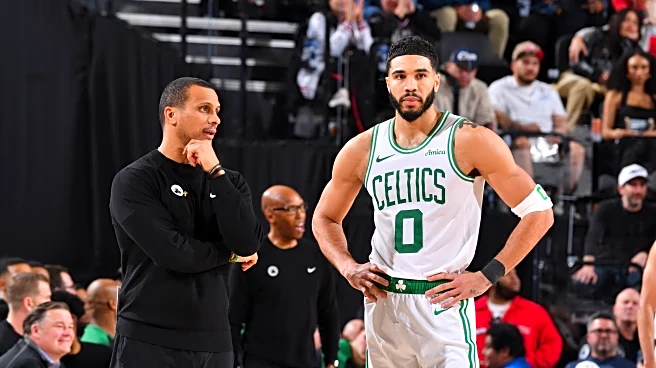
Joe Mazzulla said on 98.5 The Sports Hub earlier this week. Mazzulla also addressed the development on Friday before Celtics-Kings at TD Garden.
“The most important thing is continuing to make sure that he’s getting better in his rehab process,” Mazzulla said. “He’s doing a great job hitting his marks in the weight room, he does a great job hitting his marks in his strength-and-conditioning and his physical therapy, and that’s the biggest thing. He’s been with us all year. He’s been on the road, he’s been on the bench, he’s been in film sessions, he’s been in practices. The most important thing is that he continues to chip away at that and continues to chip away to get as healthy as he can.”
Haynes reported that he had heard Tatum had gotten close before re-evaluating his decision, a process Tatum explained began over several weeks earlier this month. Both Mazzulla and Haynes confirmed no final decision has been made, leaving Tatum’s recovery process unchanged, but the podcast marked the first time Tatum cast doubt over playing during the 2025-26 season. He specifically referenced the Celtics’ success playing with a new identity, the challenge of integrating into it pre-season, especially following an injury, and uncertainty over what that looks like as reasons for his re-consideration. Haynes noted multiple reasons for the change in his report.
Tatum also referenced the 50-60 game marks as a timeframe where he could hypothetically return, a stretch beginning on Tuesday in Dallas and ending with a Mar. 1 game in Boston against the 76ers. He reaches the nine month mark in his recovery from surgery in February around the All Star break. The Celtics have never placed a timeline on Tatum’s return and cautioned that he’ll only play when he’s 100% healthy. That involves passing various physical thresholds and practice repetitions that Brad Stevens discussed earlier this season, while also overcoming the final mental hurdles involved in a return.
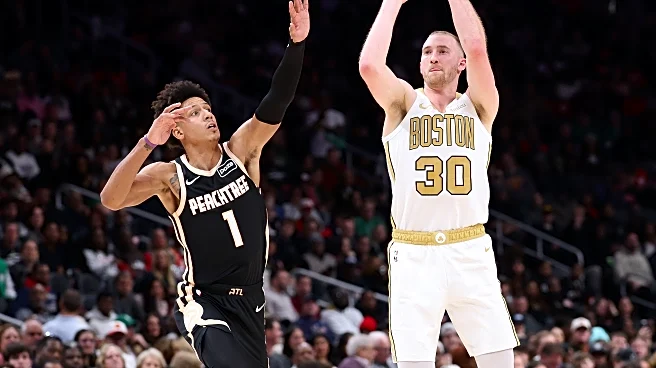
“If he is going to return, we’re welcoming him with open arms,” Sam Hauser said after Wednesday’s game. “I mean, such a great player, and any time you can have the luxury of adding a player like that to your rotation, it’s pretty exciting. So whatever his timetable is, it’s kind of up to him. We’re trying to focus on every day and then try to win as many games before he does come back, if he ends up coming back. So if that’s the case, we can’t wait.”
Tatum appeared at shootaround on Friday morning laughing with Celtics staffers on the sideline before beginning his warm-ups with trainer Nick Sang before the open portion of Boston’s availability began. Jaylen Brown did not receive a question about Tatum’s comments after Wednesday’s game, which appeared in the podcast that released on Tuesday, but has relished his role leading the Celtics this season after years of sacrifice. Their dynamic atop the team’s offense looms as the largest challenge in reintegrating Tatum, though Brown has also balanced ball-handling responsibilities with Derrick White and Payton Pritchard in a mostly even split this year. Tatum could also potentially face minutes restrictions upon returning, according to medical experts.
Mazzulla said on 98.5 that there’s a positive disruption to Tatum’s return as well, with even a less effective version of Tatum providing minutes at forward, play-making, shooting and defense that the team has missed in his absence. If Tatum decides to sit out until next training camp, which begins in late September, he’ll have recovered and ramped-up for close to 17 months before returning to preseason action.
“We’re always having conversations every day about where he’s at physically, mentally,” Mazzulla said on Friday. “I think you do that with all the players, so I think that’s the important thing over the course of the season. To answer your questions about the challenges of 82 (games) are not just physical. They could be mental, they could be emotional, they could be on the court, they could be off the court. It really doesn’t matter. The challenge of that is building the relationships with guys to have conversations, whether it’s about basketball or whether it’s not.”