


With the 2026 NFL offseason winding down, the focus on the season is taking shape as we inch closer to the start of training camps across the league. The lull between the draft and training camp can feel like an eternity for some, but it’s a great time to take a step back and zoom out on the offseason that was. In the NFC North, a tight four-team race promises to rekindle, even if none of the four teams within the division experienced high-impact acquisitions.
In 2025, the NFC North was the lone division
in football to finish with all four teams above .500, and while that is not an easy feat, it speaks to the highly competitive nature of this group. Each offseason brings changes, and while none of these teams made headlines during the acquisition period, there’s still plenty to evaluate heading into the season.
With the table set, let’s dive into the first of our two-part series, ranking each offensive group within the NFC North.
Quarterback
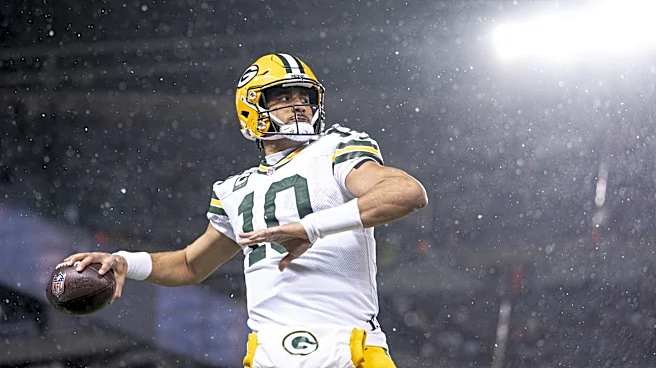
1. Jordan Love (Green Bay Packers)
The Packers have the top quarterback in the division again? Say it ain’t so…
Unlike previous iterations of quarterback rankings with the likes of Aaron Rodgers, this race is much closer at all four spots. That said, Love has proven to have enough remaining upside (and established production) to be considered the top quarterback in the division. Following somewhat of a static year in 2024, Love returned to form in 2025, even if his numbers don’t reflect a big jump.
Continued, albeit minor, injuries have somewhat limited the ability to see the full picture. Still, at his best, Love has enough of an established track record combined with physical upside to be a Top 7-10 quarterback in this league yearly. Most impressive, his turnover-worthy throws continue to take a dip, and even without an elite offensive line in front of him, he’s still not taking many sacks. Love isn’t Rodgers or Brett Favre, and for that, some will knock him. Yet, when it all boils down, the 27-year-old has still provided more than enough to keep the Packers offense in the Top 10 conversation.
2. Jared Goff (Detroit Lions)
Although it might be hard to believe, Goff will be entering 11th at the age of 31. For such an experienced player, he’s still in the prime of his career, even if his athletic profile doesn’t exactly need it. Here’s the reality with Goff: he’s a good, not great, player who has now thrown for 4,000 yards in four straight seasons. He has averaged close to a 2.5:1 touchdown-to-interception ratio, while averaging over 30 touchdown passes per season since 2022. By all accounts, he has far exceeded the expectations for most after essentially being dumped in Detroit during the trade of Matthew Stafford.
While it’s true that Goff needs more “help” than any other quarterback on this list, his production has been steadier than any quarterback in the division since the departure of Rodgers. Similar to Kirk Cousins’ time with the Vikings, Goff is a player who will continue to give the Lions Top 5-10 production, even if there are parts to his game that limit his overall ceiling. The gap between Love and Goff is thin, but Love’s ability to create and his overall arm talent give him the leg up in these rankings.
3. Caleb Williams (Chicago Bears)
Much is made about Year 2 jumps from NFL quarterbacks, and although the year didn’t start as planned, Williams’ growth in Year 1 of Ben Johnson’s system was fun to see. Purely based on talent, the former No. 1 overall pick is about as close to a “one-of-one” player as you’ll see at the position. That said, his lack of consistency can be maddening at times.
Williams’ arm talent and improvisational skills are otherworldly. After a disappointing rookie campaign in which he showed few signs of the college quarterback he was, Williams’s magic shone throughout the 2025 season. His ceiling has never been in question, but the lack of accuracy and questions about his ability to play in structure were big concerns heading into last season. While it’s safe to say he quelled concerns about his fit in Johnson’s offense, his misfires and general wildness were a bigger issue in Year 2.
There’s no question that there are still some valid concerns about Williams’ game, and those will need to be ironed out in Year 3 if he hopes to meet the high ceiling placed on him pre-draft. That said, his success under center, coupled with his historic pace of cutting down sacks, should give Bears fans hope that another big leap in his development is forthcoming. Following an offseason primarily focused on the defense, it’s clear the organization is putting all of its eggs in one basket and counting on Williams taking another big step forward in 2026. If he does, his standing on this list could be much higher next season. For now, he comfortably slots in at the No. 3 position.
4. Kyler Murray/J.J. McCarthy (Minnesota Vikings)
Head coach Kevin O’Connell might be one of the better offensive minds in the league, but even the best coaches have their limits when it comes to poor quarterback play. McCarthy was always a project coming out of Michigan, even if for the simple fact that he didn’t throw the ball much during his college career. The arm talent is there, as is the athleticism, but everything else lacked in a big way.
Heading into camp, the Vikings are touting a “true” quarterback competition, but barring a surprise, this feels like Murray’s job to lose. Even if Murray’s tenure in Arizona didn’t end in a positive light, the talent and ability to create are still very much there. Because of Murray’s old contract in Arizona, the cap-tight Vikings were able to sign the veteran on a one-year, veteran minimum deal.
Financially, there’s little risk in this competition, and although it would best serve them moving forward to have McCarthy take the leap and win the job out of the gate, the more immediate reward would be getting Murray back to his old form. Minnesota finds itself in a tough spot heading into 2026, and while it’s fair to question Murray’s fit in this offense, better quarterback play could result in a return to the playoffs.
Running Back
1. Detroit Lions (Jahmyr Gibbs/Isaiah Pacheco)
The days of “Sonic and Knuckles” might be over in earnest, but with Gibbs’ growing role, I’m not sure that’s a bad thing. Don’t get me wrong, David Montgomery is a good running back, and he was a perfect complement to Gibbs, but considering his growing role, maybe having a physical back on a cheaper contract in Pacheco will work out better for the Lions in the long run.
Simply put, Gibbs is one of the league’s best backs and possesses the type of speed most players only dream of. Although his numbers were slightly down in 2025, much of that can be attributed to the lack of cohesion along the offensive line. For Pacheco, this is a second chance for him to carve out a role as a valued No. 2 and power back in an explosive offense.
If all goes well, the Lions will save money without sacrificing much production by switching from Montgomery to Pacheco. That said, let’s make no bones about this: The offense (and running game) goes through Gibbs. We’ll see if he can take it up a notch under new offensive coordinator Drew Petzing, who had a good running game in Detroit when his backs were healthy.
2. Chicago Bears (D’Andre Swift/Kyle Monangai)
Heading into last season, most Bears fans felt like running back was a serious point of concern. After all, Johnson was in Detroit when the team ousted Swift, and Monangai felt like a consolation prize for missing out on the top names earlier in the draft. While it took a bit for the running game to get off the ground, the Bears finished the season ranked as the third-best rushing team in the league, averaging 144.5 yards per game.
The Bears’ standing in these rankings might have less to do with name/talent value and more to do with the system they are running. Johnson has always been well known for his run-game design, and that showed in a big way last season. Even more impressive was that Swift set career highs in yards, yards per carry (minimum 100 carries), and touchdowns. Monangai ranked in the Top 5 for rookie running backs in most statistical categories, despite being one of the last in his class taken in the draft.
Only time will tell how much impact the surprise retirement of center Drew Dalman will have, but with a strong scheme in place and both backs complementing each other well, there’s reason to believe that they can replicate their success in 2026.
3. Green Bay Packers (Josh Jacobs/Chris Brooks)
If we were just evaluating the first name on the depth chart, the Packers might be No. 2 on this list. The fact is, the depth behind Jacobs is questionable at best. Maybe MarShawn Lloyd gets healthy and makes an impact as RB2, but for the time being, this looks like Brooks’ job to lose.
Jacobs was banged up in 2025, and as a result, his overall production suffered. Although he played in 15 games, his yards per carry dropped to his worst total in three seasons, and he once again continued an on-again, off-again trend in yearly production. While his red-zone production was still impressive (13 rushing touchdowns), the NFL has become a two-back league, even if only for depth and spell purposes.
Assuming Jacobs can get back to his expected form, the Packers have plenty of questions on the depth chart behind him, which is why, despite Jacobs being a plus-player, they rank third on this list. With Jacobs’ late May arrest, including a domestic violence charge, this group has even more questions heading into training camp, pending the conclusion of that case.
4. Minnesota Vikings (Aaron Jones/Jordan Mason)
Last offseason, the Vikings appeared to make one of the smarter, not-so-talked-about moves when they acquired Mason in a trade with the 49ers. Not only was Jones aging, but the mileage has become an issue in recent years. Unfortunately for Minnesota, Year 1 of the Mason experience did not pan out as expected.
As a team, the Vikings ranked 23rd in the league, averaging just 108.3 rushing yards per game. Although that was still over 30 yards per game better than the Las Vegas Raiders, the team’s lack of rushing attack hurt an offense that struggled with its passing almost all season. For reference, Mason ranked 5th, and Jones followed at 6th in rushing yards within their own division.
Mason’s peripheral numbers looked good on paper, but he wasn’t nearly as effective as he was in his breakout season in San Francisco. Jones, on the other hand, played in just 12 games, while totaling 548 rushing yards and three total touchdowns. Surprisingly, the Vikings opted to retain Jones in the final year of his deal. As a whole, this group doesn’t possess a ton of upside and will be counting on better play from the offensive line to improve their efficiency.
Tight End
1. Chicago Bears (Colston Loveland/Cole Kmet/Sam Roush)
It might only be Year 2 of Johnson’s influence over the Bears’ offense, but one thing has become clear in his short time in Chicago: He values tight ends. Not only did the team spend a high first-round selection on Loveland in last year’s draft, but they followed up this April by taking another one in Roush. As with Sean McVay in Los Angeles, Bears fans can expect plenty of 12- and 13-personnel. Assuming Loveland takes the next step and Kmet maintains his value as a top-tier TE2, this is one of the better overall groups in the league with high upside.
2. Green Bay Packers (Tucker Kraft/Luke Musgrave/Josh Whyle)
Ranking these groups, especially at the top, comes down to top-end talent and overall depth. While Kraft might be more established as an NFL player than Loveland, a torn ACL and lack of top-end production keep the Packers in the No. 2 spot here. Kraft has far exceeded expectations considering his draft slot in comparison to Musgrave, but he’s proven to be a Top 10 end with plenty more upside left to untap. Musgrave had a prime opportunity to establish an extended role last year, but simply couldn’t do it. Overall, this is a good group, and if Kraft can return healthy and as productive as before, it is a top-end group, similar to the Bears’.
3. Detroit Lions (Sam LaPorta/Brock Wright/Tyler Conklin)
LaPorta burst onto the scene as a rookie, putting up impressive numbers (86 receptions, 889 yards, and 10 touchdowns), but has yet to be able to replicate those numbers in the two seasons since. More concerning is the back issue that ultimately shelved him for the final eight games of last season. If healthy, there are plenty of reasons to believe he can get back on track, but his production, especially in the red zone, has dipped each year. Wright is a quality blocking tight end but offers little upside as a pass catcher. Conklin was a nice addition and should give this group a higher ceiling in the passing game. Much of Detroit’s standing in these rankings comes down to LaPorta’s health and his ability to get back to his rookie-form production level.
4. Minnesota Vikings (T.J. Hockenson/Josh Oliver/Ben Yurosek)
Any time a team has a quality group of tight ends and ranks last on a list, you can rest assured this is simply a deep group across the division. While talent acquisition plays a big part, it also speaks to the progressive offensive minds in the NFC North. A few years ago, when Hockenson was traded from Detroit to Minnesota, many wondered why the Lions would do what they did. Quickly, LaPorta established himself as a good player, and although Hockenson has continued to produce at a quality level, his production and availability have dipped over the last two seasons. Oliver is a high-caliber blocking tight end with some receiving upside, and Yurosek is going into Year 2 with high hopes. Again, this is a quality group, but it’s also the oldest in the division and has the least production.
Wide Receiver
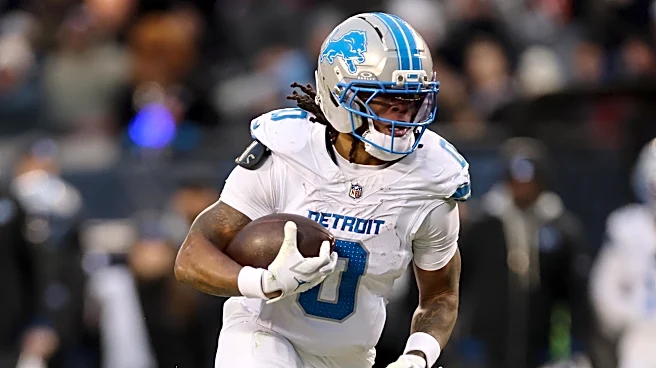
1. Detroit Lions (Amon-Ra St. Brown/Jameson Williams/Isaac TeSlaa/Kendrick Law)
Looking around the league, it might be tough to find a better one-two punch than St. Brown and Williams. We already know that St. Brown is one of, if not the best, slot receivers in the league, but Williams’ development over the last two seasons has been scary for opposing teams to observe. Even in a “down year,” the Lions’ offense ranked in the Top 10 in most statistical categories, and much of that had to do with their pass-catching options. Teslaa wasn’t overly productive during his rookie season, but when he made catches, they were either touchdowns or highlight-reel-worthy. The Law pick might have been a little early, but with the talent in front of him, he can be brought along slowly. Overall, these two groups are about neck and neck, and you’ll see it’s more about preference than anything else.
2. Minnesota Vikings (Justin Jefferson/Jordan Addison/Jauan Jennings/Tai Felton)
Before the May acquisition of Jennings, I would have easily given the Lions the nod for the top spot, but it’s hard to argue against the Vikings’ Top 3 at this point. With quality quarterback play, Jefferson is a Top 3 receiver in the game. Although Addison may never consistently hit 1,000 yards, he’s an excellent complement to Jefferson and provides a change of pace as the team’s WR3. Jennings provides a high-end WR3 option and a reliable option on third down. Similar to the Bears’ last season, this is a well-rounded group with a high floor and enough upside to feel good about this unit as long as the quarterback play can match. This was more of a 1a./1b. Type of situation.
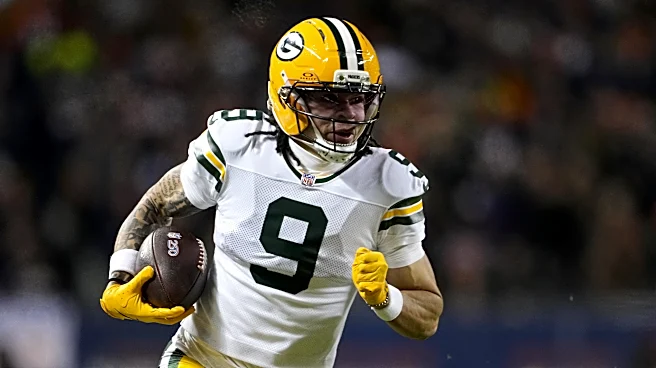
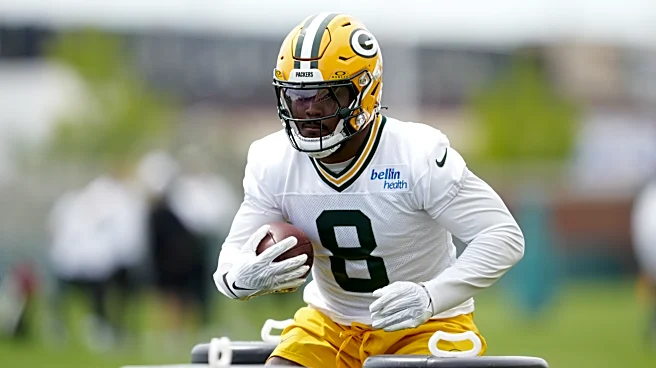
3. Green Bay Packers (Christian Watson/Jayden Reed/Matthew Golden/Savion Williams)
The running joke in Green Bay about their handful of No. 1 receivers has been fun, but it’s hard to dismiss this group’s upside, even if they haven’t come close to reaching their ceiling yet. On paper, there’s truly no clear-cut No. 1 option, but it’s all about upside and speed here. Watson can become an elite wideout, but health and consistency have held him back. Coming out of 2024, it felt like Reed was destined for the top spot, but injuries and consistency plagued him last year, too. Golden was the highest pick of this group, but experienced a disappointing season in a crowded room. The Packers value speed, and a fully healthy season for this trio could lead to big things. Now, we’ll see if that happens.
4. Chicago Bears (Rome Odunze/Luther Burden III/Kalif Raymond/Jahdae Walker)
The subtraction of DJ Moore in this group might look worrisome on paper, but anyone who watched this team last year knows that he wasn’t truly a factor in this offense until injuries played into the equation. Odunze, a former No. 9 overall pick, is heading into a critical Year 3. 2025 started strong, but a stress fracture in his foot and an inability to win 50-50 balls left a bad taste in most people’s memory. Burden’s ceiling is immense, but mental mistakes often overshadow his more flashy plays. Raymond is someone that Johnson clearly valued, but might be best suited for a lesser role. Walker’s emergence as an undrafted free agent was impressive, but a Year 2 leap is needed for this group to take the next step. Johnson will rely on multiple tight end sets plenty, but it’s fair to wonder, even with the upside of Odunze and Burden, if the Bears have enough depth to last the entire season.
Offensive Line
1. Chicago Bears
Heading into their Wild Card matchup with the Packers, it appeared the Bears had their starting five for the next two to three years. Unfortunately for them, a ruptured patella for left tackle Ozzy Trapilo and a surprise retirement from center Drew Dalman have created some short-term questions. That said, this unit was playing at an extremely high level, and there’s little reason to believe that won’t continue in Year 2 with most key pieces back and their quality replacement options. There are some long-term questions with veterans like Joe Thuney and Jonah Jackson, but for now, this still should be a Top 5-7 unit in 2026.
2. Minnesota Vikings
When healthy, the Vikings have one of the better tackle duos in the league. Unfortunately for them, 2025 was not one of those years. Assuming they come back healthy and Donovan Jackson takes a big step forward in Year 2, this group should get back to a well-above-average level. Questions remain at the center after Ryan Kelly hung the cleats up, but a bounce-back year from Will Fries could help ease any true concerns about the center position next to him. The Vikings have invested quite a bit in this group, and health permitting, it should pay off more in 2026.
3. Detroit Lions
It wasn’t long ago that the Lions had an elite unit with no real holes to speak of. Johnson’s departure to Chicago hurt from a schematic standpoint, but this group was starting to age out. The retirement of Frank Ragnow was a huge hit to this unit, but with some added youth, the arrow should be pointing up for this season. Moving Penei Sewell to his natural position at left tackle and adding Blake Miller should help stabilize the tackle spots. The interior is the bigger question,n with development needed from young players like Tate Ratledge and Christian Mahogany. The hope is that veteran Cade Mays will stabilize this group from within and raise their overall floor.
4. Green Bay Packers
For as long as I can remember, the offensive line has always been a strength for the Packers. That started to tail off last year, and somehow, they face more questions in 2026. When healthy, Zach Tom is a Top 5 right tackle, but outside of him, there are far more questions than answers. They’ll rely on a youth movement with former first-round pick Jordan Morgan earning the first crack at left tackle, while Anthony Belton will look to lock down a spot on the interior. They did well to extend Sean Rhyan after releasing Elgton Jenkins, but this group lacks proven players and quality depth.
Cumulative Scores:
1. Chicago Bears (2.2)
Overall, the Bears finished tied for first with the Lions, the lowest cumulative score in the group. What gives them the tie-breaker in this scenario is their first-place finishes. On paper, this is the best offense we’ve seen in Chicago in as long as I can remember. Similar was said heading into Year 2 of Matt Nagy in 2019, so Johnson must prove that Year 1 wasn’t a fluke, and that he’s not only one of the best offensive minds in the game, but also a budding star as a head coach. A lot of that comes down to Williams’ ability to take another sizable step forward in Year 3.
2. Detroit Lions (2.2)
On paper, the Lions still have a damn-good offense. While questions remain in the trenches, their skill positions should keep their floor at a very safe level. There will be plenty of pressure on first-year offensive coordinator Drew Petzing, but he’ll have much more to work with than he did in Arizona with the Cardinals. The talent is there, and assuming they can find some continuity on the coaching side, there should be real optimism that they can return to full form in 2026.
3. Green Bay Packers (2.6)
Although Packers fans seemingly have a bone to pick with head coach Matt LaFleur, the positive influence he’s had on this offense since arriving in 2019 cannot be ignored. Love might not be Aaron Rodgers or Brett Favre, but he’ll have a quality supporting cast and one of the better offensive schemes in the league. Concerns may linger about this team’s ceiling for 2026, but it’s hard to imagine that the offense will be a primary reason for any failures they could experience.
4. Minnesota Vikings (3)
Like the rest of the division, head coach Kevin O’Connell is a top-notch offensive mind and a very good head coach. He’s squeezed every drop of juice out of this team since taking over, but the quarterback position finally did them in last season. Assuming that is drastically improved, this is a group that could see a bounce-back year and is right in the mix as a Top 10 offense.
How would you rank each offensive position group in the division?