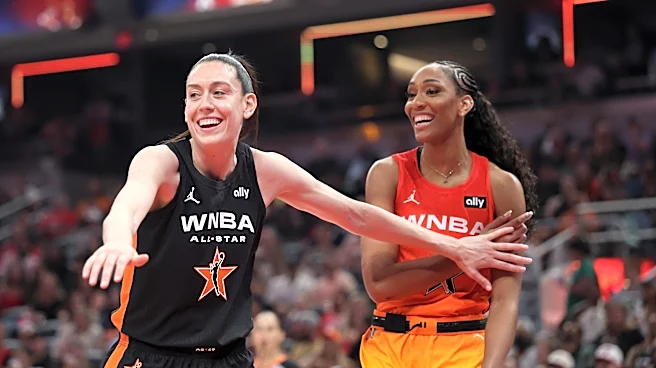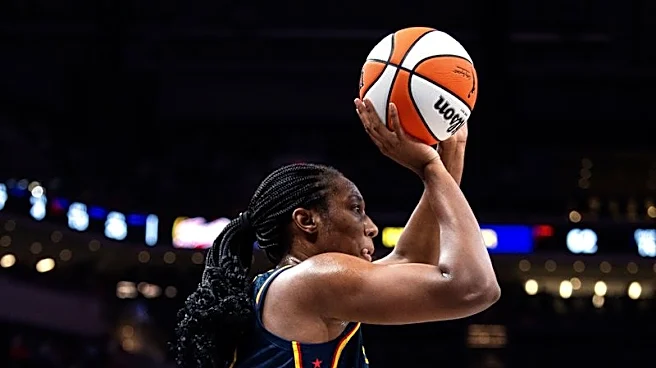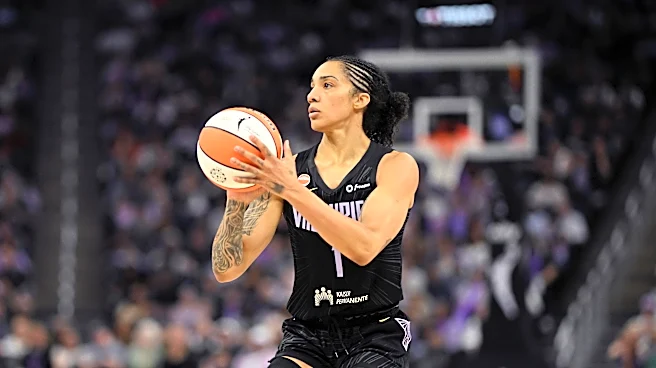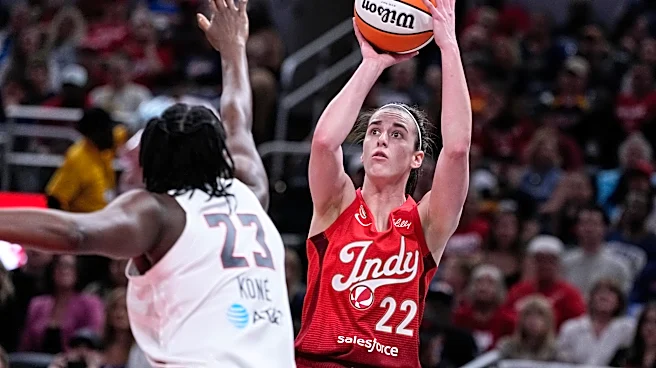





There’s a tension inherent in the selection of WNBA All-Stars.
The WNBA All-Star Game, like All-Star events in all professional sports, often is advertised as an event for fans. As such, it makes sense that fan preferences should be prioritized in the selection of All-Stars.
At the same time, All-Star selections are considered legitimate indicators of player quality, with the number of All-Star appearances on a player’s career resume often serving as historical evidence of their excellence.
Yet, these
two All-Star pillars don’t always align, resulting in the WNBA trying to establish a middle ground through a weighted voting process for All-Star starters, with the votes of fans, accounting for 50 percent, balanced by those of players and media, accounting for 25 percent each. (Although, it appears that this year’s player voting process experienced some snafus that could have impacted the final tally.)
The outcome, oftentimes, leads to dissatisfaction on all sides.
For fans, some of their favorites are denied the All-Star honor. For analysts and observers concerned with the historical record, players evaluated as more deserving can have their well-earned efforts overruled by a popularity contest.
 .
| Getty Images" data-portal-copyright="Getty Images" />
.
| Getty Images" data-portal-copyright="Getty Images" />
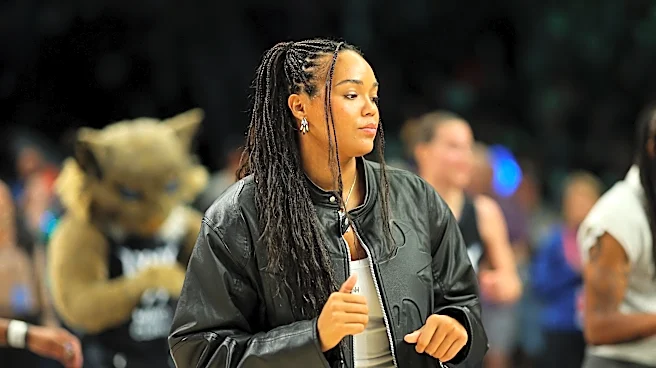
Personally, I don’t get too pressed by All-Star selections, particularly the selection of starters, and would lean toward just recognizing that the event is for fans and all their fancies. If WNBA fans want to see Azzi Fudd, who finished fourth in backcourt voting among fans, let them see Azzi!
While I would have hoped to celebrate Atlanta Dream players Rhyne Howard, Allisha Gray and Angel Reese being named starters, it’s my own fault, along with fellow Dream fans, for failing to stuff the ballot box like Pazzi Nation.
I adopt this stance because the historical record of WNBA All-Stars is already skewed, which should devalue, or at least raise questions about, using All-Star nods when evaluating a player’s legacy.
First, the WNBA did not host an All-Star Game until 1999. Until 2018, only fan voting determined the 10 All-Star starters. However, when the initial weighted voting process was introduced in 2018 it also included head coaches, with the fan vote holding a 40 percent weight while players, coaches and media were at 20 percent. The following season, coaches were eliminated and the current calculation method was implemented.

To add on another complication, the WNBA did not hold an All-Star Game, and thus name All-Stars, in an Olympic year until 2021. For 2004, 2008, 2012 and 2016, the Olympic break replaced the All-Star break, resulting in no All-Stars. That means a number of retired stars probably would have four more All-Star appearances to their names. Plus, the league also did not hold All-Star festivities in the 2020 Wubble, robbing a number of current players of another All-Star nomination. For instance, instead of eight-time All-Stars, A’ja Wilson and Breanna Stewart would be nine-timers.
Nevertheless, let’s say that All-Star selections should be approached with seriousness. In that case, who actually is deserving of the 10 starter slots? Surely, there’s an objective way to evaluate and elect the most deserving players? Not a chance!
However, for a perspective, here’s who various statistics, mostly of the advanced variety, rate as the 10 most valuable, impactful and/or productive players in the league so far this season. According to the stats, these players, regardless of position, should be the 10 WNBA All-Star starters.
WNBA Stats: Player Impact Estimate (PIE)

Player Impact Estimate (PIE) is a single-number statistic based on a player’s box-score stats. It’s similar to Player Efficiency Rating (PER), which will be discussed below, and like PER, tends to favor bigs over guards. For players averaging at least 20 minutes per game, here’s the top 10, including ties, in PIE:
- A’ja Wilson (20.2)
- Aliyah Boston (17.4)
- Kiki Iriafen (17.3)
- Olivia Miles (17.2)
- Jessica Shepard (17.1)
- Breanna Stewart (17.1)
- Natasha Mack (15.6)
- Shakira Austin (15.6)
- Jonquel Jones (15.5)
- Nneka Ogwumike (15.4)
- Sonia Citron (15.4)
PIE substantiates what Beckett Harrison wrote about the Washington Mystics earlier this season: They’ve got three legit stars, and a bunch of uncertainty and unreliability. None of the three Mystics—Iriafen, Citron and Austin—are All-Star starters, although her fellow players showed their respect for Citron’s game, voting her fourth among guards.
Natasha Mack is the outlier here, one explained by how she takes care of the traditional big duties—rebounding, blocking shot and scoring efficiently—effectively.
WNBA Stats: Total plus-minus

Most simply, shouldn’t the players who win their minutes by the most—what plus-minus measures—be considered and celebrated as the best players? So far this season, those players are:
- Olivia Miles (+197)
- Natasha Howard (+186)
- Kayla McBride (+141)
- Veronica Burton (+127)
- A’ja Wilson (+125)
- Jackie Young (+124)
- Courtney Williams (+120)
- Kayla Thornton (+120)
- Nia Coffey (+118)
- Jordin Canada (+117)
Clearly, players on good teams are boosted by this stat, as all five Minnesota Lynx starters make an appearance. Regularized Adjusted Plus-Minus (RAPM), covered below, attempts to disaggregate players from lineup contexts and assign credit to the player, or players, most responsible for elevating teammates. Does Olivia Miles benefit from playing with Nia Coffey? Or, does Nia Coffey benefit from playing with Olivia Miles?
Traditional plus-minus does explain why, when discussing the Dream’s All-Star snubs, head coach Karl Smesko made sure to include Jordin Canada.
Basketball Reference: Player Efficiency Rating (PER)

As noted above, PIE is WNBA Stat’s derivation of PER. While PIE tries to capture the percentage of total “events” a player contributes to in a game, PER aims to provide a per-minute encapsulation of a player’s contributions. The current top 10 in PER is:
- A’ja Wilson (31.4)
- Natasha Howard (23.9)
- Kelsey Plum (23.3)
- Aliyah Boston (23.3)
- Kamilla Cardoso (23.3)
- Jessica Shepard (23.1)
- Breanna Stewart (22.8)
- Olivia Miles (22.6)
- Paige Bueckers (22.3)
- Marina Mabrey (22.2)
Wilson again rises above all, with a sizable gap of the rest of the field. Yep, it looks like the players were smart to vote her No. 1 for the frontcourt.
Basketball Reference: Win shares

Win shares is a single-number estimate that aims to quantify how much a player contributes to her team winning. Who is most responsible for wins, which, even more than individual stats, seems like a solid way for determining which players are deserving as All-Stars. Here are the leaders in win shares:
- A’ja Wilson (3.9)
- Jessica Shepard (3.6)
- Rhyne Howard (3.4)
- Olivia Miles (3.3)
- Natasha Howard (3.3)
- Jonquel Jones (3.2)
- Breanna Stewart (3.2)
- Paige Bueckers (2.9)
- Sonia Citron (2.8)
- Nia Coffey (2.7)
- Jordin Canada (2.7)
Wins shares can be separated into offensive and defensive. The Wings’ actual All-Star starter pair of Jessica Shepard and Paige Bueckers rank first and third, respectively, in offensive win shares, testifying their status as the twin engines for the ascendant Wings offense. The Lynx tandem of Howard and Coffey top the defensive wins shares ranking.
ESPN Analytics: Net points

ESPN Analytics’ net points represents another attempt to assign credit for winning to single players, doing so on a play-by-play basis. In short, who makes the most positive plays for her team? ESPN Analytics rates these 10 net-points standouts as the most valuable players in the league:
- A’ja Wilson (+82.7)
- Rhyne Howard (+82.2)
- Olivia Miles (+81.6)
- Paige Bueckers (+62.0)
- Natasha Howard (+51.4)
- Breanna Stewart (+49.9)
- Marina Mabrey (+47.0)
- Allisha Gray (+44.5)
- Sonia Citron (+43.7)
- Gabby Williams (+41.4)
A’ja, once again, reigns as the queen; however, net points agrees with Angel: Rhyne and Allisha should be All-Star starters.
Help the Helper: wRegularized Adjusted Plus-Minus (wRAPM)

Like win shares and net points, regularized adjusted plus-minus intends to give individual players credit for their team’s success. Calculated per 100 possessions, wRAPM, which I’ve written about before, strives to account lineup context.
For instance, in contrast to the top-1o list for regular plus-minus, the whole Lynx starting five isn’t in the wRAPM top 10; instead, wRAPM measures Natasha Howard’s play as most valuable to the Lynx’s success. Here’s who wRAPM sees at the most impactful players:
- Breanna Stewart (+6.6)
- Jonquel Jones (+5.5)
- Skylar Diggins (+4.2)
- Aliyah Boston (+4.2)
- Alyssa Thomas (+4.0)
- A’ja Wilson (+3.9)
- Veronica Burton (+3.9)
- Jackie Young (+3.6)
- Chelsea Gray (+3.5)
- Natasha Howard (+3.2)
Unlike some other rankings, wRAPM very much appreciates how Breanna Stewart shapes the success of the New York Liberty.
TeamRankings: Points-Rebounds-Assists (PRA)

If you favor pure production—believing that putting the ball in the basket, making the pass that results in a basket or grabbing the rebound after a missed basket are the basic, most important foundations of basketball and, therefore, should be used to determine the best players—these are your All-Stars, with the number representing the sum of each player’s points, rebounds and assists averages:
- A’ja Wilson (38.00)
- Caitlin Clark (33.35)
- Kelsey Plum (32.50)
- Breanna Stewart (31.20)
- Jessica Shepard (30.65)
- Paige Bueckers (30.11)
- Alyssa Thomas (29.68)
- Angel Reese (29.14)
- Olivia Miles (29.00)
- Aliyah Boston (28.50)
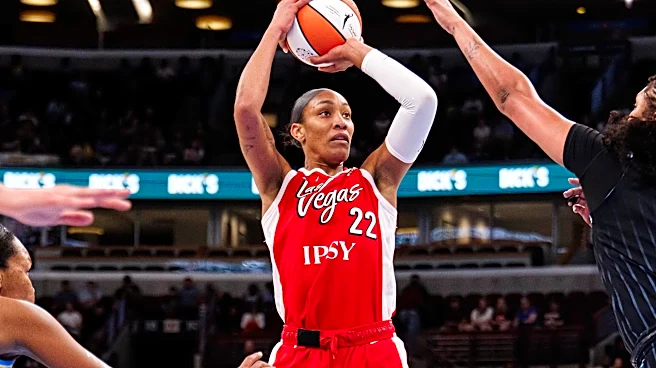
The major takeaway? However, you slice, dice or sauté the stats, A’ja Wilson is T’HE All-Star. Wilson’s name is everywhere. She’s the only player to appear in every ranking, and often at the very top.
Beyond A’ja, the Minnesota duo of Miles and Howard feature on every list except one a piece, and the same is true for Stewie. Others who pop up on at least half of these six statistical ratings of are Bueckers, Shepard, R. Howard, Citron, Aliyah Boston and Jonquel Jones.
Although far from a comprehensive statistical survey, those 10 players have a solid statistical case for claiming that are, in fact, deserving of their All-Star starter nod, or that they should be a starter in Chicago. Considering seven of the 10 actually are starters, the combined votes of fans, players and media seem to have done a decent job of elevating and honoring the players who have made a positive difference for their teams.
And while Rhyne’s snubbing has been well-covered, Sonia and Jonquel also have permission to have a gripe about their exclusions.
Speaking of gripes, air out any of your All-Star selection-related thoughts in the comments. Should it be all about the fans? Should it be all about the stats? And if so, which stats? Should the the opinions of players and coaches be given greater priority?