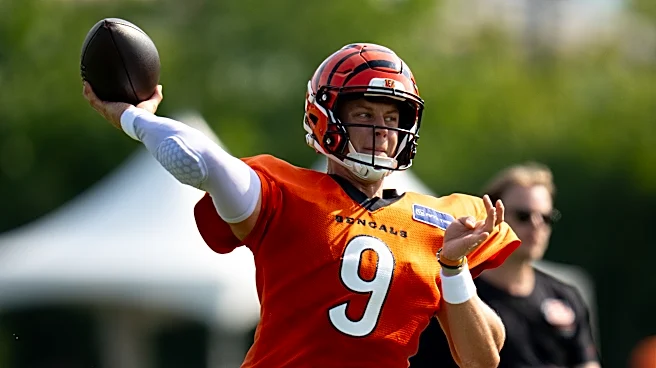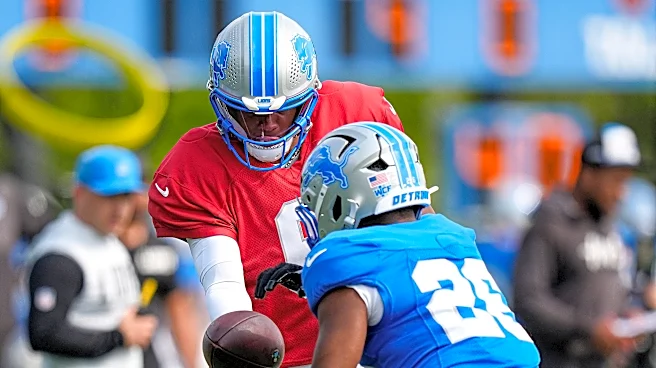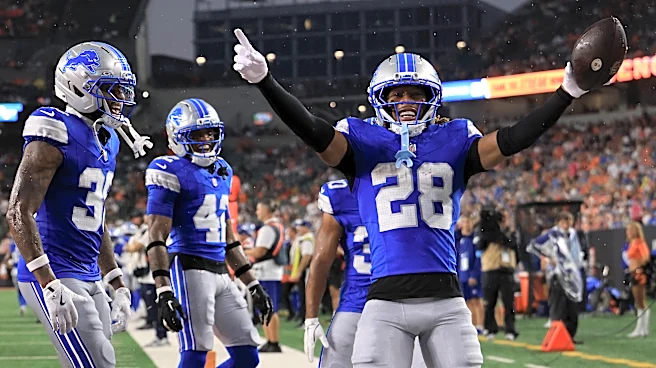

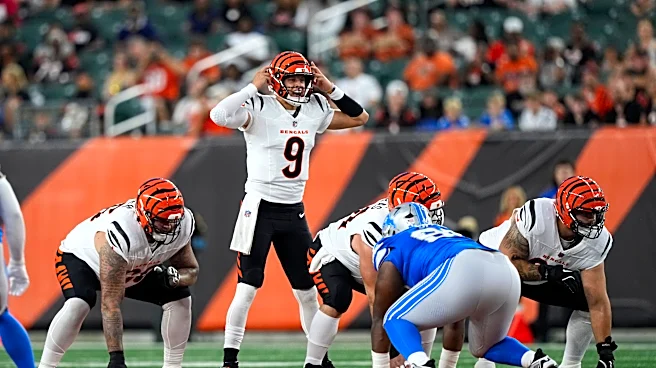
The Detroit Lions kicked off their preseason slate with a wet—and often sloppy—60 minutes of football on Thursday night against the Cincinnati Bengals in Ohio. While the weather made it harder to come to definitive conclusions about the play on the field, particularly at some of the skill positions, there’s still plenty to review and consider from the first bit of preseason action.
As we’ll do every week throughout the season for this Lions team, we have some data we can comb through courtesy of Pro
Football Focus that better helps us understand the football the Lions have played thus far—and what to look forward to in the coming weeks. Let’s take a closer look at the Lions by the numbers after their loss to the Bucs.
Pro Football Focus’ premium statistics are an invaluable data point for football fans to better understand the game. Consider subscribing to PFF to have full access to a plethora of stats and grades to keep you informed about the NFL—and college football, too. Also, NFL Pro is supplying some innovative and illustrative advanced statistics of their own that are worth checking out for the price of admission.
16.7 pass-rush productivity
After a long and winding road back to the football field, Ahmed Hassanein returned and made the biggest impact on the defensive side of the ball last night. Dan Campbell may have manifested Hassanein’s sack of Joe Burrow, but it was the second-year edge rusher who stunted and drove his way to making it a reality.
Through the first seven games of the NFL’s preseason, Hassanein’s 16.7 pass-rush productivity score via PFF is the second-highest score amongst 117 qualifying defenders (minimum nine pass-rushing snaps). He recorded five total pressures on 21 pass-rushing snaps, including 2.0 sacks and a forced fumble against the Bengals.
82.1 and 81.9 run-defense grades
Being a cornerback for the Lions ain’t easy. Detroit puts a lot of responsibility on their respective plates, and one non-negotiable is their attitude and aptitude in run defense. Two cornerbacks in Detroit’s secondary graded out exceptionally well in run defense against the Bengals on Thursday evening: Roger McCreary (82.1) and rookie Keith Abney (81.9).
McCreary has reportedly had a relatively quiet camp after many expected him to be the team’s starting nickel cornerback, but his 12.5% run-stop rate was tied for the third-best mark among 79 qualifying cornerbacks (minimum five run-defense snaps). If McCreary continues to look impressive in run defense—and in coverage where he earned an 86.3 coverage grade, allowing zero completions on two targets—he’ll move his way off the bubble and firmly onto the team’s 53-man roster.
As for Abney, it’s an encouraging sign to see his plus-run defense show up as soon as his first taste of NFL competition. Detroit has had to rely on their depth heavily at cornerback the last few seasons, and if Abney can continue to stack performances like his first game, the Lions could feel more comfortable should they need to break the glass in case of emergency.
6.38 yards after contact per attempt
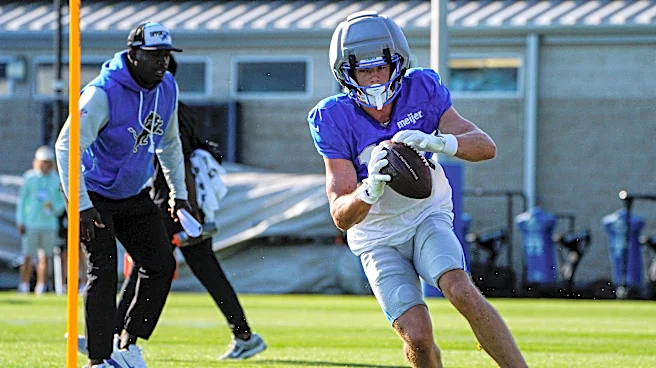
Jacob Saylors, on a down-to-down basis, seemed to have the most impactful play amongst the players on offense, and Dan Campbell agreed after the game.
“He was probably our most potent player on offense, Campbell said of Saylors in his post-game press conference. ”He made a lot of plays for us. He’s a steady workhorse.”
Beyond his sick throwback running back aesthetic, Saylors’ play matched his look. He was efficient and effective as both a runner and a receiver, rushing for 6.9 yards per carry (55 rushing yards total) and posting 9.3 yards per reception (28 receiving yards total). But on a night where Detroit’s offensive line was clearly still getting its footing, especially in the ground game, Saylors earned every yard: of his 55 rushing yards, 51 of those yards came after contact, and Saylors averaged a whopping 6.38 yards after contact per attempts—good for second among 23 qualifying running backs in Week 1.
28.3 coverage grade
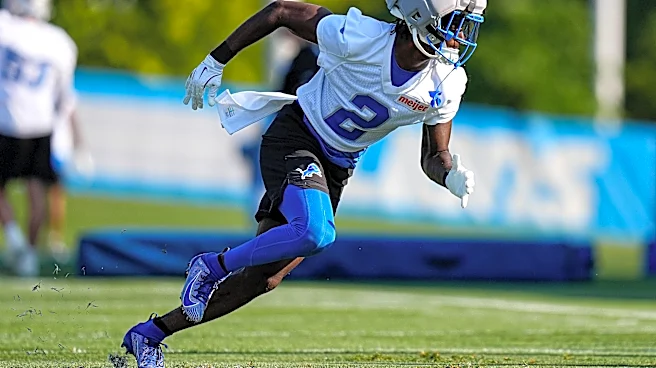
On the Lions’ third defensive series, Ennis Rakestraw’s night played out in a nutshell. A nice pass breakup on first-and-10 from Rakestraw quickly gave way to the worst series of events. He allowed a 20-yard reception on third-and-16 [note: Campbell put the blame on a different defender for this play], an 11-yard reception on second-and-20, and an 8-yard reception on third-and-9. After giving up three straight completions for a total of 39 yards, Rakestraw’s awkward angle of attack on a tackle attempt three plays later injured him and put him out of play for the rest of the game.
In total, Rakestraw surrendered four catches on five targets for 44 yards and earned a 28.3 coverage grade from PFF, the second-worst grade out of 104 qualifying secondary players so far through Week 1 of the preseason. The good news is that Rakestraw avoided a major injury, but the concerning news for the third-year player is that he has roughly two weeks to prove reliable and capable as a defender to justify his spot on the roster.