






The Chicago Bears entered the 2026 NFL Draft with Super Bowl expectations and a roster that had plenty of holes to fill. Sitting at No. 25 overall, last weekend marked the first time since 2011 that the Bears selected as low as they did in the first round. Thursday night’s selection snapped a three-year streak in which the team totaled four Top 10 selections, which included Darnell Wright, Caleb Williams, Rome Odunze, and last year’s 10th overall pick in Colston Loveland.
Although selecting in the
back half of each round is unfamiliar territory, it’s a sign of a team that has had a successful season and is on its way to bigger and better things. If all goes well, this will become the new normal in Chicago. With the second half of the big offseason puzzle ready to evaluate, we’ll take a look at each selection made by fifth-year general manager Ryan Poles and assign a “way-too-early” grade with some thoughts as the Bears head into their offseason program starting with Rookie Minicamp next week.
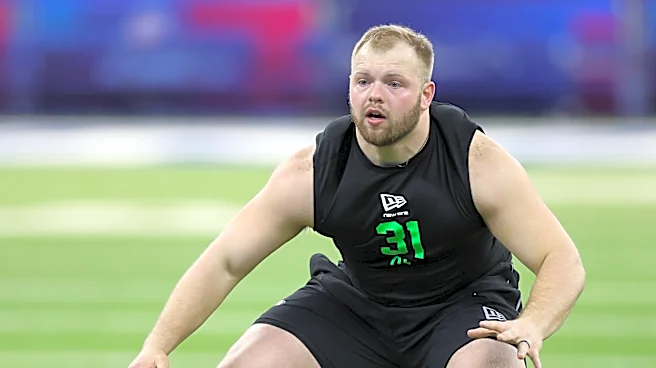
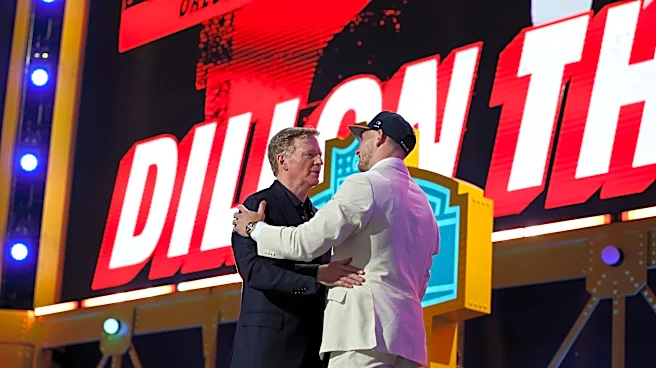
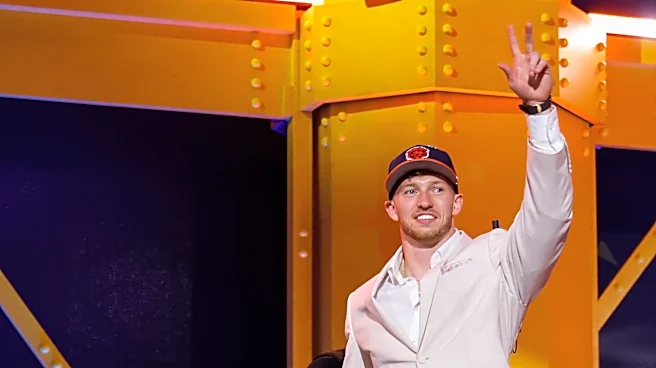
1.25 S Dillon Thieneman (Oregon)
Arif Hasan’s Top 300 Consensus Board: 17th
Daniel Jeremiah’s Top 150: 16th
Dane Brugler’s Top 100: 18th (S2)
Jacob Infante’s Big Board: 19th
For the first time since 2018, the Bears selected a defensive player in the first round. Bluntly stated- It’s really hard to build a good defense without the right blend of high-round picks and hits in free agency. If we’re being frank, the Bears haven’t done a whole lot of either lately, which is why it was important for them to add to the defensive side of the ball early in the draft. Positional value is a factor, but at pick 25, it’s hard to argue that anyone other than the former Purdue and Oregon safety would have been the best player available. His college production was notable. As a freshman, he totaled six interceptions, and over his four-year college career, he combined for 306 tackles and eight interceptions. His 9.72 RAS showed up consistently all over the tape.
Some fans felt conflicted following the pick and rightfully so. On one hand, Thieneman was widely regarded as the second-best safety in this class. Even so, positional value and pressing needs on the defensive line can suggest the Bears are building from the outside in. Looking at the player himself, this feels like a best-case scenario in a draft where most evaluators felt that picks 20 through 60 were of similar talent. Thieneman gives the Bears a versatile piece in the secondary that is not only interchangeable with recently signed veteran Coby Bryant but also has enough speed and man-coverage ability to slide down into the slot to play nickel. Similar to most prospects, he’s far from a perfect prospect, but all things considered, scheme fit, need, and the best player on the board all lined up at No. 25 overall, which doesn’t happen often.
Grade: A
2.57 C Logan Jones (Iowa)
Arif Hasan’s Top 300 Consensus Board: 95
Daniel Jeremiah’s Top 150: 75th
Dane Brugler’s Top 100: 95th (C3)
Jacob Infante’s Big Board: 75th
Just two picks after the New England Patriots traded in front of them to take edge rusher Gabe Jacas, the Bears decided to take their pick of the litter at center with Jones. In some ways, it’s easy to feel like Poles was sniped yet again, and just moved onto the next player on their board. That said, Jones is a good player who fits the scheme like a glove. The big knock on him, aside from being undersized, is that he’ll be 25 during his rookie season, which isn’t ideal. That said, it’s clear they wanted someone who fit the scheme athletically and can hit the ground running whenever he’s eventually called upon to start. Fans should expect Garrett Bradbury to get the Week 1 nod, but with the veteran slated to be a free agent next offseason, the team’s future center is on the roster and can develop under this coaching staff. Speaking of athleticism, his 9.63 RAS ranked fifth of all players at his position in this class.
On paper, the value feels a little “off,” but this center class was very much about preference, which is why it’s hard to knock Jones being the first center off the board. Following the pick, the Bears raved about his multiple meetings with the team pre-draft. It’s easy to see how we’ll slot in as an immediate starter whenever called upon. His athleticism and ability to pull and get to the second level drew many pro comparisons to none other than Drew Dalman. If that’s who the Bears get out of this pick, it’s a homerun selection.
Grade: B+
3.69 TE Sam Roush (Stanford)
Arif Hasan’s Top 300 Consensus Board: 103rd
Daniel Jeremiah’s Top 150: 83rd
Dane Brugler’s Top 100: N/A (TE6)
Jacob Infante’s Big Board: 115th
It was clear the loss of Durham Smythe was a hole they’d fill. I was not counting on them spending a high third-round pick on a blocking tight end. Yet, that’s exactly what the Bears did, with a clear influence from head coach Ben Johnson on all three Day 2 selections. Although the defensive line talent was lacking, there were plenty of options considerably higher on the consensus board than Roush. In a sense, it was a win for Chicago to get an additional fifth-round selection by moving down nine slots; on the other hand, they gave up the equivalent of a late fifth-round pick in value, according to the Jimmy Johnson trade value chart.
The athletic profile for Roush is there, as he posted an impressive 9.94 RAS at a position that doesn’t typically boast that type of profile. He has good size and more than enough burst to be a factor in the passing game. Arm length and drops were his downfall at Stanford, but with some coaching, there’s hope he has the upside to become a player like Cole Kmet. The blocking is already there, but the development in the receiving game will need to come. For the time being, he should be a quality option in the red zone.
The other way to look at this selection (setting need aside) is that the NFL is valuing blocking tight ends more and more. With the top-end free agent salary coming in somewhere between $8-$10 million annually over the last three free agent cycles, teams are deciding that they would rather draft and develop that skill set, rather than competing in free agency for it. What this means for Kmet in the long term isn’t great, but following his restructure, Bears fans can feel confident that he’s locked into the roster for at least 2026.
All in all, it’s hard to call this a big win on paper, both from a positional value standpoint and their lack of return in the trade down, but it’s still not what I would classify as a “bad” pick—Johnson’s fingerprints all over this pick, and all.
Grade: C+
3.89 WR Zavion Thomas (LSU)
Arif Hasan’s Top 300 Consensus Board: 265th
Daniel Jeremiah’s Top 150: N/A
Dane Brugler’s Top 100: N/A (WR34)
Jacob Infante’s Big Board: 332nd
Speed has been the hot topic of the offseason, and the Bears continued that trend with the selection of Thomas. From that standpoint, the pick is easier to understand, but taking a player that was graded as an undrafted free agent on the consensus board this early in the draft is a tough look. Thomas was a four-year player who totaled 106 receptions for 1,213 yards and seven touchdowns in his college career at LSU. Despite his smaller frame (5’10, 190 pounds), his 4.28 40-time and special teams value as a returner were said to be a big selling point for the offensive coaching staff. Despite his speed, Thomas actually had the second-lowest RAS in the class (8.76), primarily due to his lack of size.
Thomas is a player who lacks polish as a route runner and complete receiver, despite splitting his four years between Mississippi State and LSU. Early in his NFL career, it’s fair to expect him to contribute as a special-teamer and a gadget-type player who can provide some explosive plays a few times a game. Following the trade of DJ Moore, another receiver was needed. With higher-rated players on the board, this pick will be closely watched over the next few years. Don’t be surprised to see the Bears use him in the backfield, on reverses, and have a specific package for him at some point in 2026. That said, this feels like a classic case of an offense-minded head coach falling in love with potential while bypassing many highly rated players who were likely higher on the board for almost everyone else in the building.
Grade: D-
4.124 CB Malik Muhammad (Texas)
Arif Hasan’s Top 300 Consensus Board: 89th
Daniel Jeremiah’s Top 150: 104th
Dane Brugler’s Top 100: 87th (CB11)
Jacob Infante’s Big Board: 93rd
Heading into Day 3, the need for the Bears to at least add depth on the defensive side of the ball was hard to ignore. Judging by the execution of two different trade-ups, it appears the Bears shared the same sentiment. While someone like Tacario Davis would probably have made Dennis Allen the happiest, he went earlier than expected, while Muhammad dropped further than projected. Although he’s not quite as long or tall, Muhammad is the more polished prospect.
Although the former Texas product will need some development, this is the type of player who was most expected to go firmly in the Day 2 mix. He was yet another player with an elite athletic profile, factoring in with a 9.51 RAS. Last year, he did an impressive job against future Top 5 pick Jeremiah Smith, and despite a down year from the Longhorns, he was one of the bright spots on the defense. Cornerback is a tricky position, and relying on any rookie starter can be a tall task. Still, at worst, he’ll provide healthy competition with Tyrique Stevenson in Year 1 with the upside to ultimately win the starting job. That’s all you can ask for at this juncture of the draft, especially in this type of class.
Grade: A
5.166 LB Keyshaun Elliott (Arizona State)
Arif Hasan’s Top 300 Consensus Board: 134th
Daniel Jeremiah’s Top 150: N/A
Dane Brugler’s Top 100: 83rd (LB8)
Jacob Infante’s Big Board: 368th
Following a trade-up in Round 4 that resulted in a swap of two picks, the Bears dropped 22 spots in Round 5. Despite the drop off, Chicago came away with a nice value in Elliott at No. 166 overall. Elliott may never become a “complete” off-the-ball linebacker, but he’s a downhill player with enough athleticism to profile as a MIKE in this scheme. Despite a trend toward smaller linebackers, Elliott’s 6’2, 231-pound frame resembles more of what Allen coveted during his time in New Orleans. Despite being a heavier linebacker, he posted a 4.58, resulting in an impressive 8.74 RAS.
Twitter is littered with plenty of good Elliott tape, including multiple top-level evaluators who were big fans of him coming out of Arizona State. At the same time, there are some concerns about his coverage ability, his run defense, and his blitzer play (seven sacks). He’s a stable force in the middle of the field, and with T.J. Edwards likely in the final year of his tenure in Chicago, he could ultimately complement Devin Bush and DeMarco Jackson well in a revamped linebacking core that fits Allen’s needs much better than a year ago.
Grade: B+
6.213 DT Jordan van den Berg (Georgia Tech)
Arif Hasan’s Top 300 Consensus Board: 244
Daniel Jeremiah’s Top 150: N/A
Dane Brugler’s Top 100: N/A (DT29)
Jacob Infante’s Big Board: 178th
Going into the draft, there were a few clear things:
- This was a down year on the defensive interior.
- There weren’t many scheme fits in this class.
Couple that with three free agents added at the position, and I wasn’t convinced that the Bears were even going to add someone to the mix. It took until the team’s final pick (and a trade up), but Chicago came away with an intriguing player who will undoubtedly need some patience, but could be a quality rotation piece in a year or two. Van den Berg’s overall production at Georgia Tech wasn’t always consistent, but there were splash plays all over the film. Even more impressive is his perfect 10.00 RAS.
The athletic profile is beyond intriguing. He ran a 4.94 at 310 pounds, and as you can imagine, the rest of his testing numbers were historically good. Oh, and he can jump out of a pool…
In college, his average depth of tackle was -.11 yards. The next closest player to him was +.60, which means he averaged a tackle-for-loss against the run. Van den Berg is the first South African player to be drafted, and although he’s an older prospect as a sixth-year Senior, he started to find his footing in his final two years at Georgia Tech. This is the exact type of player the Bears should have been targeting late on Day 3.
Grade: B
Noteable Undrafted Free Agents
- iOL Caden Barnett (Wyoming)
- S Skyler Thomas (Oregon State)
- LS Beau Gardner (Georgia)
- QB Miller Moss (Louisville)
So far, 13 undrafted free-agent signings have been reported, but it’s worth noting that they will not become official until the team announces them closer to the start of rookie minicamp. On the surface, this appears to be one of the stronger groups that Poles and his front office have brought in during his five-year tenure as the team’s general manager. On paper, multiple players have a strong shot at making the final roster, but, more importantly, there are plenty of names who could be in line for practice squad spots on the surface. Undrafted free agency is rarely predictable, and typically, the top names available rarely make the biggest impacts. Jahdae Walker was a prime example of that last year, as a relatively overlooked name who was signed on the spot. Time will tell if this group is more or less impactful than useless. Still, with the least predictable draft in recent memory, there seems to be a higher chance of finding an additional diamond in the rough (or two) from this group.
Overall Team Grade and General Takeaways
Thanks to an odd class that saw fewer underclassmen declaring and a general lack of talent, the Bears were far from alone when it came to having an uneven draft class. Although the goal of each team is never to go into the draft looking to fill immediate needs, it’s easy to argue that Chicago did a quality job addressing the majority of their bigger holes. That being said, once again, not coming away with a high-upside edge rusher feels like an issue.
Speed and athleticism were the name of the game, and when all was said and done, they finished with the second-highest collective RAS and Next Gen Stats most athletic class by score. That said, the team has drafted a few projects and will rely on their elite athleticism and coaching staff to get the most out of this class.
Simply put, the Bears need another highly impactful class, and while there are two surefire starters in this group, there’s also plenty of uncertainty. Not coming out of the draft with an edge rusher feels like a loss, and their overall approach on Day 2 doesn’t look great on the surface. That said, they came back strong on Day 3 with a trio of intriguing defenders that should provide some quality depth. We’ll see if they can find a start or two within that group. If so, they’ll be in good shape. If they end up with just two starters and a handful of role players, that’ll be a different story.
Only time will tell how this class plays out, and for as much as we want real-time reactions to each draft class, these things take years to play out. For now, I’m left wondering if the Bears are truly improved over last year and what, if any, free agent moves (or trades) they have before the start of Week 1 in September. While this was far from a “bad” class on paper, I’d argue it might be their least known class on the surface in the last five years. Part of that is the byproduct of picking much later in each round, and the other part is not addressing obvious needs that remain on paper.