





Thomas Tuchel arrived at the World Cup building his England side upon wide connections. The central midfielders, fullbacks, and wingers coordinate via wide rotations, position exchanges, and channel runs. The idea revolves around generating spaces for crosses and cutbacks. According to Opta, only Canada (82) played more crosses than England (75) until the round of 32 in the World Cup.
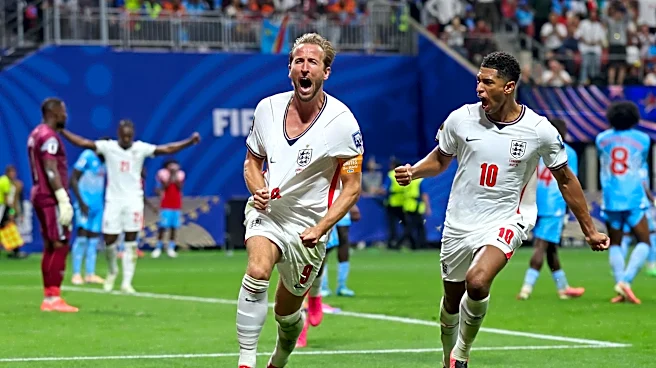
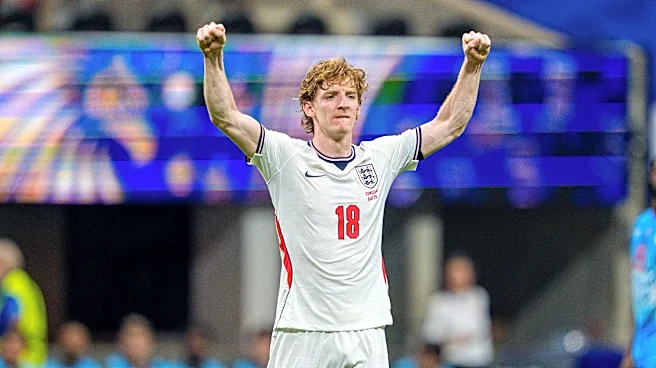
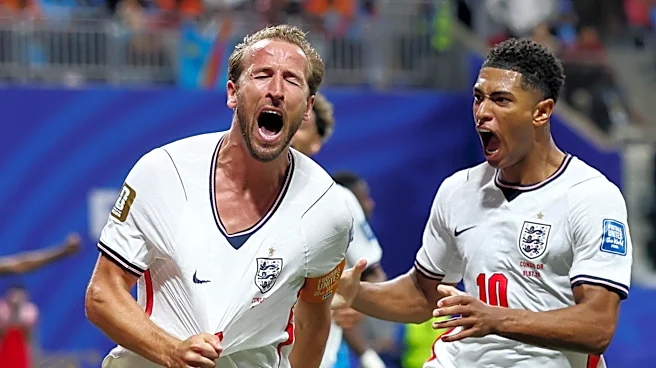
Against DR Congo, Antony Gordon’s cross toward the edge of the six-yard box was the assist that set up Harry Kane
well to equalise the result, after many failed attempts to score relying on the same dynamics.
One of the few offensive tools that England resorted to against DR Congo’s 4-1-4-1 low block is Bellingham’s late arrivals in the box.
13 minutes in, England looked to move the ball around DR Congo’s block toward Rashford. Meanwhile, Bellingham stealthily dashed diagonally from the right half-space toward the center, waiting to see how the events would develop:


With DR Congo’s right winger and right-back dealing with their counterparts, Declan Rice drew Mukau and Moutoussamy’s attention. That opened up the left half-space for Bellingham to dart behind DR Congo’s defensive midfielder. However, Rashford opted to go backward:

Three minutes in, Declan Rice and Nico O’Reilly combined down the left half-space, working the ball out to Marcus Rashford.


This time, Rashford found Bellingham’s box-crashing run between the center-back and left-back with an inswinging cross. However, the goalkeeper stepped out early to catch the ball.

There were times when Declan Rice and Jude Bellingham swapped positions. England’s intentions remained the same: finding situations to deliver crosses. Here, Bellingham would take advantage of the numerical parity England generated on the left.

Moreover, he would capitalise on Mbemba being forced to keep his eyes on the ball, which enabled Bellingham to exploit the blindside of DR Congo’s centre-back to receive Rice’s accurate, early cross. However, Bellingham headed the ball to where the goalkeeper stood.


The first minute of added time in the first half saw England work the ball from the left to the right. Around the penalty area and the far post zone, Harry Kane and Marcus Rashford distracted Chancel Mbemba and Wan-Bissaka, whereas Axel Tuanzebe focused on the ball.

That allowed Bellingham to arrive late into the gap between the center-backs to head Madueke’s inswinging cross. Lionel Mpasi-Nzau, with a heroic reflex, kept his national team ahead.


The moments preceding England’s second goal highlighted Bellingham’s main quality. He noticed that Wan-Bissaka maintained his concentration on Gordon, and Kane pinned the center-backs. As a result, he sneaked behind DR Congo’s left central midfielder into the gap between the right-back and center-back, providing Anderson a free option between the lines to access.

Bellingham scampered forward down the channel, penetrated the box, and fired a shot into Mpasi’s body.

England’s wingers, tucking in, served them well to regain the ball quickly. Gordon would carry across before feeding Harry Kane at the edge of the box.


Bayern’s striker entered the box and wrapped his right foot around the ball to power it toward the root of the net, sending his national team to the round of 16.

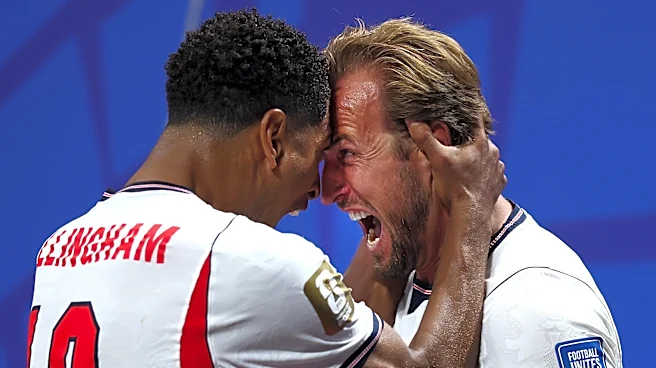
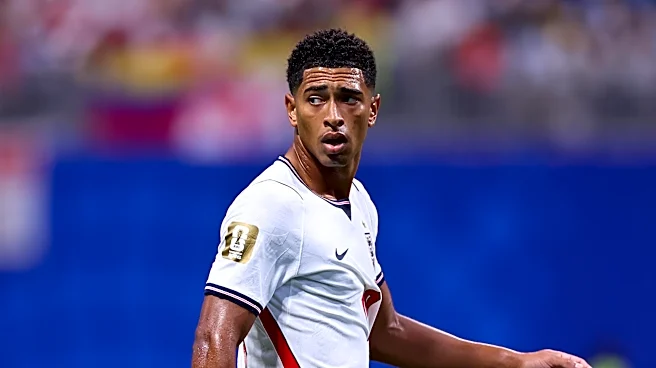
Besides his quality on the ball, Jude Bellingham’s ability to sniff out and interpret the gaps across the opposition backline is what sets him apart from the players in the same position. He proved in his first season with Real Madrid what he can produce once he spots these free pockets. And now in the 2026 World Cup, his late arrivals in the box and runs beyond the defensive lines are another alternative for Thomas Tuchel’s side to rely on for chance creation or scoring goals.