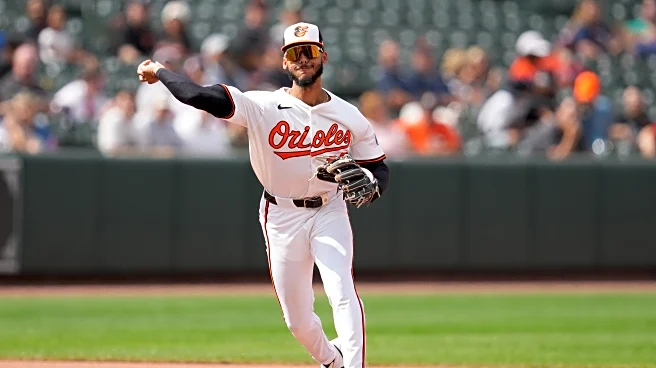

Lots of things didn’t go the Orioles’ way this year. One of them: their skipper. On May 17, the front office pulled the plug on manager Brandon Hyde, opting to take their chances with longtime infield coach Tony Mansolino in his stead. Though Mansolino appeared well-liked in the role, after the season ended, in late October, the Orioles announced the hire of his full-time replacement Craig Albernaz instead.
Now, with the book closed on an underwhelming 2025 season, we have the critical distance and
bandwidth to ask some questions about these moves. Were the Birds trigger-happy in cashiering their manager of six seasons? Did Mansolino ever have a chance to be more than just a placeholder? Did he do a good job in the role?
How we got to that situation in the first place: well, the Orioles started the season dreadfully. The rotation was terrible—down Kyle Bradish (Tommy John recovery), Trevor Rogers (knee), Grayson Rodriguez (elbow problems), and Tyler Wells (Tommy John recovery). Zach Eflin was dealing with back problems, Dean Kremer started slow as usual, and Charlie Morton couldn’t find his stuff until June. The Orioles trudged to a soggy 9-16 record in April, and were even worse in May.
Hired in winter 2018, Brandon Hyde once led this team through some of the franchise’s leanest years ever, and GM Mike Elias said he wanted to let him see this team through to competitiveness. But after two winning seasons, the team’s sad spring start seemed to be due not just to injuries but an effort problem, too. No one was hitting, and the morale seemed low. This is probably why, in the third week of May, the front office fired Hyde.
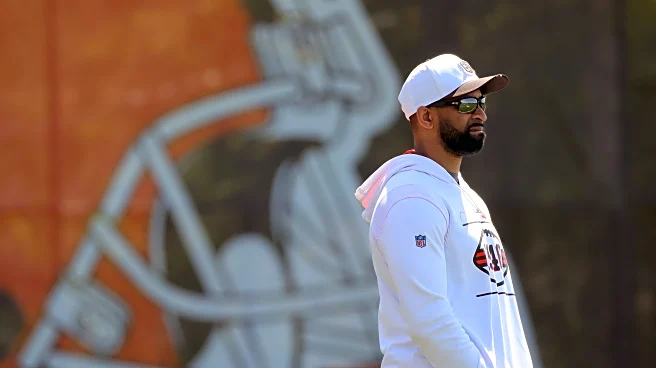
Cue Tony Mansolino to fill the hot seat. A former infielder, Mansolino played in MiLB for six seasons before being hired into Cleveland’s farm organization and shooting up the ranks. In 2017, he won MiLB Manager of the Year for Single-A Lynchburg, then ascended to Double-A in 2018 and Triple-A the year after that. He served as third base coach for the big-league team in 2020, then got hired in the offseason by the Orioles as their new third base coach. This was a role he’d hold for five years until this season.
As skipper, Mansolino brought a noticeably different vibe to the dugout than Hyde. Where Hyde had been more deliberate and analytical in his approach, Mansolino emphasized energy, communication, and playing “the right way”—running the bases aggressively, playing solid defense, and competing hard. He gave good postgame interviews, seemed to platoon his players less reflexively than Hyde, and he never really had a closer. In 119 games as interim manager, he finished with a 60-59 record (.504), considerably better than the 15-28 record he inherited. Players consistently praised his communication skills and the positive atmosphere he created in the clubhouse, with outfielder Tyler O’Neill calling his presence “awesome.”
Did Mansolino do a good job with his opportunity? It’s tough to say. As he put it in September, with characteristic honesty, injuries were a “huge part” of the team’s failures, but “that’s a little bit of a copout, it’s not very accountable from our perspective to do that.” The rest was under-performance.
To judge what Mansolino could and couldn’t do with this roster, maybe it’s fair to adopt a (too-neat) pitching-hitting split. The pitching staff improved a bit from Hyde to Manso (a team ERA of 5.85 going to down to 5.20), and this, given the injury carnage, may have been all you could reasonably expect. The bullpen was a revolving door of struggling arms, and Mansolino rotated save opportunities rather than committing to a rigid hierarchy. This led to some head-scratching decisions when struggling relievers like Yennier Cano and Grant Wolfram got high-leverage opportunities. Then again, given the talent he had to work with after four of the most talented arms—Gregory Soto, Andrew Kittredge, Seranthony Dominguez, and Bryan Baker—were traded to other teams, this seems understandable.
On the hitting side, the team showed modest improvement in batting average—climbing from .238 under Hyde to a more respectable .252 under Mansolino—but the offense never truly broke out. The most glaring problem was a team-wide power outage. Too many regulars had down years simultaneously—Adley Rutschman, Gunnar Henderson, Tyler O’Neill, Colton Cowser, and Jordan Westburg (even if all struggled with injuries)—and the O’s managed just 0.89 home runs per game under Mansolino compared to 1.12 the previous season, with a slugging percentage that dropped from .425 to .398. Injuries? Lack of talent? It seems like approach has to be part of the story.
For his part, Mansolino had a tricky assignment, having to walk a tightrope of trying to win games while developing talent with an eye to the future. He struck a balance, giving younger players like Coby Mayo more playing time while resisting calls to completely turn the lineup over to prospects. In one of his more interesting quotes to the press he made this point: “We have a responsibility to win in the major leagues. … I don’t think we’re going to bring up the Double-A team here to make all the internet lineup constructionists really happy, to be honest with you. We’re going to try to win the baseball game today.”
For a while, it was common to read in the Baltimore sports ecosystem that Mansolino was managing like his job depended on it. In retrospect, this was an odd thing to say if he never had a chance to earn the full-time job anyway. Was the front office just being polite when they said he was under consideration? Mike Elias certainly said the right things publicly, praising Mansolino’s work and noting that the manager position would be evaluated after the season. But the speed with which the organization pivoted to Craig Albernaz—a respected, analytics-minded coach from Cleveland—suggests the front office had already decided this season was a lost cause and wanted a fresh start with someone who could fix the pitching staff’s systemic issues.
In the end, I think Mansolino’s interim tenure shouldn’t be viewed as a failure. He was promoted this spring in tough conditions and asked to turn around a team mid-crisis, maintain professionalism through a lost season, turn out competent lineups even after losing key players to injury or trade, and keep young players developing. He turned a lack of talent—especially on the pitching side—into an improved operation, posting a winning record despite inheriting a disaster. He’s young, relatively inexperienced as a manager, and will get opportunities with other organizations (he’s set to become Atlanta’s bench coach for 2026). Ultimately, the decision to move on seems to be more about the organization’s bigger-picture needs than Mansolino’s shortcomings. He was a good soldier in a tough situation, and there’s no shame in that.