
It seems like most of the articles I’ve written since I (blissfully) returned to The Dream Shake have been some iteration of “the Rockets have the NBA’s second-best Offensive Rating, but they need to fix
their offense.”
Well…
It’s now the fourth-best Offensive Rating (121.0). Still elite territory, but they’re slipping.
This should not come as a shock. Ime Udoka, despite his many positive qualities, has failed to establish a sustainable first-shot offense. The team’s strategy is overly predicated on offensive rebounding, and it’s starting to show. There are plenty of potential fixes. I’ve suggested running a triangle. I’ve advocated for picking up the pace on a situational basis. I stand by those ideas:
But one piece of fruit hangs particularly low.
The Rockets isolate too much
The Rockets are second in the NBA in isolation frequency (10.7%). The 0.87 points per possession (PPP) they score in isolation lands in the 34.5th percentile. Kevin Durant is in the 45.8th percentile in isolation PPP, and Alperen Sengun is in the 40.3rd. Amen Thompson is shockingly in the 74.3rd percentile, but his iso volume is significantly lower.
I’m no basketball genius. It would seem rational to me that, if you don’t do something very well, you shouldn’t do it very often.
They say doing the same thing repeatedly and expecting a new result is the definition of insanity. The actual definition is an “inability to think and behave in ways considered to be normal and rational, especially on account of serious mental illness”, but it’s still an insane thing to do.
I brought this up on my podcast (shameless self-promotion!), and my co-host posited a theory. He says the Rockets play slowly and isolate frequently in large part because it puts them in a better position to get offensive rebounds. He may be right.
Isn’t the planning for failure? If a politician campaigned on a platform with promises about what they’re going to do if their policies fail, would you have confidence in their policies? Shouldn’t the Rockets aim to create and make good first shots, rather than design a system where they don’t care what the shot looks like, because hey, we’ll get the rebound anyway?
Besides, the Rockets’ 37.6% Offensive Rebound Percentage leads the NBA by a huge margin. They could change their system, lose a couple of percentage points, and still have the best mark in the league.
It’s starting to look like it’s of critical importance.
Rockets have not delivered on potential
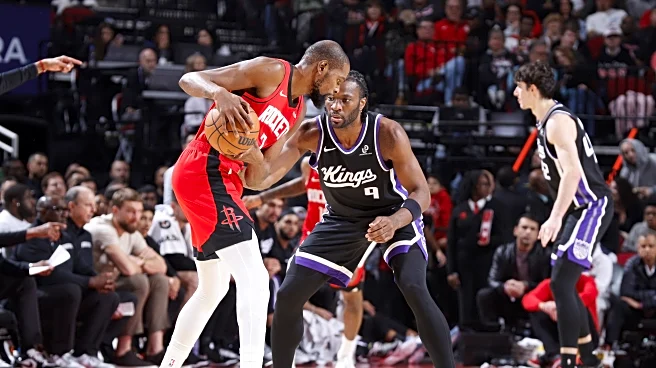
The Rockets lost to the Kings by one point in overtime last night. It was a cruel case of deja vu. All told, they’ve played 85.0 clutch minutes this year – third in the NBA. The Rockets are 6-8 in those contests.
Any NBA fan knows that when the chips are down, you’ve got to grind out a win. In the clutch, and in the postseason, systems go out the window, and basic isolation-heavy basketball reigns supreme.
So, given that the Rockets are in the 34.5th percentile in isolation PPP, their 6-8 record isn’t a huge surprise.
Still, this isn’t about their clutch-time strategy. It’s about developing a strategy to avoid clutch situations in the first place. Systems may break down in high-leverage situations, but they also carry teams to easy victories:
And the Rockets need a more sophisticated system.
Counterarguments exist. Yes, the actual culprit in the Rockets’ struggles has been defensive regression. Their 113.8 Defensive Rating over the last 10 games ranks 13th in the league. That was integral to last season’s identity.
Sure, the team badly misses Fred VanVleet. Perhaps it really is that simple. The team’s 16.3% Turnover Percentage ranks 28th in the league. Conceptually, the idea behind these Rockets is to control the possession battle. Dominating the offensive glass is a big part of that calculus, but holding onto the ball once they get it is as well. Last season, the Rockets ranked 11th in Turnover % (14.0%). Rostering the least turnover prone high volume passer in the NBA helped that cause.
That’s all true, but none of it negates this team’s need for a better first-shot offense. Perhaps a midseason overhaul isn’t viable. That’s fine. Simply adding some wrinkles to a highly stagnant attack could lead to progress.
For what it’s worth, there’s plenty to salvage here. The Rockets are the sixth seed, but the West is wide open. They’ve got plenty of season left to re-establish themselves as the second-best team in the conference.
It just might help to design an offense that’s hoping its first shot will…you know, go in.