





BOSTON — For 82 games, the Celtics’ depth — particularly at the wing position — was one of its biggest strengths.
“We just have 15, 16 guys that can impact winning,” Joe Mazzulla said before the playoffs. “At any point in time, people can help us win.”
When Mazzulla made that comment, it resonated. We’d seen it all year, after all.
Jordan Walsh started 25 games and showed flashes of brilliance on both sides of the ball, demonstrating an ability to shut down some of the best scorers in the league.
Baylor
Scheierman started 20 games and emerged as the perfect complementary role player who had a penchant for winning plays.
At just 19 years old, Hugo Gonzalez started three games, but made his mark in plenty more, drawing charges, diving for loose balls, and becoming one of the league’s top plus-minus guys.
Even Ron Harper Jr., who began the season on an Exhibit-10 contract, got three starts and helped swing several games, even outplaying Kevin Durant on the second night of a back-to-back in Houston.
Depth, however you wanted to look at it, was an undeniably positive storyline. All four back-up wings came into the season unproven, and all four finished it with big-time performances under their belt, and undeniable potential.
But, while that player development was part of what made the 2025-2026 regular season special, the Celtics couldn’t sufficiently leverage it when it mattered most.
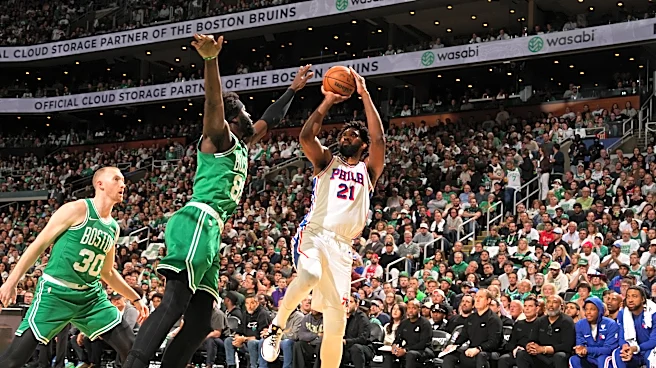
Walsh played the most substantial backup wing role, in large part due to his ability to guard Tyrese Maxey, but he played just 5 minutes in Game 7. Gonzalez didn’t play rotational minutes until Game 7, and though he helped key a critical first-half run, all in all, he played just 19 postseason minutes.
Harper Jr. played 21 minutes across the first six games, got an unexpected Game 7 start, and then went on to only record 4 minutes in that game, despite tallying two quick steals.
Throughout the series, fans clamored for more minutes for each of their favorite back-ups: more Scheierman minutes, Walsh in the starting lineup, any sign of life from Gonzalez. Before Game 7, I posted a thread on X asking fans what they would change; more than half of the 500+ respondents called for more minutes from one of the team’s young wings.
The reality, however, is that playoff rotations usually tighten up. By late March, Jayson Tatum was back playing (very effective) heavy minutes, and Sam Hauser had established himself as the team’s longtime fifth starter.
Mazzulla’s rotation conundrum was not made easier by the fact that none of the young guys on the roster separated themselves from one another — while different players stepped up in different moments, there was not a clear hierarchy going into the playoffs.
“It was an unusual roster in that we had a lot of unproven young players that had really not contributed at a meaningful level yet in their careers, and [they] really showed themselves capable of that,” Stevens said. “Oftentimes, as a coach and as a staff, it’s a lot easier if some do and some don’t, because then there’s a clear demarcation line. But that’s a good problem to have.”
In this series, however, the Celtics didn’t really benefit from the fact that there was no set rotation the way they did all season. In the decisive Game 7, Gonzalez, Scheierman, Harper, and Walsh all went scoreless on 10 combined field goal attempts. None of the four players was able to develop an offensive rhythm against Philadelphia.
It’s easy to say that Mazzulla should have played Scheierman more — he broke through as an all-around player shortly after the trade deadline. One could also make the case that Gonzalez, who probably brings the most to the table from an athleticism standpoint, should have seen opportunities before Game 7.
But the reality is that there is limited on-court time, and it’s hard to blame Mazzulla for those decisions, considering there was no clear pecking order among the backups going into the playoffs.
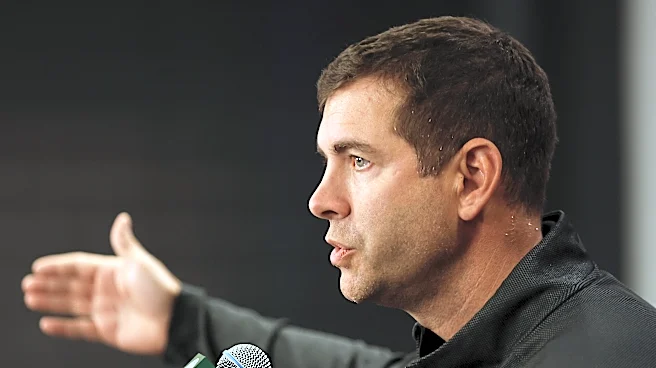
Stevens emphasized that it was not the front office’s job to make rotational decisions: “The role questions, and when people play, and how many people play, that’s what a coach has to do — and it’s really hard when, again, there’s not a clear separation.”
At his end-of-year press conference, Stevens was specifically asked about Gonzalez’s growth and, in turn, he praised his rookie season. The 2025 No. 28 pick averaged 14.6 minutes across 74 games, shot 36.2% from three, and was one of the NBA’s plus-minus leaders.
“Hugo had a great rookie year, and is, I think, a critical part of us moving forward because his athleticism can meet the moment in the big games,” he said. “That’s a real thing. You can see it. You know it. His strength is off the charts. He’s probably the strongest — he’s one of the strongest guys on our team right now, pound-for-pound, as a 20-year-old. So, he’s got a bright future.”
Still, Stevens explained that Gonzalez hadn’t done enough during the season to clearly demand postseason minutes.
“That said, he didn’t separate himself from those other guys,” he said. “And so, as a front-office person, I can’t sit here and say that one person should have been playing over another, should have been playing over another. There wasn’t enough separation.”
It’d be hard to argue with that.
Gonzalez had great moments, but he also made rookie mistakes, couldn’t create as much offensively, and didn’t space the floor as well as someone like Hauser, who has been on the Celtics for five seasons. Now that the 3-1 series lead has been blown, it’s easy to play Monday Morning Quarterback and say this guy should have played, or this guy should have played, but the real problem lies in the fact that all four wings — who had taken turns being so important during the regular season — came into the playoffs on relatively equal footing.
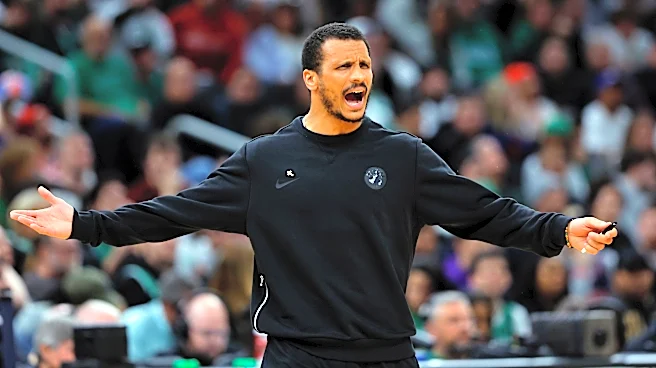
Mazzulla, for his part, denied that making those rotational decisions was difficult.
“It wasn’t,” Mazzulla said. “I think too many times, pushing the right button gets linked to a positive result. At the end of the day, it’s about pushing the right button [toward the] process of putting us in a position to win. And that’s always the goal. And the locker room, whoever is out there puts us in position to win.”
That’s Mazzulla’s perspective, and it’s a valid one.
Still, watching the Celtics-76ers series unfold, it became increasingly clear that the team’s regular-season depth, and rotational unpredictability was no longer the asset it was in the regular season.
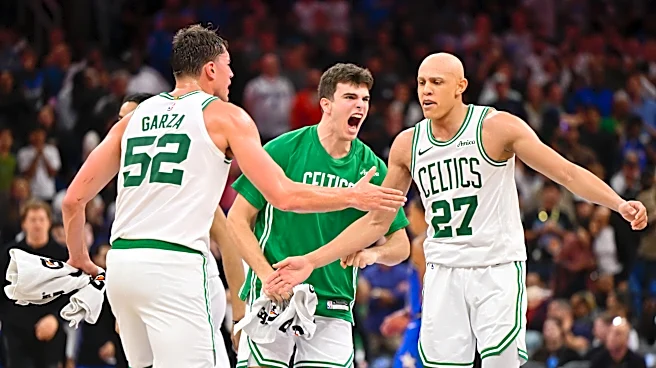
In Game 7, only five players scored — three of the team’s starters (Harper Jr., Luka Garza, and Scheierman) went scoreless. Walsh was effective in slowing down Maxey in stretches, but none of the other bench guys consistently left their imprint on the game.
That’s, in part, the result of a roster that hadn’t been there before. Nearly half of the rotation — Neemias Queta, Walsh, Gonzalez, Scheierman, Harper Jr., and Garza — had never before logged postseason action.
“There’s positives in that, because these are experiences that will then add up for these guys to take advantage of in the future,” he said. “But when you’re in the midst of it, and you have a chance, you wish you would still be playing.”
Gonzalez ($2.9 million), Garza ($2.8 million), and Scheierman ($2.7 million) are all under contract next season. Harper Jr. ($2.6 million) and Walsh ($2.4 million) have team options. It seems unlikely that all five guys will be back in green next season — and if they are, it seems even likely that, with another year under their belt, there will be a pecking order established earlier in the season.
During the 2024 title run, Mazzulla didn’t have to make these decisions. Jrue Holiday, Kristaps Porzingis, and Al Horford were all going to see significant minutes. Payton Pritchard and Sam Hauser were on the edges of the rotation. Everyone who played had been there before, and the guys who didn’t hadn’t meaningfully contributed throughout the year.
A lot of that, to put it plainly, is just roster construction.
“As I look back, we didn’t have a team that was as experienced or as, certainly, as ready for that moment as you know we’ve had in the past,” Stevens said.
At the same time, in hindsight, it’s clear that one of the Celtics’ biggest regular-season strengths became a challenge when it came to the postseason. The 2025-2026 season was formative for so many players — that’s part of why Jaylen Brown has dubbed it his favorite-ever season.
But when it mattered most, that depth became a challenge.