

Twice.
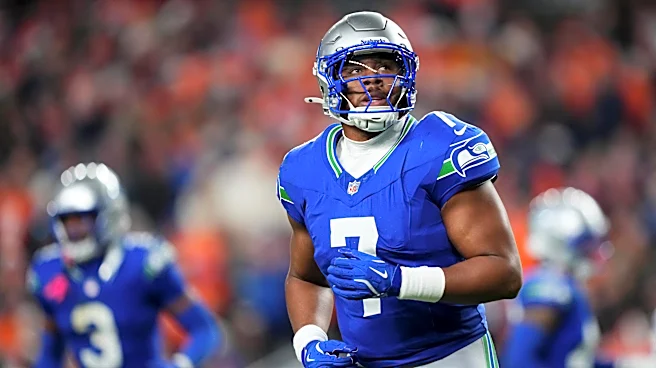
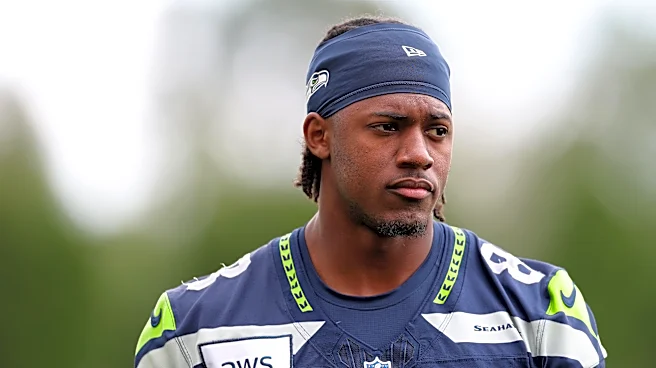
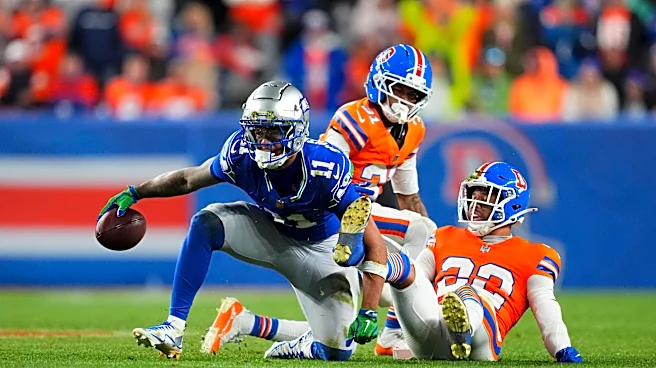
That’s the exact amount of times Jaxon Smith-Njigba has been limited to under 100-yards receiving in the nine games the Seattle Seahawks have played this season.
With 71 receptions for a league-leading 1,036 yards and nine touchdowns, the 6-foot, 197-pound 24-year-old is arguably the best wideout in the NFL. To say the Las Vegas Raiders defense will have its hands full with Smith-Njigba in Sunday’s Week 10 matchup with the Seahawks this Sunday is an understatement.
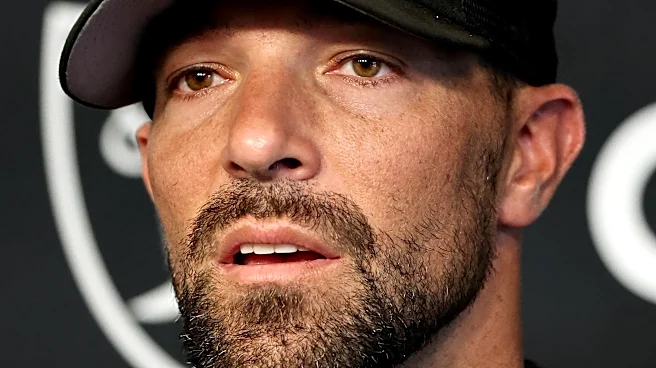
Defensive coordinator Rob Leonard
knows JSN presents a supreme challenge for Las Vegas and he expects Seattle to exploit any and all matchups.
“Yeah, I mean, he’s unbelievable. He’s number one in the league across the category in all things, receptions,” Leonard said when asked about the collective effort it’ll take to limit Smith-Njigba. “But yeah, it’s very critical. You start with him day one. We’re still talking about him all the way, early down, third down, red zone. Not just coverage-wise, different things that we have to do.”
Fully expect the Raiders secondary to get the full JSN experience with cornerbacks Eric Stokes, Darien Porter, Jermod McCoy, Taron Johnson and Hezekiah Masses to get the responsibility of covering the Seahawks elite wide receiver. This is because Seattle isn’t shy about deploying their elite wide receiver in both slot and outside alignments. The 20th pick in the 2023 NFL Draft has been a strong slot receiver since he arrived but he’s spending more time as a perimeter option, too.
That slot and boundary capability has truly expanded Smith-Njigba’s effectiveness and the Ohio State product’s production highlights just how much more dangerous he’s become as a weapon in the Seahawks offense. And all this despite Seattle’s offensive attack not being at the level that current Raiders head coach and play caller Klint Kubiak produced when he was the Seahawks offensive coordinator during the team’s Super Bowl-winning run last season.
Rookie offensive coordinator Brian Fleury has Seattle’s offense ranked 18th in points scored (202) and yards gained (2,950). The passing game is ranked 17th in yards gained (1,953) and touchdowns scored (15) while the run game is 18th in yards gained (997) and 20th in touchdowns scored (seven). But whether it’s Sam Darnold or Drew Lock at quarterback, JSN
Interestingly enough, however, Smith-Njigba’s lowest output of the season was last Sunday in a Week 9 tilt with division foe Arizona Cardinals: 10 targets, seven receptions, for 51 yards (long of 18) and no touchdowns. Leonard and the Raiders defense meticulously studying the way the Cardinals covered the Seahawks elite pass catcher in round two of their NFC West contests this year.
And one of the defensive tactics Arizona deployed is something Leonard is keen to do with his Las Vegas defense: Zone-heavy and two-high safety looks.
While Leonard has deployed more man coverage to try and mitigate defensive woes, returning to a zone-heavy look helps Stokes — who excels in Cover 3 and struggles mightily in man-to-man — and allowed Arizona to bracket Smith-Njigba over the top and took away the deep and intermediate routes where Seattle’s wideout does a lot of his damage.
Doing this forced working underneath with shorter passes and this is an area where linebackers Nakobe Dean and Quay Walker operate, offering the opportunity to hit JSN — hard. The Cardinals’ adjust gameplan severely limited Smith-Njigba and was a far cry from their Week 2 contest where the wideout produced 155 receiving yards and three touchdowns on nine receptions.
To put it plain: The Raiders approach to JSN should be similar to what defenses do when matching up with Las Vegas tight end Brock Bowers — bracket and make other pass catchers beat you.
But what a coverage responsibility and experience Smith-Njigba presents to the younger Raiders cornerbacks like Porter, McCoy and Masses. That trio are 25, 21 and 22 years of age, respectively, and going against one of the game’s best wide receivers should be a welcome task, albeit, daunting.
According to Pro Football Reference, Porter is charged with 24 targets allowing 13 receptions (54.2 completion percentage) for 201 yards and one touchdown. Masses has been targeted 31 times allowing 16 receptions (51.6 percent) for 258 yard and a team-leading four touchdowns allowed, while McCoy draws six targets allowing four receptions (66.7 percent) for 63 yards and one touchdown.
“Yeah, he’s playing faster. His eyes are in the right spot, and he made a play on the ball, which was awesome,” Leonard said when asked what he’s seen from McCoy this season. “Him and Zeke (Hezekiah Masses) are both growing, and that’s what you’re looking for, is improvement, right? So, it’s been fun to get him more reps so he can feel a little bit more calm out there.”
JSN’s elite ability to maintain consistent speed through his routes without telegraphing or slowing down will thoroughly test the entire Raiders secondary’s skillset — beyond the cornerbacks, too. Because Seattle will place their elite pass catcher all over the alignment, even in the backfield and alongside an offensive tackle to truly force the opposing defense’s hand. And if Dean or Walker draw coverage responsibility based on JSN’s alignment and pre-snap motion, good luck, Raiders.
At that point, the pass rush and coverage need to combine so disruption of or taking down the quarterback means no dice for Smith-Njigba.
Head-to-Head
Sunday’s tilt in Allegiant Stadium marks the 57th time the Raiders and Seahawks square off. The Silver & Black lead the all-time series 30-26 (29-25 in regular season play, 1-1 in postseason action). The last time the two teams played one another was in 2022 with Las Vegas dropping Seattle 40-34 in overtime on a walk-off 86-yard run by running back Josh Jacobs. Before that, the Seahawks won the 2018 and 2014 meetings (27-3 and 30-24).
Quote of Note
“How aggressive you want to be, based on what their personnel is, what our personnel is, and what gives you the best chance of starting fast. Is it coverage? Is it pressure? Is it a different front? There’s a million variables that go into it. And then what personnel package do we want to start with? What 11 do we want to put out there to start the game, and then have a plan to get to a different one later? So those are all factors. How did we practice that week? What was the best thing that we were executing? ‘All right, I like that as a lead call.’ It’s very interactive, both call-wise and personnel-wise, and it’s a week-long conversation of that back-and-forth decision of what’s best.”
—Las Vegas Raiders defensive coordinator Rob Leonard on nuances of starting better defensively