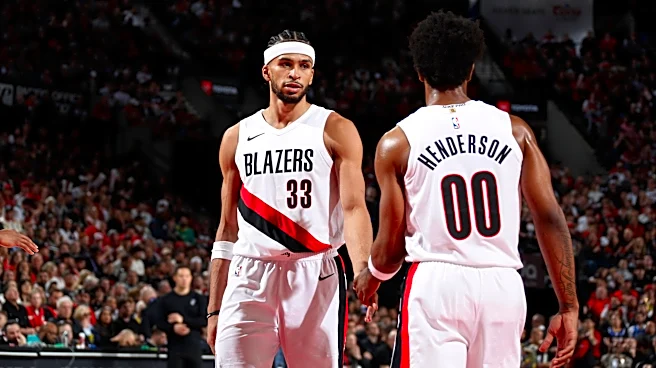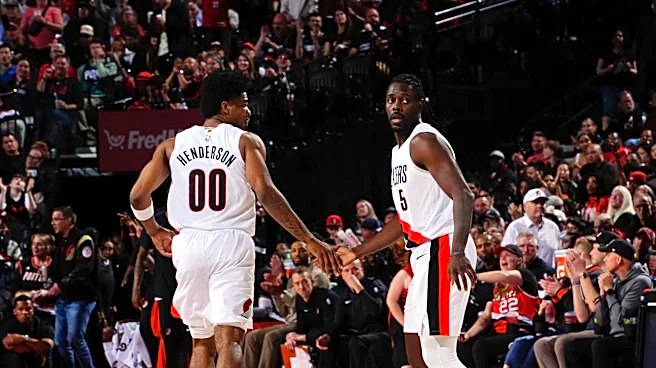


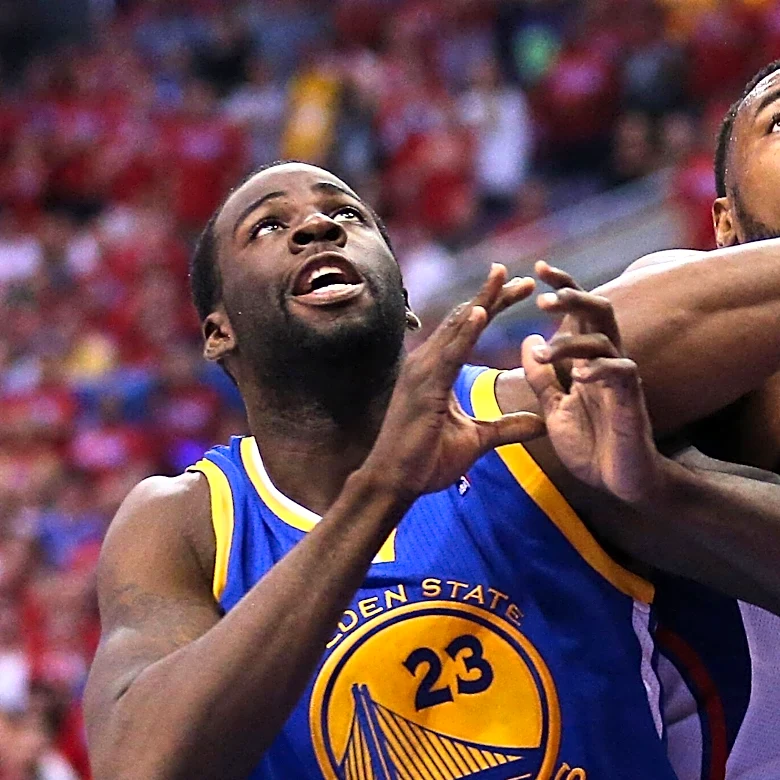
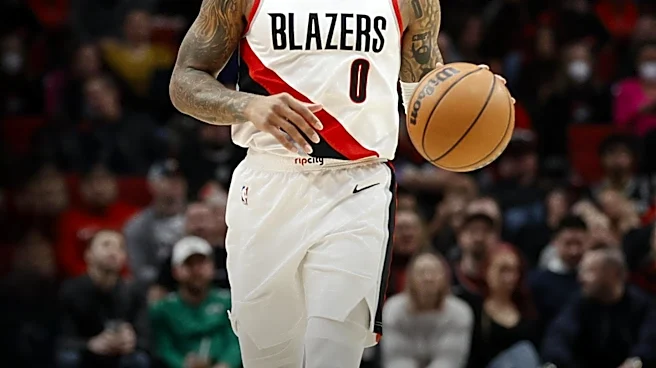
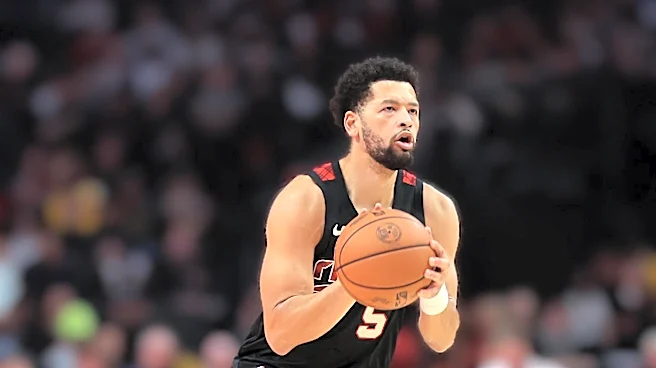
Maybe you haven’t noticed, but since the flurry of trades in the 2026 offseason, the Portland Trail Blazers have a few guards on the roster. The list starts with returning veteran Damian Lillard, to whom the Blazers will add shocking summer trade target Ja Morant. All-inclusive veteran Jrue Holiday merits playing time. The growth of 2023’s third-overall pick Scoot Henderson remains an important agenda item for the team. And that’s just the point guards. High-flyer Shaedon Sharpe plays shooting guard alongside
an actual shooter, Vit Krejci.
How the Blazers sort out playing time has been a frequent item of discussion in Blazer’s Edge Mailbag questions. This question offers one of the more basic (and stable) queries:
Dave,
What’s the potential for 3-guard lineups this season? Labeling players as guards doesn’t limit their actual position on the court. I could get excited about a Dame, Ja and Shae lineup, especially if [center Donovan] Clingan is in for defense. Do you see possibilities of 3 guards? I think we’ll have to or good players are going to be upset with no playing time.
Robert
I agree with your premise strongly. Portland’s scoring talent is weighted heavily towards players 6’5 and under. Several of them will need to be on the court at the same time. I doubt that they’ll even call them “guards”. At some point you’ll have the ball handler, a bunch of wings, and a big. That ball handler might switch with every play even if the lineup itself doesn’t change.
I can go even further. Against teams that don’t field a huge center, I could see Head Coach Micah Nori going cray-cray with mid-game substitutions. Why limit yourself to three “guards”? Why not run out Morant, Holiday, Henderson, Deni Avdija, and either Krejci or Toumani Camara? The tallest guy in the lineup is 6’8, but if the opponent is running a 6’11 perimeter floor-stretcher at center, that doesn’t matter as much. And you’ve got four guys who can make plays or pass plus the fifth as a veteran outlet shooter with a little height on him. This isn’t a perfect, or even sustainable, lineup, but for 4-5 minutes in the third quarter versus the other team’s second unit, it could be a fast, mobile, “give ‘em hell” attack force that leaves the other guys’ heads spinning.
You can easily create smaller-scale permutations. Place Holiday, Henderson, Sharpe, or Krejci at “small forward” alongside a couple of smaller, ball-handling guards and you have an outlet player who can keep the ball moving or create a rim attack threat from the side. I can envision a guard penetrating, tossing it to another guard on the sideline, that guard diving to the middle too, then passing back out to the original driver, now wide-open at the arc. Basically the Blazers can threaten the middle from so many positions that they get the defense retreating continually, leaving easy looks for their shooters.
The potential flaws in this approach are two. And they’re obvious.
First, unless the defense is just stupid, they’re not going to let Portland’s guards get to the rim. The Blazers will have to hit outside shots, not just to score, but to pull the defense back out. But where will the shooting come from? Here’s the list of three-point percentages for each small-lineup player’s last active season and career:
- Damian Lillard .376/.371
- Ja Morant .235/.311
- Jrue Holiday .378/.370
- Scoot Henderson .352/.343
- Vit Krejci .390/.393
- Shaedon Sharpe .337/.332
- Deni Avdija .318/.333
- Toumani Camara .370/.367
- Sidy Cissoko .298/.283
This isn’t a disaster, but it’s not exactly a row of sharpshooters. And the volume scorers are less apt shooters than the role-players. That’s going to limit the number of first-option point producers the Blazers can field at the same time. That begs the question: why even have them in the first place if you can’t actually play them together?
This is doubly true when you consider defense. Portland has three good defenders in that list, but finding a fourth is challenging. Fielding five, without gaps, while not losing scoring or shooting ability is near impossible. Height aside, the Blazers are going to have to sacrifice defense when they play small. That limits the approach to a gimmick, employed against second units who can’t score big organically. The Blazers will have to outrun and outscore the opponent with their small lineups. They won’t sustainably beat them that way.
Nevertheless, roster construction alone mandates that we’re going to see Portland go small. NBA games are varied and flexible enough to allow it, so the opportunity will be there. Whether actual effectiveness matches theoretical utility remains to be seen, but that’s what makes the season exciting, right?
What say you? Which small lineups do you anticipate this season and why? Share in the comments section below.
If you want to submit your own question for the Mailbag, you can send it to blazersub@gmail.com and we’ll try to answer as many as possible!
‘
‘
‘
‘
‘
‘
‘
‘
‘
‘
‘
‘
‘
‘
‘
‘
‘
‘
‘
‘
‘
‘
‘
‘
‘
scorers are less stable from distance than the role-players. That’s not a problem inherently, but the team will have to look at limiting the overlap for prime-time, first-option scorers, which makes one wonder what the point was in even getting them in the first place.
This is doubly true when you consider the second potential flaw: defense. A few of those players are good defenders, but putting five together, or even four, without major gaps while maintaining scoring and shooting prowess is a tall order. That’s why this kind of lineup is likely a short-minute, gimmicky approach instead of a mainstay. Unable to stop front-line opposing scorers, the Blazers will need to employ it against lineups that can’t produce many points organically. That means playing against benches, not stars.
Still, the opportunity will present itself. NBA games twist and turn enough—and Portland’s lineup is deep enough—that we’re going to see multi-guard units throughout the season. They’re going to make sense in a few ways. Whether their effectiveness matches the theoretical usefulness remains to be seen.
What about you? What small-lineup combinations do you foresee and why? Share in the comments section below. And if you want to send in your own Mailbag question, just write to blazersub@gmail.com and we’ll try to get to as many as possible!