
The Los Angeles Clippers’ season has been nothing short of a disaster. Every time you think they’ve hit rock bottom, they manage to lose another game. Last week, they dropped their fifth straight, this
time to the juggernaut Oklahoma City Thunder. As things stand, the Clippers sit as the 13th seed in a competitive Western Conference and have very little to point to for future optimism.
To make matters worse, the Clippers do not own their pick in the upcoming 2026 draft. It doesn’t get much better in 2027 either, as the Thunder hold swap rights to that pick. Instead of controlling their own draft destiny, the Clippers are likely looking at a late first-rounder.
As some already know, the Sixers own the Clippers’ draft capital beyond the 2027 season. In 2028, the Clippers will send an unprotected first-round pick to Philadelphia. The situation remains bleak in 2029, when the Sixers have the option to swap picks with the Clippers.
Put simply, the Clippers are strapped for assets and have one of the oldest rosters in the league. There is a potential saving grace in the form of cap space in 2027, but even if the Clippers were to land a big-name free agent (say, Trae Young), it’s hard to see how they would assemble a roster capable of competing in the West. Barring a complete grand slam, such as Giannis Antetokounmpo somehow reaching free agency and signing there, their 2028 pick will likely land in the lottery.
There aren’t many assets as valuable as the Clippers’ 2028 unprotected pick or the 2029 unprotected swap. The only comparable assets that come to mind are ones that will convey sooner, such as the Clippers’ pick this year (owned by the Thunder) or the Pelicans’ pick (owned by the Atlanta Hawks). Beyond those, the Clippers’ future picks stand out as some of the most valuable draft assets in the league.
With all of that in mind, the Sixers are probably best served holding onto those picks. That said, the NBA is unpredictable, and there are always players who could become available and justify trading premium draft capital. The question is: who actually fits that bill that could become available?
I’ll get the obvious top-end talents out of the way first. From a salary-matching standpoint, there are multiple ways the Sixers could theoretically acquire these players. I’d trade both Clippers assets without much hesitation for the following names: Nikola Jokić (sorry, but yes), Shai Gilgeous-Alexander, Luka Dončić and Victor Wembanyama. All of them, however, are almost certainly not going anywhere anytime soon.
So who are the realistic names? Which top-end talents could actually become available and be worth trading for?
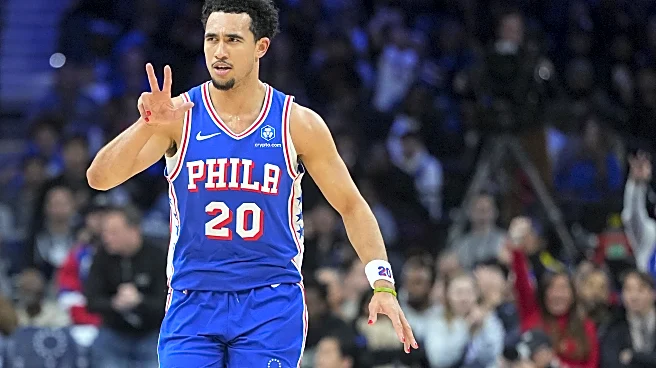
The main factors I’ll be considering are fit (primarily alongside Tyrese Maxey, VJ Edgecombe and the other guards), timeline (roughly aligned with Maxey’s theoretical prime), and overall talent.
Evan Mobley
One of my favorite theoretical targets is Evan Mobley, who most would consider untouchable alongside Donovan Mitchell on the Cleveland Cavaliers. Why would the Cavs trade a 24-year-old cornerstone with legitimate two-way talent? Because they may not have a choice.
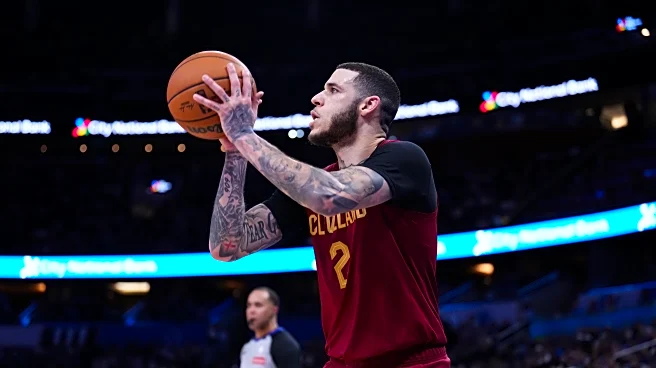
So far, Cleveland has underwhelmed in a wide-open Eastern Conference. They’re stuck in second-apron territory, with two members of their Big 4, Darius Garland and Jarrett Allen, seeing their trade value at an all-time low. The Cavs also lack meaningful draft capital, and unless they can pull off a deal that moves one of those two, the pressure may shift elsewhere.
That’s where Mobley enters the conversation. If Cleveland faces yet another early postseason exit, major changes would be hard to avoid. In that scenario, Mobley would suddenly have real value on the trade market, and the Cavs could be forced to consider moving him to reset their roster and regain flexibility.
Mobley, frankly, would be a phenomenal fit alongside Maxey and the rest of the Sixers’ younger core. He’s a legitimate rim protector who can play next to another big or slide down to center when needed. Over the past few seasons, his perimeter shooting has improved to the point where defenses are forced to respect it.
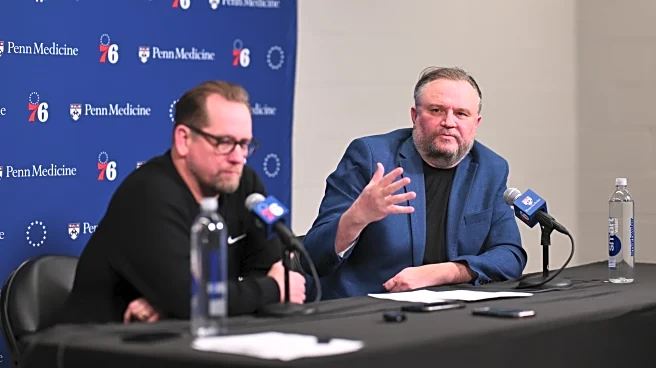
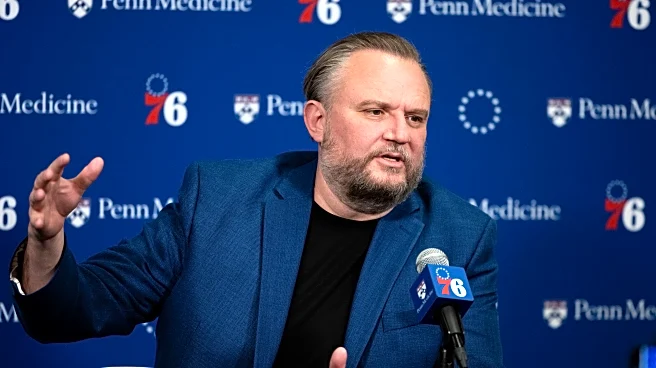
When asked about roster construction around smaller guards, Daryl Morey noted the need to surround them with legitimate length, athleticism and rim protection. Mobley checks all three boxes. Few players fit that vision better, making him an ideal theoretical trade target if Cleveland were ever willing to make him available.
Franz Wagner
Franz Wagner is the definition of a player every team wants: a 6-foot-10 wing who can defend, playmake and score at every level. So why would Orlando ever consider trading him?
Because at some point, they may have to choose between Wagner and Paolo Banchero.
Both players play a similar brand of basketball. They need the ball to be at their best and do most of their damage inside the three-point arc. The Magic are now going on five years into the Banchero-Wagner partnership, and there’s very little evidence that their on-court synergy has meaningfully grown. Some of that can be attributed to injury absences, but even when both have been available, the offense has often been sporadic. Individually, both players have consistently shined when the other is off the floor.
Sixers fans can recall the constant debates around whether Ben Simmons and Joel Embiid could truly work together, given the lack of shooting and the tension between their playstyles. In a similar way, the Magic have been dealing with that same question with Wagner and Banchero. This isn’t to say the situation is dire. There is still plenty of runway given their age and the fact that both are locked into long-term contracts. But if the chemistry between them never takes a real step forward, Orlando may eventually be forced to move off one or the other.
It’s also worth keeping in mind that the Magic sent out a significant amount of draft capital to acquire Desmond Bane. If they ever do decide to move Wagner, they wouldn’t be doing so out of desperation. They’d be looking to recoup assets and reshape the roster around a clearer offensive hierarchy.
Wagner would be the perfect prototypical forward alongside Maxey and the other guards. He’s a true ball-handler and creator, capable of scoring effortlessly within the arc. He would add much-needed length and bring a unique element to the Sixers’ offense. Most championship-caliber teams have reliable wings who can generate their own shot, and Wagner fits that role perfectly.
Jaren Jackson Jr
Jackson might be the most controversial name on this list for a few reasons. He’s a player who tends to miss time at some point during the NBA season. The Memphis Grizzlies have also struggled this year, though I don’t think JJJ is the reason — they’ve asked him to carry a heavy offensive load, which isn’t ideal for a defense-first player. As a result, both his efficiency and block numbers have dipped. He’s also one of the older players on this list at 26 years old.
That said, the fit alongside Maxey and the young Sixers is undeniable. He’s a legitimate shot-blocker and capable of contributing in a variety of ways on offense. I don’t see him as a surefire starting five, but as a complementary second rim protector, few players are better.
With Maxey and a developing Edgecombe, JJJ wouldn’t have to overburden himself offensively. He could focus on his strengths: rolling to the rim, spotting up on the perimeter, and serving as a legitimate floor spacer.
Similar to Mobley, players who combine genuine offensive skill and floor spacing with elite rim protection and Defensive Player of the Year–level defense don’t grow on trees. If Mobley never becomes available, JJJ is the only player with the defensive chops who wouldn’t just complement the Sixers’ guard core, but could help them thrive.
The Grizzlies have done a solid job recouping draft capital for their presumed retool with the before-mentioned Bane deal, and if they don’t believe they can win with cornerstone Ja Morant, it makes little sense to hold onto Jackson Jr. as he approaches his theoretical prime.
Trey Murphy
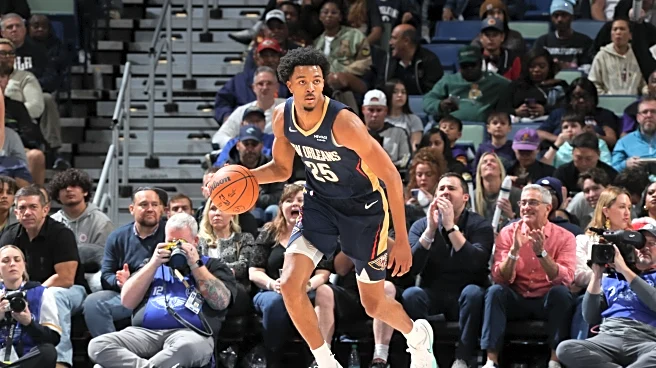
It seems like rival NBA teams have been waiting for the moment the Pelicans make Trey Murphy available —cough Warriors cough. And for good reason. At just 25 years old, Murphy is one of the better shooting 6-foot-8 wings in the league. He takes a high volume of perimeter shots (7.2 attempts this year, over 8 last year) and is capable of putting the ball on the floor and finishing at the rim. He’s also quietly a productive passer, with some untapped upside in that department, especially given the Pelicans’ tendency to hoard guards and bigs who need the ball in their hands.
Out of all these players, Murphy might be the top target on the Sixers’ list, primarily because of his contract. He’s on a bargain in today’s CBA landscape, making $25 million this season, $27 million in 2026-27, $29 million in 2027-28, and $31 million in 2028-29. In the past, we’ve seen Morey and the Sixers “overpay” for players on cheap deals, and Murphy fits that bill perfectly.
Murphy would give the Sixers a legitimately skilled wing at almost the same age as Tyrese Maxey. Perhaps even more important, he would sandwich Edgecombe between himself and Maxey — two high-volume shooters who give defenses headaches and could help unlock Edgecombe’s growing offensive skill set.
So why would the Pelicans trade Murphy, given his skill and contract situation? To be blunt: the Pelicans’ front office under Joe Dumars has lost much of the benefit of the doubt when it comes to trades. They recently shipped away an unprotected pick to draft in the late lottery. While I like Derik Queen, it’s clear they’ll pull the trigger on almost anything. If they fully embrace Queen and fellow rookie Jeremiah Fears — both of whom have shown skill at just 20 years old — it makes sense to get younger. And one way to silence critics over giving up an unprotected pick is to recoup one in a deal.
The Pelicans have one of the league’s most unusual roster constructions, with players spread drastically in age. If they decide to get younger, they might be best served by capitalizing on Murphy’s value before his salary jumps significantly.
Other names
All four of the players above could presumably become available given their team situations, though this list could certainly expand beyond these talents. Below, I’ve included additional names the Sixers could target using their LAC assets, even if it’s extremely unlikely they become available in the near future. These players represent potential fits who could complement Maxey and the young core while adding floor spacing, defensive impact, length, and/or secondary playmaking: Jalen Williams, Scottie Barnes, Jalen Johnson, Cooper Flagg, Amen Thompson, Alex Sarr and Chet Holmgren.
More often than not, the idea of these draft assets ends up being more appealing than the actual outcome. Take the Sacramento pick, one of the crown jewels of the Sam Hinkie era. For years, many viewed it as one of the most valuable assets in the league. Bryan Colangelo sent that pick to the Celtics, where it ultimately conveyed at 14 and became Romeo Langford. While it was a lottery pick, it didn’t turn into anything meaningful.
The Sixers’ current contract situation has hampered the team and will likely continue to do so in the future. These LAC assets are Morey’s silver bullet, and I wouldn’t be surprised if he turns them into a proven player in the Maxey era, with the names we’ve discussed topping the list.